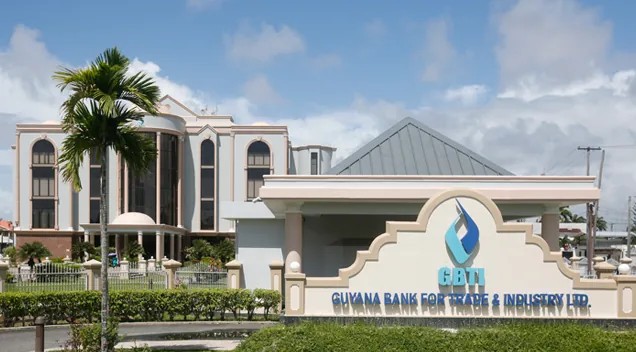
The Guyana Bank for Trade and Industry (GBTI) has signalled its intent to appeal a High Court ruling delivered on Monday that found the bank breached its contractual obligations when it closed the accounts of several candidates affiliated with the opposition We Invest in Nationhood (WIN) party, setting the stage for a significant legal showdown with implications for both the financial sector and electoral politics.
Justice Nicole Pierre ruled that GBTI failed to act in good faith when it terminated the accounts of Vanessa Bagot, Heerawattie Mangaldeen, Natalia Angela and Abdul Ally, awarding each applicant nominal damages of G$20,000 along with costs of G$300,000. The judge found that while the bank had a legitimate interest in managing sanctions-related risks, its decision was not grounded in specific evidence against the individual account holders but rather on broad assumptions tied to their political association.
The WIN candidates were represented by attorney-at-law Darren Wade, who argued that the closures were arbitrary and unjustified. GBTI was represented by a legal team led by Senior Counsel Stephen Fraser, alongside attorneys Shontel Scott, Sydney Fraser and Shakisa Harvey, who maintained that the bank acted within its obligations to comply with international financial regulations and safeguard against potential exposure.
In her ruling, Justice Pierre said the bank failed to properly assess the individual circumstances of each customer and did not consider less restrictive measures before severing the relationships. However, the court dismissed several broader claims brought by the applicants, including allegations of unlawful discrimination, breaches of anti-money laundering laws and violations of natural justice.
In a statement following the decision, GBTI said it would appeal certain findings of the ruling, noting that the damages awarded were nominal and emphasisng that the majority of claims against the bank were rejected. The institution reiterated its commitment to regulatory compliance and the protection of the financial system.
The dispute arose in the lead-up to Guyana’s September 2025 General and Regional elections, after WIN leader Azruddin Mohamed and his father were indicted in the United States on allegations including fraud, bribery and money laundering linked to a gold smuggling scheme. The developments triggered increased caution within the banking sector, with institutions moving to limit potential sanctions exposure.
GBTI’s appeal is now expected to test how far commercial banks can go in terminating customer relationships based on perceived risk, particularly in politically sensitive contexts. The outcome could help define the balance between compliance obligations and the duty of fairness owed to customers, and is likely to be closely watched across Guyana’s legal and financial communities.