Even as billions of dollars have been allocated to transform one of Guyana’s most critical transport corridors, fresh concerns have emerged about safety failures and weak oversight on the ground. In Guyana’s 2026 National Budget, $10.4 billion was set aside for the continued upgrading of the Linden to Mabura Hill Road, while a further $7.6 billion was allocated to commence works on the Mabura Hill to Kurupukari Road—extending this vital link deeper into the hinterland.
These targeted investments form part of a wider $227 billion allocation to the infrastructure sector, with approximately $196.1 billion earmarked specifically for transport infrastructure, including roads and bridges. Yet, a recent site visit by Opposition Member of Parliament Saiku Andrews suggests that despite these substantial sums, serious deficiencies persist.
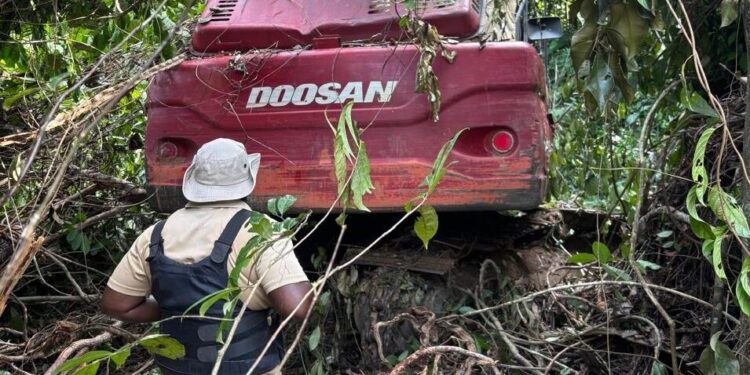
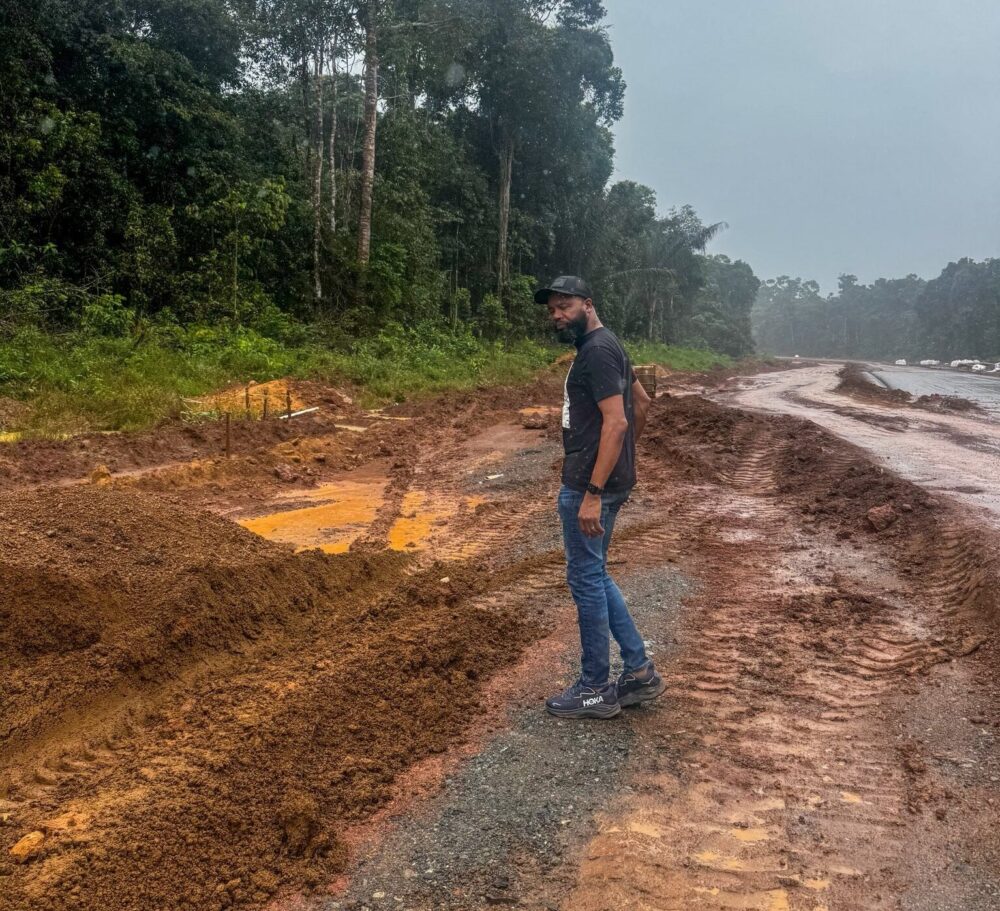
Andrews, who holds responsibility for infrastructure within A Partnership for National Unity (APNU), said his inspection of the Mabura Road project uncovered troubling safety lapses that require immediate attention.
“During my site visit to the Mabura Road project today, serious safety deficiencies were identified that require urgent attention,” Andrews said.
Among the most pressing concerns is the absence of adequate lighting along sections of the roadway, which commuters say has created hazardous conditions, particularly at night.
“Road users raised concerns about the absence of adequate lighting along sections of the corridor, creating dangerous conditions, particularly at night,” he stated. “This lack of visibility significantly increases the risk of accidents and undermines safe passage along what is already an active construction zone.”
The parliamentarian also pointed to a critical lack of signage across multiple stretches under construction, describing the situation as a breakdown in basic traffic management.
“There is also a critical lack of proper signage across multiple sections of the roadway currently under construction,” Andrews said. “Commuters are not being given clear directions or warnings, forcing drivers to make unsafe manoeuvres, including reversing or diverting without guidance. This points to a failure to enforce basic traffic management and safety standards that should be integral to any major public infrastructure project.”
Questions were also raised about the accuracy of progress reporting. While the project is said to be about 65 per cent complete, Andrews indicated that this figure may not fully reflect conditions on the ground.
“My technical team during our visit on-site suggests that approximately 65% of the project is complete, although there are inconsistencies in how this figure is being reported,” he noted. “It was observed that some paved sections represent only one side of the road, raising legitimate concerns about the accuracy and transparency of progress reporting.”
With the rainy season approaching and increased movement expected into the hinterland—particularly from mining, logging, and construction activities—Andrews warned that the current shortcomings could quickly escalate into more serious risks.
“With the rainy season approaching and increased movement expected into the hinterland, these shortcomings will pose even greater risks if not addressed promptly,” he cautioned.
The Mabura Road corridor remains a vital economic artery, facilitating the movement of people, goods, and resources between coastal and interior regions. However, Andrews argued that its importance makes the identified deficiencies even more unacceptable, especially in light of the significant public funds committed to its development.
“The Mabura Road project is a critical national artery, supporting the movement of people, goods, and resources between the coast and hinterland, including mining, logging, and construction activities,” he said. “Given its strategic importance, the current gaps in safety, coordination, and oversight are unacceptable.”
He is now calling for immediate corrective action, including the installation of proper lighting, improved signage, and greater transparency in reporting.
“I call on the relevant authorities to urgently implement proper lighting, clear signage, and more transparent reporting to ensure that this project delivers not only development, but safety and accountability for all users,” Andrews stressed.
The developments are likely to intensify scrutiny over whether record-breaking infrastructure spending is being matched by adequate safety enforcement, transparency, and value for money on the ground.