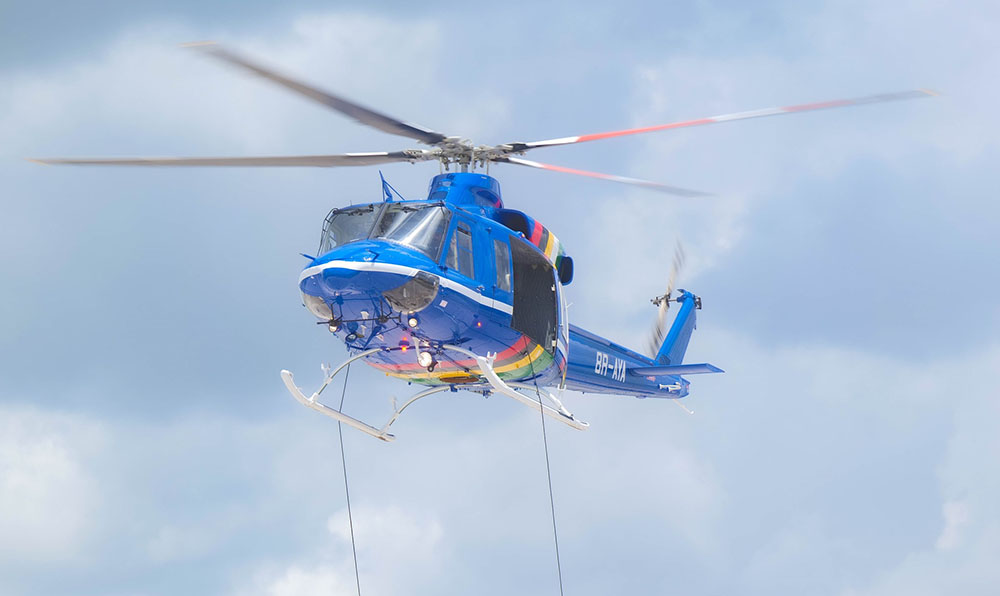
A letter published last week in Village Voice News by Patrick E. Mentore has renewed scrutiny of aviation safety and transparency in Guyana, linking a recent airspace incident to unresolved questions surrounding the December 2023 Guyana Defence Force (GDF) helicopter crash.
Mentore referenced reporting by Demerara Waves Online News that two international flights experienced a loss of separation in Guyana’s airspace earlier this month, prompting the suspension of two air traffic controllers and an investigation.
According to that report, the required minimum distance of 10 miles between aircraft was reduced to five miles. Aviation Minister Deodat Indar said, “They are supposed to have 10 miles between aircraft and something happened and that separation was breached,” noting that no collision or emergency landing occurred.
The incident took place around 1 a.m. on February 16 and involved a United Airlines flight travelling from São Paulo to Washington, D.C., and a Turpial Airlines flight departing Guyana for Venezuela. Both aircraft were operating at high altitude when the safety buffer was compromised.
Mentore argued that the minister’s acknowledgement that authorities had been receiving “a lot of kudos” for aviation management, coupled with concern about publicising the breach, raises broader questions about transparency.
He said those concerns are mirrored in the still-unresolved December 6, 2023 GDF helicopter crash, which killed five soldiers: Lieutenant Colonel Michael Charles, Colonel Michael Shahoud, Brigadier (Ret’d) Gary Beaton, Lieutenant Colonel Sean Welcome, and Staff Sergeant Jason Khan.
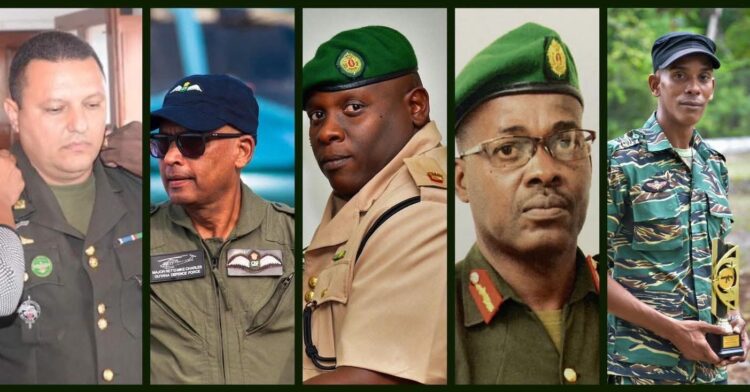
The Bell 412 helicopter, carrying seven military personnel, went down in a remote area of western Guyana near the Venezuelan border during a military operation. Two occupants survived. More than two years later, no final report has been publicly released on the cause of the crash.
“We are no where nearer to knowing what caused that catastrophe,” Mentore wrote, warning that the lack of answers continues to fuel speculation.
In his letter, he outlined the aircraft’s history prior to its acquisition by Guyana and pointed to several technical bulletins and airworthiness directives associated with the Bell 412EPI model, including issues involving critical components that could lead to engine failure or loss of control.
Mentore maintained that confirming whether those directives were complied with could help determine if mechanical failure played a role. “The answer… would go a fair way to… a partial lifting of the clouds of doubt,” he said.
Mentore’s call for transparency echoes similar demands frequently made by others, including Amanza Walton-Desir, the lone parliamentarian for the Forward Guyana Movement (FGM), who has urged the government to release the long-awaited crash report.
Walton-Desir has argued that withholding the findings undermines aviation safety and public trust, stressing that international standards require accident reports to be made public, even if sensitive details are redacted. She has also warned that “Guyana cannot advance aviation safety on secrecy,” while insisting that families and the nation deserve answers about the causes of the fatal incident.
While acknowledging that details of the military mission may remain confidential, Mentore stressed that the public deserves clarity on the cause of the crash, saying openness is critical to restoring confidence in the country’s aviation oversight.