The long-running tensions over street vending in Georgetown have escalated into a legal battle, even as calls grow for a humane and practical solution that protects both public access and the livelihoods of small vendors.
The Georgetown Public Hospital Corporation (GPHC) has turned to the High Court, seeking to compel the Mayor and City Council (M&CC) to take decisive action against vendors obstructing access to its facilities. According to court filings, the situation has reached a critical stage, affecting hospital operations and, more alarmingly, emergency services.
The hospital argues that the City Council has neglected its responsibilities, despite repeated warnings and correspondence. In its application, GPHC expressed concern that vendors have occupied key roadways and pavements surrounding the hospital, severely hindering the movement of patients, staff, and ambulances. Streets such as Lamaha, East, New Market, and Middle have all been affected.
While acknowledging that vending is a deeply rooted cultural and economic practice in Guyana, the hospital maintains that its unchecked expansion in critical zones now poses a serious public risk. GPHC noted that despite numerous letters and attempts at engagement with City Hall, there has been little meaningful relief from the growing congestion.
For its part, the Mayor and City Council has signaled awareness of both the urgency of the issue and the human realities behind it.
In a January 29, 2026 statement shared on its official Facebook page, the M&CC said Mayor Alfred Mentore, along with councillors and administrators, reviewed the situation with the aim of addressing complaints while ensuring vendors are “still given an opportunity to earn a living.”
The Mayor warned that vending at the immediate entrance of the hospital would not be tolerated and that those found in violation would face legal consequences. This position followed a lawyer’s letter to the Council indicating that vendors operating along New Market Street and the hospital’s vicinity must be removed or face court action.
At the same time, the Council outlined plans to improve conditions in the area, including sanitation works and addressing flooding—longstanding issues that have affected both vendors and the wider public. Officials suggested that once these improvements are completed, relocating vendors would be more feasible.
Efforts at engagement continued on March 11, when city officials met directly with vendors at the Square of the Revolution. That meeting provided a rare opportunity for vendors to voice their concerns, many of which centered on uncertainty about relocation and the risk of losing their only source of income.
For many of these vendors, the streets are not a choice but a necessity.
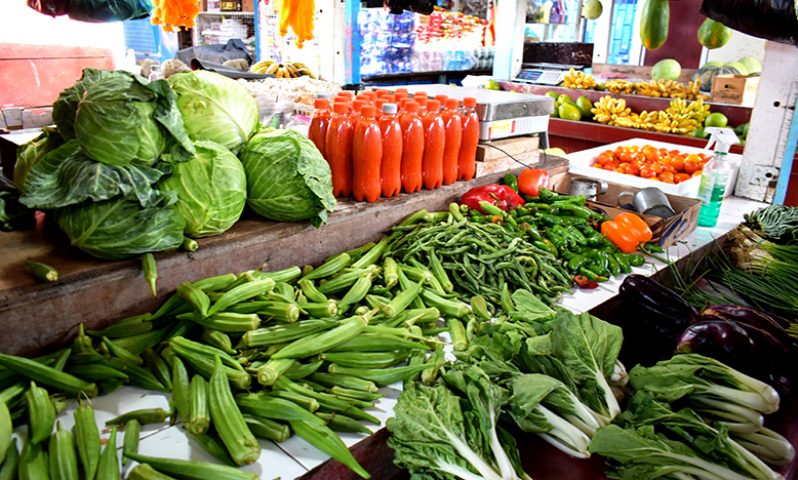
Street vending in Guyana has long served as a survival mechanism, particularly for those on the margins of the formal economy. It represents resilience, hustle, and the daily struggle of the “small man” trying to earn an honest dollar. Any attempt to remove vendors without viable alternatives risks deepening social and economic hardship.
Yet the concerns raised by GPHC are equally real. A hospital must remain accessible, especially in emergencies where minutes can mean the difference between life and death.
This is the delicate balance Georgetown must now confront.
Stakeholders argue that the way forward lies not in forceful removals or legal standoffs alone, but in genuine consultation and coordinated planning. Designated vending zones, improved infrastructure, proper sanitation, and clear, consistently enforced rules could allow both sides to coexist.
The current crisis underscores a broader truth: development and dignity must go hand in hand.
As the matter heads before the court, the hope remains that it will also push all parties toward a collaborative solution—one that preserves access to critical healthcare services while respecting the economic realities of those striving each day to make a living.
In Georgetown, the challenge is not whether vending should exist, but how it can exist responsibly in a changing city.