During Women’s History Month, it is important to highlight women whose work has reshaped opportunity and expanded the boundaries of what young people can achieve. Few names in Guyana’s modern education and technology landscape stand out more prominently than Karen Abrams, the visionary behind STEMGuyana.
Over the past decade Abrams has helped introduce thousands of Guyanese children to robotics, coding, engineering and problem-solving skills, placing Guyana firmly on the global map of youth innovation. Her work has not simply created programmes. It has ignited a national movement around technology education and youth empowerment.
From Technology Executive to Education Pioneer
Before launching STEMGuyana, Abrams spent years building a successful career in the technology sector in the United States. She worked in senior roles with major internet and technology companies during the early expansion of the digital economy, gaining firsthand insight into how rapidly technology was reshaping industries and opportunities worldwide.
Those experiences shaped her thinking about Guyana. Abrams recognised that while the world was moving rapidly into a digital and knowledge-based economy, many children in developing countries were not being equipped with the skills necessary to participate.
Rather than accept that gap, she set out to close it.
Driven by a belief that Guyanese children possessed immense untapped potential, Abrams envisioned a programme that would introduce young people to STEM education, an approach to learning that focuses on Science, Technology, Engineering and Mathematics. These fields form the backbone of modern innovation and are essential to careers in areas such as software development, robotics, artificial intelligence, engineering, medicine and scientific research.
That vision became STEMGuyana.
Building a National STEM Movement
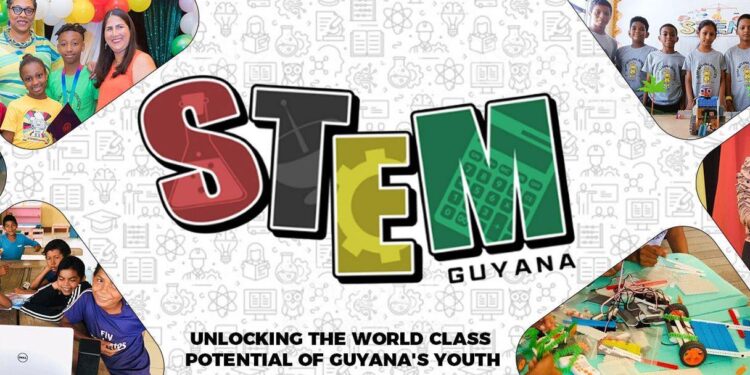
When Abrams launched STEMGuyana in 2016, the initiative began modestly with robotics camps and small training sessions for students and teachers.
Within a few years, however, the programme expanded into a nationwide network of STEM clubs, teacher training programmes, and technology camps across multiple regions of Guyana.
Through these initiatives, STEMGuyana has
- established dozens of school and community STEM clubs
- trained hundreds of volunteer STEM leaders and teachers
- introduced more than 20,000 Guyanese students to robotics, coding and digital innovation
For many students, participation in STEMGuyana programmes represents their first hands-on experience building robots, writing computer code, or experimenting with engineering concepts.
Abrams has repeatedly emphasised that talent exists everywhere in Guyana, but opportunity does not always reach every community. Her work has therefore focused on expanding access to technology education across geographic and economic boundaries.
Guyana on the Global Stage
One of the most powerful demonstrations of Abrams’ vision has been the success of Guyanese students in international robotics competitions.
Students trained through STEMGuyana have represented the country at global robotics events and competitions in the United States and other international venues. In one competition, a Guyanese team placed 10th among global participants, an extraordinary accomplishment for students coming from a programme only a few years old.
Another international robotics challenge saw Guyana place 39th out of nearly 200 countries, earning the Albert Einstein Gold Medal of Excellence for outstanding performance.
These achievements sent a powerful message that with the right exposure and mentorship, Guyanese youth can compete with the best in the world.
Innovation Beyond Robotics
Abrams’ work has extended far beyond robotics competitions.
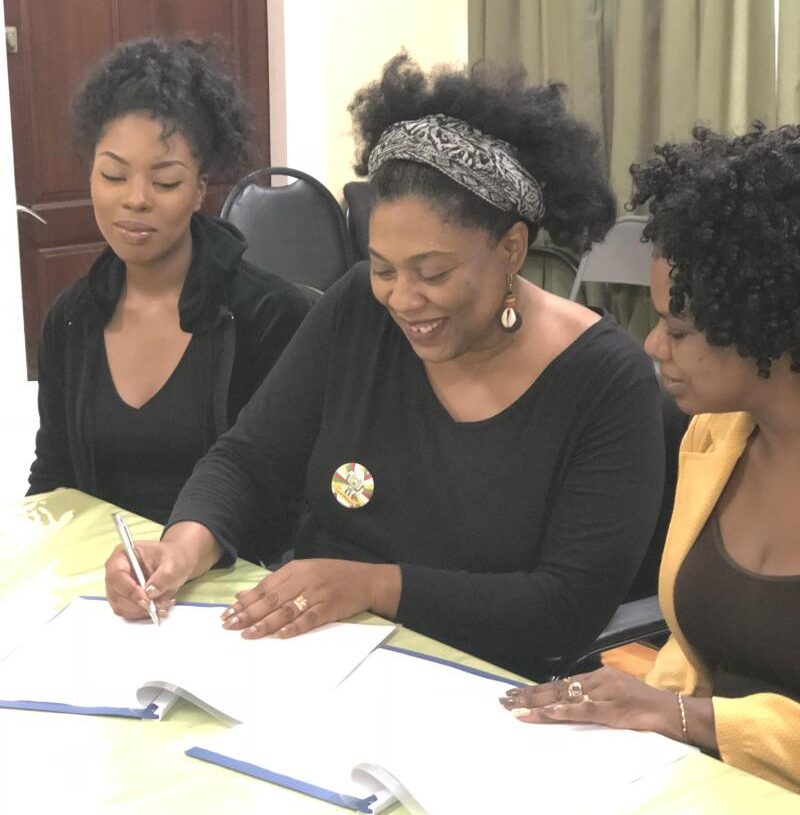
Under her leadership, STEMGuyana has introduced several initiatives designed to strengthen learning and expand educational access across the country.
These include
- digital learning tools to help students prepare for the National Grade Six Assessment
- STEM learning pods and technology hubs established during the COVID-19 pandemic to support students whose schooling was disrupted
- science education programmes and media initiatives designed to make STEM learning more engaging and accessible for children
These programmes reflect Abrams’ belief that innovation must reach beyond elite schools or urban centres and become part of everyday learning for children across Guyana.

National and International Recognition
Abrams’ contributions to education and youth development have received significant recognition.
In 2018 she was awarded Guyana’s Golden Arrow of Achievement, one of the nation’s highest honours, in recognition of her work advancing science and technology education among young people.
Her impact has also attracted international attention. She was named to Forbes magazine’s “50 Over 50” list, which celebrates women around the world who are redefining leadership and innovation later in life.
Such recognition reflects not only Abrams’ personal achievements but also the global relevance of the movement she has helped build.

Looking Ahead
Even as STEMGuyana continues to expand, Abrams has remained focused on a broader question about the future of education in Guyana.
She has consistently argued that technology innovation must be supported by strong educational foundations. In her view, the promise of artificial intelligence, digital learning platforms and advanced technologies can only be fully realised if children first develop strong literacy, numeracy and critical thinking skills.
For Abrams, the goal is not simply to produce coders or engineers. It is to nurture a generation of thinkers and problem solvers capable of driving Guyana’s development in a rapidly changing world.

A Legacy Still in Motion
Karen Abrams’ work demonstrates how one determined individual can catalyse change on a national scale. What began as a vision to expose children to technology has grown into a movement influencing thousands of young lives.
Across Guyana today, students who once had little exposure to robotics or computer programming are building machines, solving engineering challenges, and imagining careers in science and technology.
That transformation is perhaps Abrams’ greatest achievement.
In the spirit of Women’s History Month, her story reminds us that pioneering work often begins with a simple belief.
A belief that children, when given the right tools and opportunities, can change not only their own future but the future of an entire nation.