The United States and Israel have launched coordinated military strikes against Iran in a significant escalation of tensions in the Middle East, with explosions reported across major Iranian cities including Tehran, Isfahan and Tabriz early on Saturday. The offensive marks one of the most serious confrontations between Tehran and its adversaries in years and has sparked urgent global concern.
President Donald Trump announced that the U.S. has initiated what he described as “major combat operations” aimed at dismantling Iran’s military capabilities and its nuclear and missile infrastructure. Israeli leaders have framed the strikes as a necessary action to eliminate what they term an “existential threat” from Tehran.
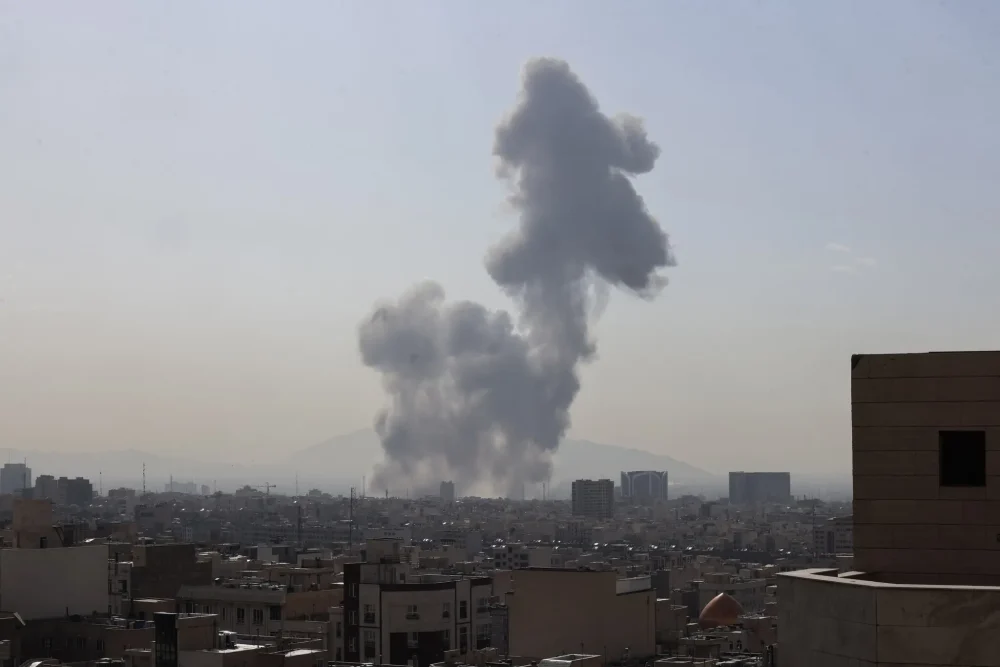
Explosions were widely reported, and thick plumes of smoke were seen rising over Iran’s capital. Telecommunications in Tehran were disrupted as hospitals placed medical teams on high alert. Iran’s Islamic Revolutionary Guard Corps (IRGC) and defence authorities warned that attacks could continue, issuing directives for residents to seek safety outside major urban areas.
In direct response to the strikes, Iran launched missile and drone attacks toward Israel and U.S. military positions in the region, prompting sirens and civil defence responses in multiple countries and a declaration of national emergency by Israeli authorities.
President Trump, in a public address, called on the Iranian people to rise up against their government and urged Tehran’s leadership to “lay down your arms” or face severe consequences, portraying the campaign as necessary to defend U.S. national security interests.
International reactions have already begun to surface. Russia condemned the U.S. and Israeli assault as an “unprovoked act of armed aggression” and warned that it risks triggering a broader humanitarian and possibly radiological catastrophe across the region. Moscow has expressed support for diplomacy and offered to mediate peace efforts.
The strikes follow unresolved diplomatic efforts between Washington and Tehran aimed at curbing Iran’s nuclear ambitions, with negotiations in Geneva reportedly ending without agreement just days before the military offensive. Analysts say the region now faces heightened risks of wider conflict involving multiple nations and deepening instability.
At this stage, casualty figures and the long-term strategic impact of the strikes remain uncertain as world leaders call for restraint and for diplomatic channels to be prioritised in efforts to de-escalate the rapidly unfolding crisis.