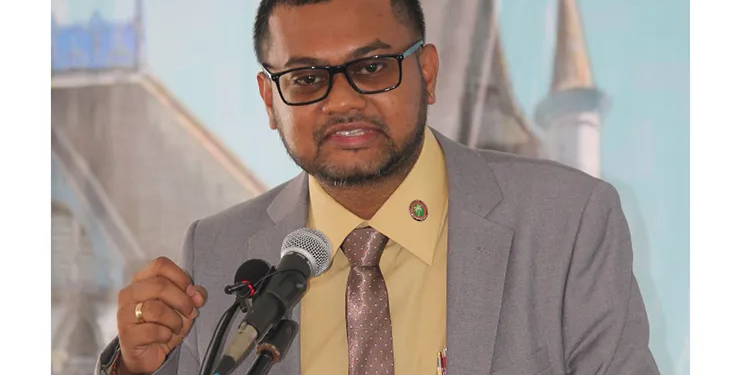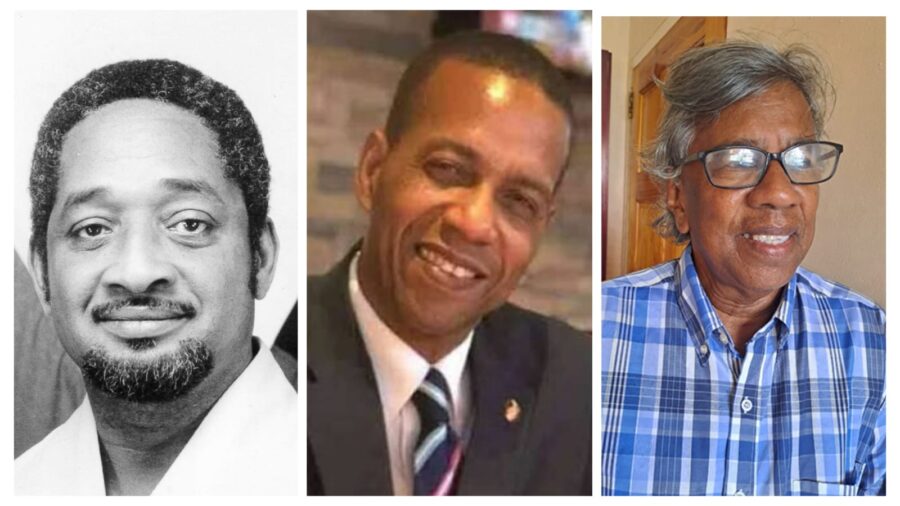
‘Straight-Up’ host and social activist Mark Benschop has strongly defended the legacy of late President Forbes Burnham and the People’s National Congress (PNC), rejecting claims that Guyana achieved little since independence in 1966.
Benschop emphasised that the PNC era—1964–1985 led by Burnham and 1985–1992 led by President Desmond Hoyte—delivered tangible progress in several areas, including agriculture, education, and infrastructure.
“Rice farmers never enjoyed the benefits they had under the PNC during Burnham’s presidency,” he said. “They had productive years that we have not seen since, even under decades of obstruction from opposing parties. Places like Black Bush Polder and Canal No I and II saw prosperity, respect for farmers, and fully functional irrigation systems that supported the country as the ‘Breadbasket of the Caribbean.’”
He highlighted the PNC’s contributions to education and infrastructure. “During that time, people had access to food, free education from nursery through university, and opportunities that shaped thousands into lawyers, engineers, and professionals. The infrastructure built under Burnham—including roads, bridges, and multilateral schools—remains a testament to that government’s commitment to development and no child being left behind.”
Benschop also criticised subsequent governments, particularly the People’s Progressive Party (PPP), for what he described as mismanagement and corruption. “The PPP took away free university education, destroyed infrastructure, and created policies of hopelessness,” he said. The party introduced fee-paying at the University of Guyana in 1994, and after three decades of sustained protest, it was forced to restore free education in 2025—reinstating a constitutional right that the Burnham government had guaranteed to all.
Benschop, further noted, that “respect for law enforcement eroded, and opportunities for young people were stifled under the PPP regime. Those who claim the PNC did nothing need to go back to school and study history properly.”
On his show last evening, Benschop addressed commentary by Freddie Kissoon, former University of Guyana (UG) lecturer and current columnist for the Guyana Chronicle, who claimed that Burnham deliberately set 23 February—the date Guyana became a republic—to coincide with his birthday on 20 February.
- Burnham was born on 20 February 1923.
- Guyana became a Republic on 23 February 1970.
- The Berbice Slave Rebellion began on 23 February 1763 and endured until the close of 1764. The date of the Republic pays homage to this historic struggle.
Blasting Kissoon, Benschop said, “Kissoon has to sing for his supper, and now that he is over at the Guyana Chronicle, he has to do his master’s bidding—the wretched PPP government that controls the state-owned paper. Kissoon should be ashamed to peddle this lie because he is suggesting Burnham had power to see into the future and set Republic Day to align with the 1763 Berbice Slave Rebellion, all to coincide with his own birthday.”
Digging deeper, Benschop added, “if this is the level of reasoning associated with someone who taught political science at the University of Guyana, it is no wonder the politics in Guyana is so screwed up—students learned nothing sensible from this so-called political scientist.”
He further criticised what he described as ongoing favouritism and corruption under successive PPP governments. “What is being offered to the people [by the PPP regime] is not even a glimmer of hope but rather policies of hopelessness, discrimination, and enrichment of ministers’ families and friends,” he said.
Benschop concluded with a call for historical awareness and accountable governance. “Guyana’s progress did not begin yesterday, and it was not the work of opportunists or corrupt elites. Guyanese need to be reminded it was the PNC government that laid the foundations for education, agriculture, and infrastructure that continue to benefit the nation.”
He added, “those who rewrite history or peddle falsehoods—like suggesting Burnham manipulated Republic Day for personal reasons—undermine the truth and mislead the public. Guyana deserves leadership that builds on proven achievements, prioritises the people over cronies, and restores hope for a future where every citizen can thrive.”