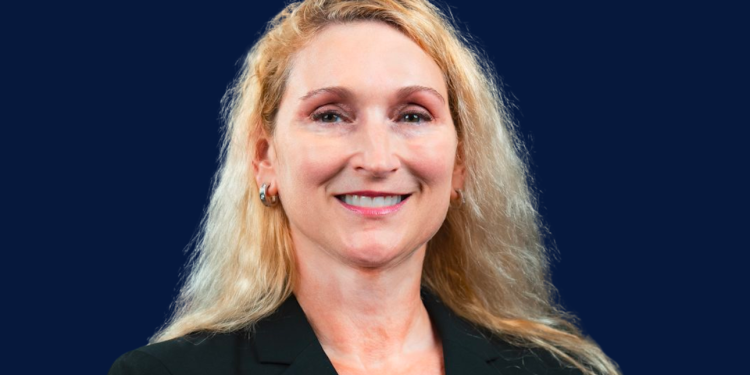
By Dr. Abiola Inniss Ph.D. LLM
In 1493, European powers utilized the legal fiction of terra nullius—nobody’s land—to claim sovereignty over the inhabited territories of the Caribbean. Five centuries later, a similar fiction is being constructed in the digital sphere. The “training data” that fuels the multi-billion-dollar generative AI economy is treated as data nullius: information belonging to no one, available for the taking.
But this data is not neutral. It is the digitized sum of our human expression, our history, and our syncretic culture. And once again, the Caribbean is being positioned as a site of extraction.
The engine driving this modern extraction is the United States doctrine of “Fair Use.” While designed to balance American copyright interests, this law has metastasized into a tool of digital colonialism. Major AI laboratories in Silicon Valley scrape the open web—ingesting Caribbean news archives, literature, music, and academic repositories—claiming that this consumption is “transformative” and therefore free.
This legal framework creates an “Extraction Paradox.” The very laws designed to promote innovation in the Global North effectively strip the Global South of its proprietary rights, reducing our complex cultural heritage to mere statistical weight. We are witnessing the functionalization of culture: a novel by Earl Lovelace or a poem by Louise Bennett-Coverley is no longer treated as art to be read, but as a dataset of syntactic probabilities to be mined.
For the Caribbean creator, this is disastrous. Our work is consumed not for its aesthetic value, which we could license, but for its “token” value, which is taken for free. The AI model “knows” our culture, but our culture has no claim on the model. This mirrors the historical extraction of bauxite or sugar: the raw material leaves the region, is refined elsewhere, and the value-added product is sold back to us, with no residual wealth remaining in the territory of origin.
The cultural damage is as severe as the economic loss. Caribbean creativity is often communal—think of the shared stewardship of Mas or the evolution of folk songs. U.S. copyright law, obsessed with the “solitary genius,” fails to protect these rhizomatic, intergenerational works. An AI can ingest thousands of images of Trinidad Carnival and generate “Carnival-style” imagery without infringing on any single designer’s copyright. It strips the visual data of its communal context, turning a sovereign expression of identity into a generic algorithmic commodity.
Furthermore, we face the danger of “hallucination.” When AI models trained on Caribbean texts distort historical truths—conflating the Haitian Revolution with the Morant Bay Rebellion, for instance—they commit an act of moral erasure. Because the “black box” of AI is opaque, we have little recourse to correct these distortions. The AI becomes the authoritative voice of Caribbean history for the global internet, displacing our own historians and archivists.
Currently, Caribbean nations are trapped in a “Sovereign Void.” Our own strict “Fair Dealing” laws handcuff local innovators, preventing them from training models on local data, while U.S. companies operate with impunity from servers in California. We are legally geofenced out of the global training set, forced to become importers of AI tools that were trained on our own stolen data.
To avoid becoming a permanent periphery in the 21st-century cognitive economy, the Caribbean must move from passive critique to active defense. We need a Sovereign Data Architecture built on three pillars:
- Legislative Reciprocity: We must update our Text and Data Mining (TDM) laws. Access to Caribbean data should be permitted only for non-commercial research or by entities that maintain a “sovereign nexus”—such as servers located within CARICOM or reciprocal data-sharing agreements.
- Sovereign Data Trusts: We should establish legal entities to steward our public sector data and digitized heritage. Rather than individual artists fighting losing battles against tech giants, a Data Trust would negotiate “bulk licensing” deals. If OpenAI wants to train on the “Caribbean Corpus” to reduce bias, they must pay royalties to the Trust.
- Leveraging Our IP Laws: Unlike the U.S., many Caribbean nations (like Trinidad and Tobago) have laws that grant copyright to the person who makes the “arrangements necessary” for computer-generated works. We can market ourselves as a “jurisdiction of certainty,” attracting ethical AI companies to set up operations here to secure copyright protection they cannot get in the U.S.
The rise of Generative AI is not just a technological shift; it is a geopolitical contest over the ownership of human culture. If we adhere to the status quo, we guarantee a future of digital servitude. But by rejecting the hegemony of “Fair Use” and erecting our own data borders, the Caribbean can ensure its archives remain not just a repository of the past, but the engine of our own autonomous future.
Dr. Abiola Inniss, Ph.D., LLM, is a leading scholar on Caribbean Intellectual Property Law and Policy and the founder of the Caribbean and Americas Intellectual Property Organization (CAAIPO). Her recent research focuses on the “digital sovereignty” of the Global South and the legal frameworks of the CARICOM Single Marke and Economy. She is the author of several seminal texts, including the comprehensive guide series on Caribbean trademark, copyright, and patent registration. Dr. Inniss is a regular presenter at international conferences on law and technology.