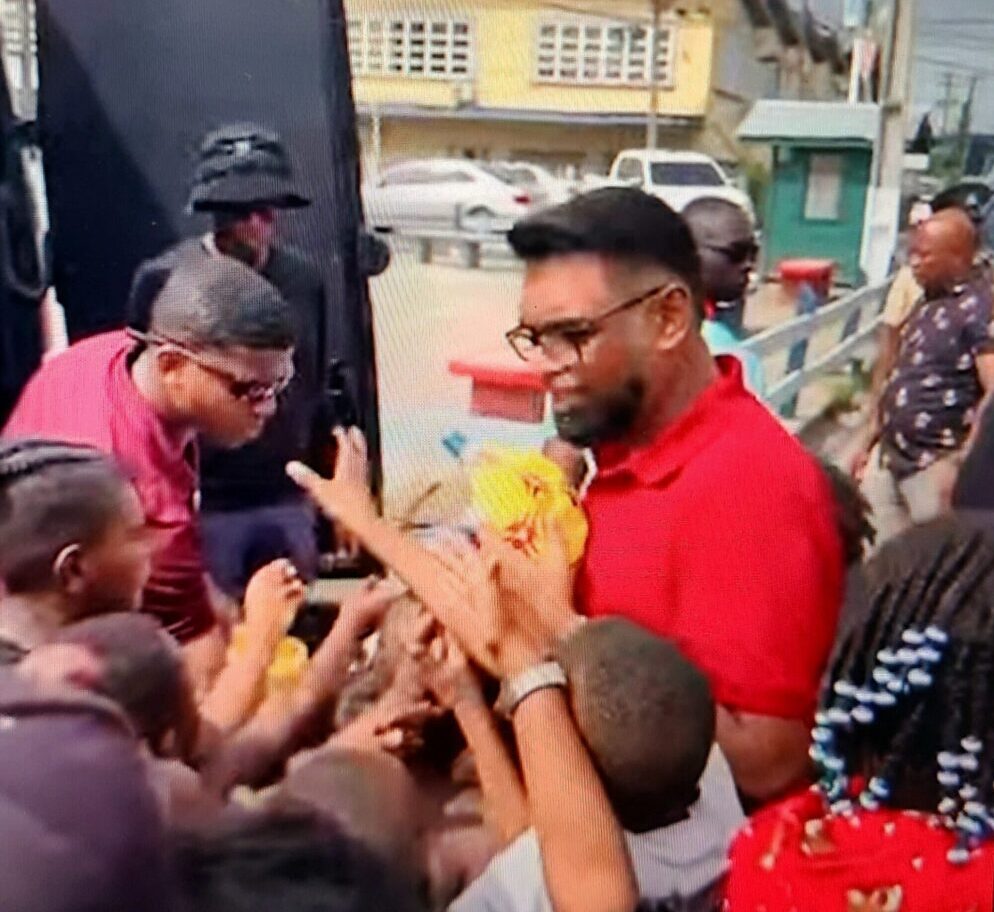
As the festive season unfolds across Guyana, the governing People’s Progressive Party (PPP) has launched a flurry of toy distributions and community feeding programmes, presenting a veneer of goodwill while exposing a deeper failure in governance. In a nation now ranked the fastest growing economy in the world, earning more than US$6 billion in oil revenue since first oil in 2019, hundreds of thousands of citizens continue to live in grinding poverty.
The Inter-American Development Bank’s 2025 report paints a grim picture of Guyana’s deepening crisis: 58 percent of the nation’s roughly 780,000 people—about 452,400 individuals—live in poverty, with 32 percent, or 249,600 people, trapped in abject poverty. Local analysts warn that the true numbers are likely far higher. The report also states that African Guyanese and Indigenous communities bear the brunt of this hardship, a persistent inequity repeatedly flagged at all levels of government yet left unaddressed by PPP policies.
In less than five years, poverty has surged by 10 percentage points, climbing from 48 percent as recorded in the World Bank’s earlier fact sheet, laying bare the failure of successive governments to ensure that Guyana’s wealth benefits all its citizens.
The government’s seasonal displays of charity, often concentrated in underserved African and Indigenous communities, have drawn sharp criticism from civil society, who view them as reactionary and superficial. Analysts note that these visits reinforce racialised myths that African and Indigenous communities are lazy and in need of handouts rather than empowerment. Many of the PPP’s community outreaches appear to be in reaction to similar initiatives by opposition parties We Invest In Nationhood (WIN) and the People’s National Congress Reform (PNCR), suggesting that optics, rather than genuine concern, drive the government’s actions.
Veteran trade unionist and General Secretary of the Guyana Trades Union Congress, Lincoln Lewis, specifically addressed African economic marginalisation, describing it as “economic genocide,” and highlighted the government’s failure to alleviate poverty amid extraordinary national wealth. He stated, “In the face of Guyana’s extraordinary wealth, the ordinary citizen continues to bear the brunt of neglect.”
Over the past six years of oil production, Lewis notes, many ordinary citizens have seen little improvement in their quality of life. He warned that while businesses continue to prosper, ordinary workers struggle, and despite government rhetoric about growth and prosperity, this wealth has not been equitably shared.
Trade union calls to address disparities in the public sector—through collective bargaining, living wages, and protection of pension plans—have largely been ignored. African Guyanese, who dominate public sector employment, are increasingly being pushed into precarious work in the private sector, often as itinerant vendors, without meaningful economic safeguards.
Historically, efforts to redress economic inequalities have faltered. An agreement in May 2001 signed between the late former President and Opposition Leader Desmond Hoyte and then-President Bharrat Jagdeo to address disparities in depressed areas was never implemented. Today, six years into oil production, the PPP continues to prioritise optics over structural change, leaving vast swathes of the population trapped in poverty while the country celebrates its economic success on paper.