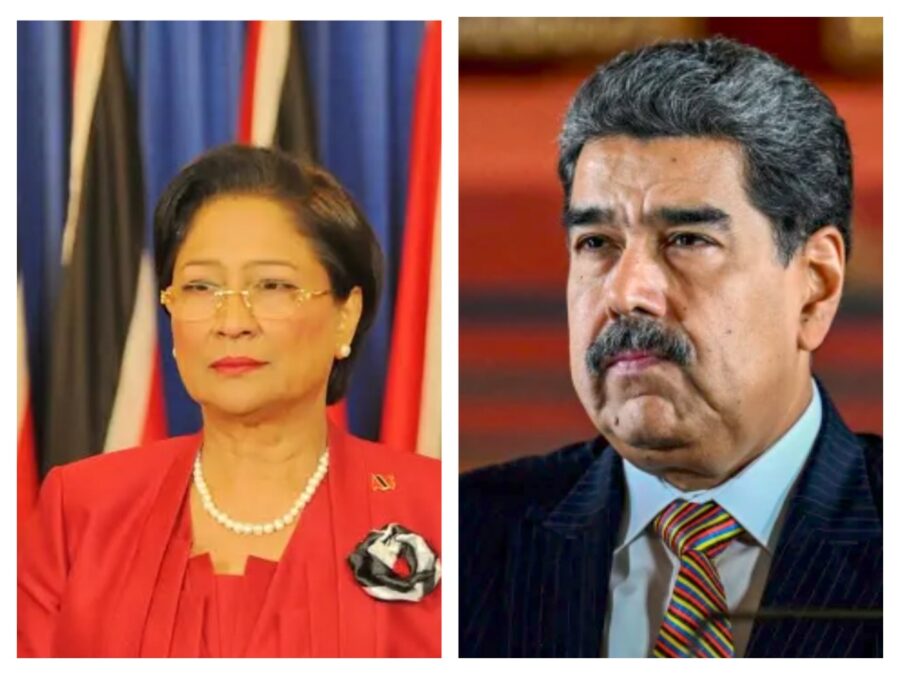
Venezuela has escalated its diplomatic dispute with Trinidad and Tobago, announcing the immediate termination of all bilateral contracts, agreements and negotiations, while accusing Port of Spain of colluding with the United States in the seizure of a Venezuelan oil tanker.
In a statement posted on Instagram on Monday, Venezuelan Vice President Delcy Rodríguez said President Nicolás Maduro ordered the move in response to what she described as an “escalation of hostilities and serious aggressions” following the December 10 interception of the tanker by U.S. authorities. Caracas has repeatedly characterised the seizure as an act of piracy.
Rodríguez claimed Venezuela has “full knowledge” of Trinidad and Tobago’s participation in what she called the “theft” of Venezuelan oil, arguing that the interception constituted “a serious violation of international law and a clear transgression of the principles of free navigation and trade.” She accused Prime Minister Kamla Persad-Bissessar of pursuing a “hostile agenda against Venezuela” since assuming office.
Trinidad and Tobago’s Prime Minister has rejected those allegations, dismissing claims of collusion with Washington as “false propaganda.” Persad-Bissessar said that if Venezuela has concerns about the seizure of the tanker, they should be addressed directly to U.S. President Donald Trump.
“They should direct their complaints to President Trump, as it is the U.S. military that has seized the sanctioned oil tanker,” she said, adding that Trinidad and Tobago continues to maintain peaceful relations with the Venezuelan people.
Persad-Bissessar also told Guardian Media she was unconcerned by threats from the Maduro administration to terminate energy arrangements, stating that Trinidad and Tobago has never depended on Venezuela for its natural gas supplies.
While the two countries have discussed future gas cooperation—most notably the Dragon gas field, estimated at 4.2 trillion cubic feet, as well as other undeveloped cross-border fields—none are producing or supplying gas to Trinidad at present.
Despite Port of Spain’s denials, Rodríguez intensified her criticism, alleging that the Persad-Bissessar administration facilitated the “installation of U.S. military radars” in Trinidad and Tobago to harass Venezuelan vessels. She accused the prime minister of turning the country into a “U.S. aircraft carrier to attack Venezuela, in an unequivocal act of vassalage.”
The Venezuelan government also denounced the Energy Cooperation Framework Agreement between the two countries, with Rodríguez confirming that Caracas would sever energy ties in response to what it described as a “very serious act that aims to blatantly steal Venezuela’s oil.”
“Venezuela demands respect! And it will not allow any colonial entity and its vassals to threaten the sacred sovereignty of the country and its right to development. Venezuela will always prevail,” Rodríguez said.
The dispute centres on the U.S. seizure of the Motor Tanker SKIPPER (ex-ADISA), which American authorities said was intercepted in international waters while falsely flying the Guyana flag. Guyana’s Maritime Administration later confirmed the vessel was not registered there, citing the “proliferation and unacceptable use” of its flag by unregistered ships. U.S. President Donald Trump described the SKIPPER as the largest crude tanker ever seized by American authorities and confirmed that the oil aboard the vessel would be confiscated.