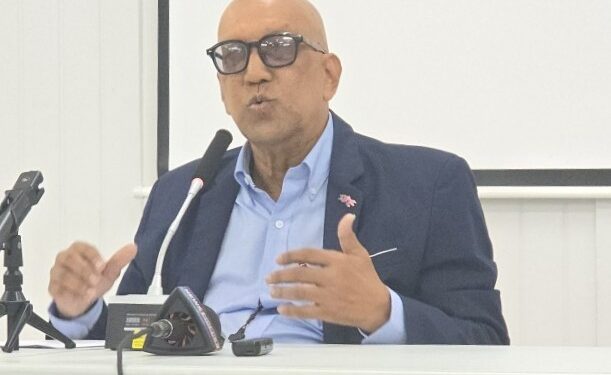
In the ballrooms of Georgetown and on the manicured lawns of corporate launches, a familiar ritual plays out. A local leader, beaming with a particular kind of pride, stands shoulder-to-shoulder with a foreign guest. Cameras flash, hands are shaken, and the image is broadcast as a symbol of arrival, of global connection, of progress. But if we pause and look deeper, past the suits and the smiles, what are we truly witnessing? Is this a meeting of equals, or is it the ghost of colonialism, dressed in new clothes, performing an old play?
This phenomenon, the eager, often performative alignment with foreign, particularly white, faces, is more than a social quirk. It is a symptom of a profound psychological inheritance; the colonized mind. For centuries, the ultimate validation, the seal of legitimacy, and the source of “civilized” knowledge came from across the ocean. The master’s language, the master’s institutions, and the master’s approval were the gates through which one passed to be deemed worthy. Have we, in our newfound era of oil-rich sovereignty, truly dismantled that gate, or have we simply gilded it?
The craving for this external validation reveals a tragic internal contradiction. It whispers a silent, debilitating belief: We, alone, are not enough.” This belief leads a nation on the cusp of unprecedented wealth to play host to a parade of “advisors,” “partners,” and “investors” who are too often modern-day prospectors. They come for the loot, our resources, our opportunities, our future, and they offer in return a photograph, a pittance in CSR, and the fleeting, addictive high of their attention. We mistake their presence for partnership, their interest for endorsement, and in doing so, we auction our agency for a plate at a table they built.
Contrast this with the power of the local. When a Guyanese entrepreneur thrives, their success is not an extractive event. It is a generative cycle. They build their home here, not just a house, but a home, anchoring their life and legacy in our soil. They hire their cousins, their neighbours’ children. They buy from local suppliers, invest in local teams, and spend their profits in local markets. Their wealth circulates like lifeblood, strengthening the community that nurtured them. The money remains, multiplies, and builds resilience. This is not just business; it is nation-building from the inside out.
Yet, too often, we sideline these homegrown builders in our rush to secure the foreign seal of approval. We offer prime contracts to outsiders who import their labour and export their profits, while local innovators struggle for recognition and capital. This is the economic manifestation of the colonized mind: a belief that what is foreign is inherently superior, more efficient, more legitimate. It is a betrayal of our own potential.
What, then, is the path to mental liberation? It begins with a radical act of love. Not a sentimental love, but a fierce, deliberate, and practical love for each other and for this country. It means looking at the person across the street, the entrepreneur across the creek, and the professional across the political divide, and seeing not competitors for foreign scraps, but partners in a shared project called Guyana. It means choosing to validate one another, to do business with one another, to celebrate one another’s successes as our collective triumph.
Our children are watching these rituals. They see who gets the spotlight and who is relegated to the shadows. They internalize which accents command respect and which are mocked. We must educate them not just to be skilled workers, but to be leaders, owners, and visionaries. They must be taught a history that is not only of exploitation, but of immense resilience and creativity. They must feel a pride that is rooted not in which foreigner they can pose with, but in what they, as Guyanese, can build together.
We are a small country, but we stand on the brink of a monumental choice. We can continue the old game, where we are pawns in someone else’s quest for our loot, grateful for low-wage jobs and the patronizing pat on the head. Or, we can awaken to our own power.
The true sign of our independence will not be the number of foreign delegations we host. It will be the day our leaders and influencers find their greatest pride not in a photo with a stranger from afar, but in a handshake with a local visionary whose genius is building a future right here, a future where the only gaze that truly matters is our own, looking upon what we have built, together, with love and self-belief, and finally declaring, It is enough. It is ours. It is good.