…cites pandemic as an opportunity for farming to thrive
Farming is in his blood he says and when the COVID-19 pandemic hit Kwebana during the last quarter of 2020, Paul Morgow was certain his farm on the outskirts of the remote village on the Waini River in the Moruca sub-region would play a breadbasket role during the bleak period.
Kwebana, a sprawling Waini River village , is a thriving commune whose ancestors are the Caribs, one of the major indigenous groups in Guyana.The area is home to many farmers and while there are still many Carib-language speakers at the village many noted that, like most indigenous villages, farming has been entrenched in their upbringing.
In addition to logging, farming sustains the village and notably, many are involved in the cultivation of the indigenous staple cassava, a root from which the villagers produce cassava bread, cassareep sauce and the kadacura sauce, the latter which is used almost daily in every Kwebana household, cooked with fish, wildmeat and sometimes chicken.
In 2020, the COVID-19 pandemic ruined global economies , hurting almost all sectors of the each country’s economy but household agriculture came to the fore during the early days of the global sickness. For those who could not till their kitchen gardens , Guyanese farmers capitalised on the lockdowns enforced nationally and in various locales around the world by increasing production; many roadside trucks appeared across the city and urban roadways. Some farmers, like Morgow, take the produce to the customers and in Morgow’s case, he walks around the village until his quota of greens and sometimes fruits, are sold out.
Lockdown fears
Morgow told the Village Voice during a visit to the remote village early in January 2021, that he would make his trips to the central area of the village to ply his trade on a weekly basis. This has been happening over the past three years. He has been a farmer for more than 10 years, and he noted that he started farming at the Mabaruma sub-region where his parents planted and sell as a means of survival.
In mid-2020, when lockdowns were in force in the Moruca Sub-region, where Kwebana falls geographically, Morgow realised that the cut-off would hurt the village, at least economically.
A 22-mile road links Kwebana to Santa Rosa, the administrative capital of Moruca and when the first cases of COVID-19 were recorded at the latter village in May 2020, lockdowns were enforced in the entire sub-region. This led to many fearing shortages of goods. ”I didn’t drive for weeks,” said Vibert Wilson, one of several Kwebana taxi operators who ply the remote roadway to Santa Rosa on a daily basis. Wilson, who is always seen with his mask, even when he drives alone, said the situation required strict adherence to health practices as mandated by the health authorities.
Strictly organic
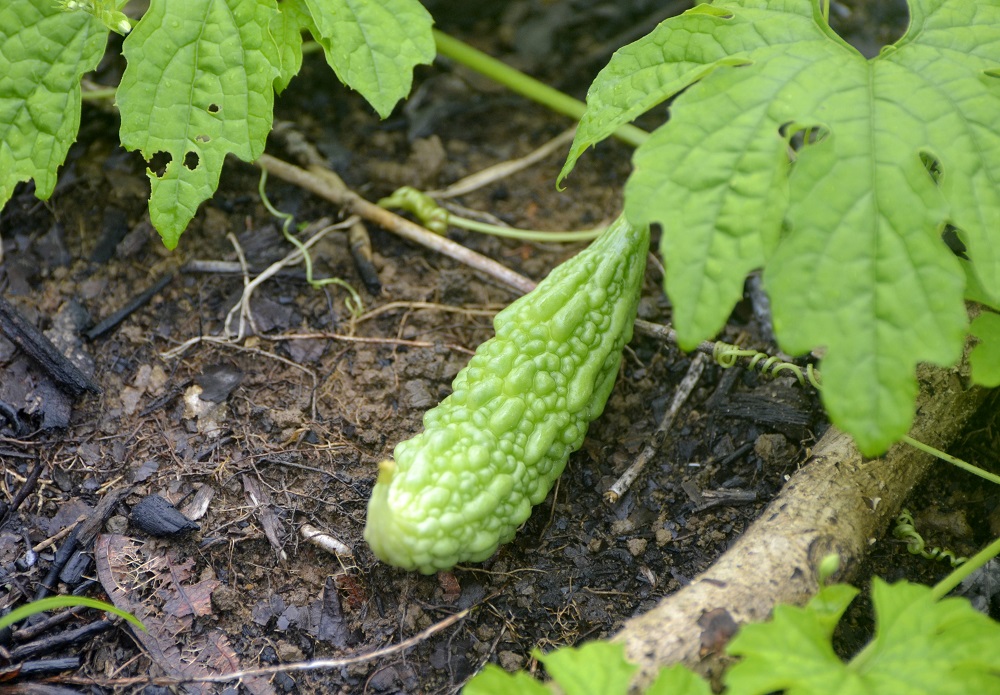
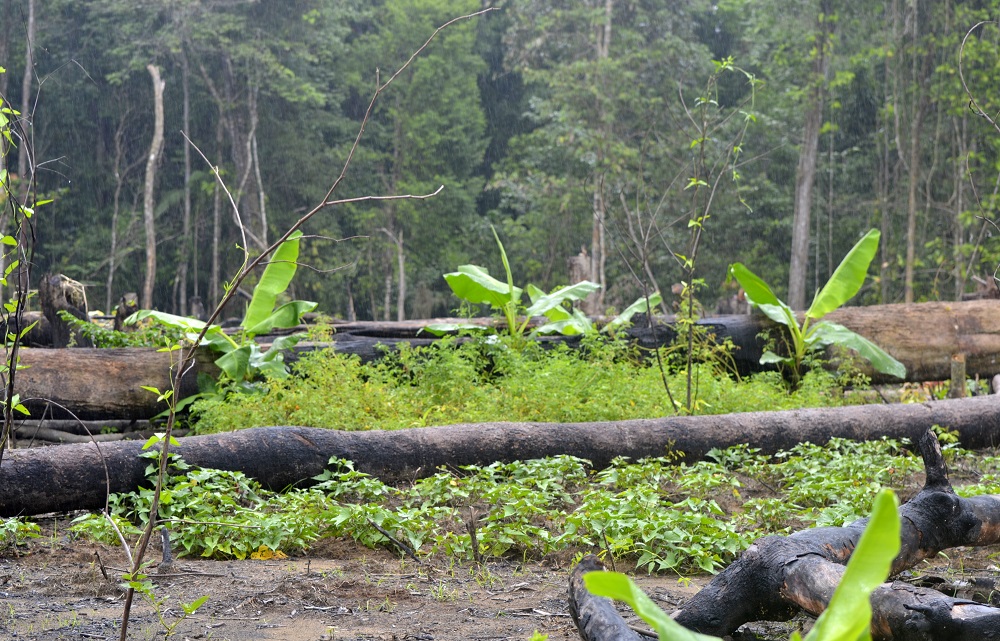
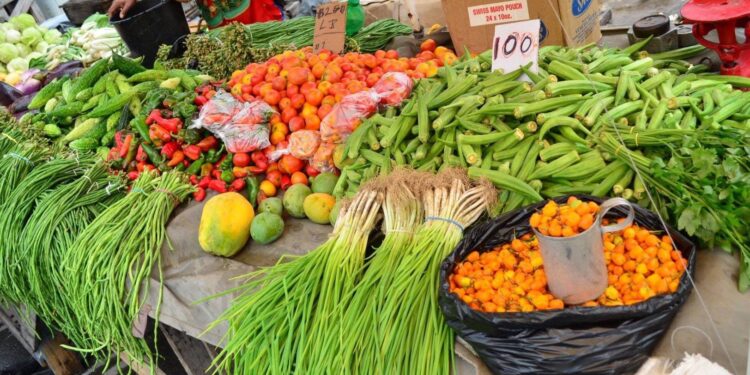
For Morgow, it was his chance to improve his farming methods as well as add more varieties to his crops. His supplies are always sold out in the village as many are always in need of his tomatoes, peppers, cucumbers and callaloo to name a few. He farms on two acres of land which is surrounded by a swamp , almost a mile from the Waini River banks where he lives with his wife and children. He cleared the forest using his axe and cutlass over month-long periods during the early part of 2020 , a job which he said was manually demanding. The landscape slopes into the forest and numerous trees had to be felled and cleared.
Morgow said that he moved to that riverside-section of the village several months before the COVID-19 pandemic hit the village in October 2020. He said he spent weeks trying to familiarise himself with the soil type before he started planting his cash-crops. ”Everything here is organic, strictly organic crops I plant here,” he said, noting that his only issue is fighting the insects which would attack some of his plants in the early weeks of their growth.
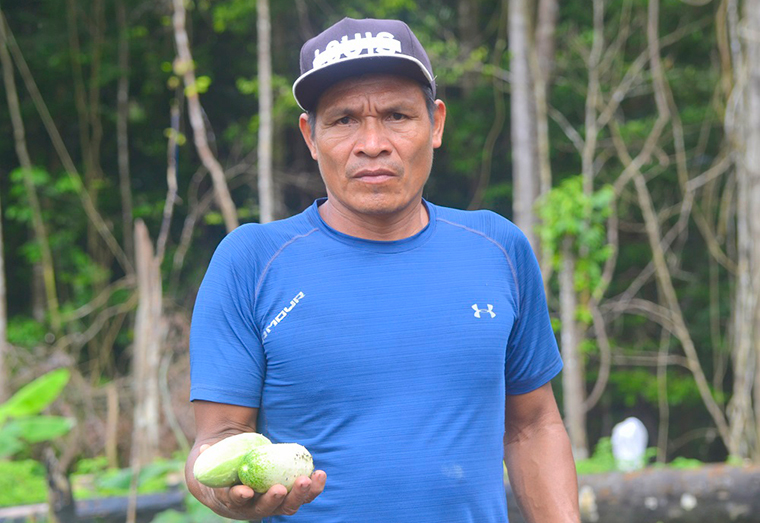
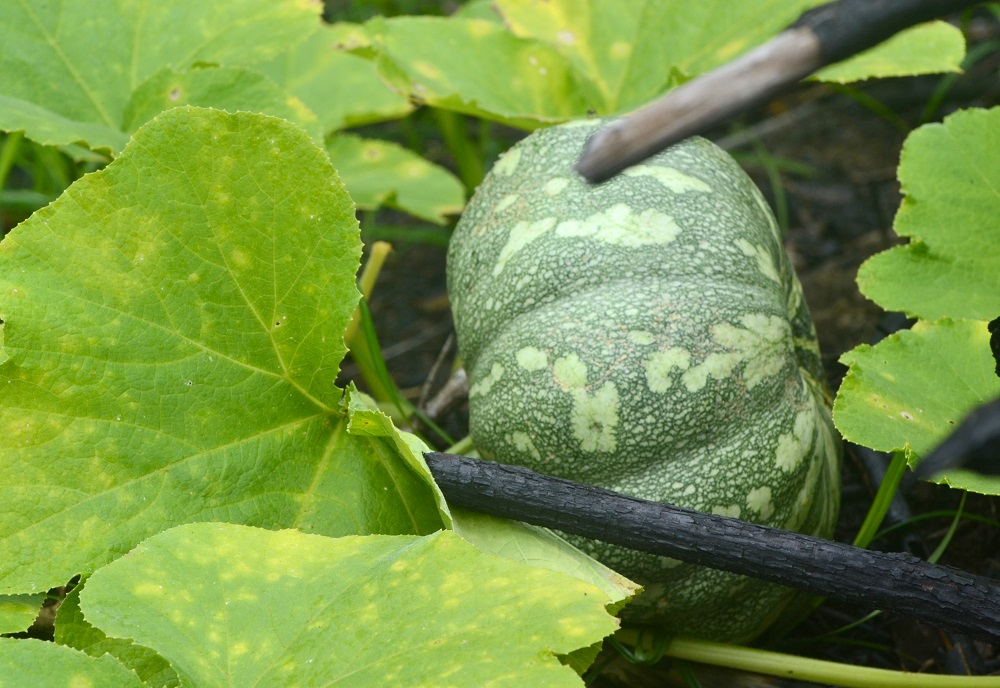
As he walked through his cucumber patches, he said that the villagers are always supportive of his venture, noting that he would package his supplies in clear plastic bags as neatly as possible before he paddles down to the central area of the village to sell in his canoe. The ride is a 20 minute, calm sojourn along the Waini and as Morgow headed up to his farm for a tour, he noted that he would sometimes try a small patch of a specific crop and once it is successful by his standards, he would plant it on a larger scale.
“Right now I have some bora which ain’t catch yet because I have an insect issue here which I am trying to get rid of,”he said as he plucked one of the insects from a leaf during a tour of his farm.
COVID at Kwebana
In October, a wave of COVID-19 cases were recorded at Kwebana, a situation which left the village in tatters. Law enforcement ranks were sent to the area to ensure that residents were following the stay at home orders.
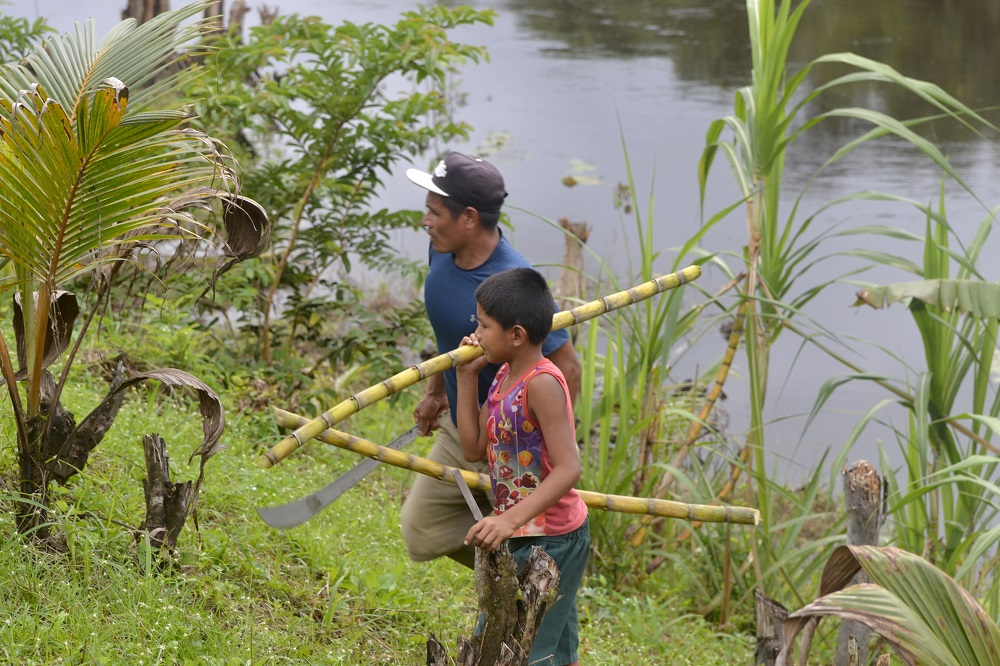
Morgow said that while this may have affected some, all he needed was a bag of rice to feed his family since his farm has all the vegetable supplies he needs to put food on the table. He said there is also a chance that fishes will bite his hook. He said too that when the lockdown at the village took effect last October, he spent more time attending to his crops, noting that he would carefully venture into the village during the day to supply his customers .
“It[COVID-19] was something we never expected but I had to find a way to get the goods to the people who usually buy,” he said, noting that he picks his vegetables early in the mornings before venturing downriver to the villagers with their supplies.
Morgow said that he has plans to set-up a stall in the village. However, he realised that his supplies are always sold-out when he does his daily walking rounds. As such he will carefully consider at which point he should set-up a stall .
He said he will continue to expand his farming methods and varieties , adding that he does his own research and he utlises the knowledge he gained from his parents and forefathers who were career farmers at Mabaruma.
He said that a visit from an extension officer from the National Agricultural Research and Extension Institute (NAREI) would be beneficial to him and other farmers in the area and according to him, while he knows much about farming, it is always good to learn newer skills while tilling the land.