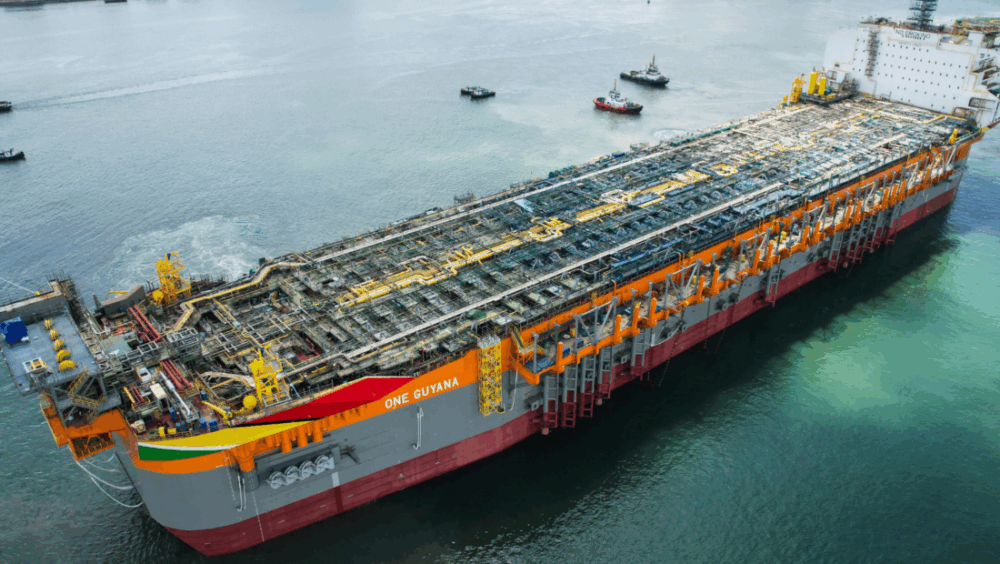
By Mark DaCosta- ExxonMobil Guyana Limited last heralded a remarkable achievement recently, announcing a soaring production milestone of 900,000 barrels of oil per day from the Stabroek Block. This extraordinary output not only reflects the vast potential of our nation’s oil reserves but also raises critical concerns about the equitable distribution of wealth. How can it be that while our oil production reaches new heights, approximately 48 percent of our population continues to live in poverty, with many families struggling to access basic necessities?
The recent surge in production, announced November 12, coincides with the official launch of the Yellowtail project, which has achieved an initial capacity of 250,000 barrels per day. This addition, combined with ongoing production from the Liza Phase 1, Liza Phase 2, and Payara projects, places serious financial assets at the fingertips of our People’s Progressive Party (PPP) government and corporate partners. ExxonMobil and its co-venturers, including Hess Guyana Exploration Limited and CNOOC Petroleum Guyana Limited, have committed upwards of US$60 billion towards the development of various sanctioned projects in the Stabroek Block.
Since Guyana’s first oil in December 2019, the government has earned just over US$6 billion in petroleum revenues (profit oil plus royalties) that have been deposited into the Natural Resource Fund (NRF). In the first half of 2025 alone, Guyana collected US$1.05 billion in profit oil and US$1.70 billion in royalties
With oil prices currently standing around US$80 per barrel, the potential earnings are staggering, equating to over US$72 million per day — an amount that could significantly transform the lives of Guyanese citizens if appropriately allocated. However, the juxtaposition between soaring revenue from oil and the persistent burden of poverty paints a troubling picture. It prompts a vital inquiry: Who exactly is profiting from this oil bonanza, and why aren’t the benefits trickling down to those who need them most?
Alistair Routledge, President of ExxonMobil Guyana, asserts, “We continue to safely deliver industry-leading performance, providing the oil and gas the world still demands.” However, while corporate stakeholders celebrate record revenues and profit margins, the reality for many local families is starkly different. People’s daily experiences tell a contrasting story — children go to bed hungry; families cannot afford adequate healthcare, and educational resources remain insufficient. This disconnect raises significant concerns regarding the effectiveness of government strategies in translating oil wealth into tangible benefits for the average citizen.
As the government’s coffers swell with oil revenues, many in our nation are left to question where this wealth is going; into whose pockets? The production figures being celebrated offer a façade of prosperity, yet the absence of comprehensive social investment leads many to feel further disenfranchised. As government officials and corporate leaders discuss million-dollar investments, community members express frustration over ineffective governance and social services that do not match the nation’s impressive financial metrics.
The current political landscape, dominated by the People’s Progressive Party (PPP), has made several pledges to ensure that oil revenues would be reinvested in social development and infrastructure improvements. Yet these commitments often ring hollow in the faces of ordinary Guyanese citizens, who see little change in their situations. When they hear that their nation is on the brink of becoming a major oil power, they question why they remain trapped in cycles of poverty. The numbers being presented might seem staggering, yet the reality showcases neglect and unfulfilled promises.
When ExxonMobil celebrated its milestone, it also meant millions of dollars in taxes and royalties entering government coffers. While the government has highlighted these revenue streams as indicators of success, they must also be scrutinised: Are these funds being effectively managed and allocated? How much is actually being passed on to improve public services and quality of life for all citizens?
With reports that about 48 percent of our population still lives below the poverty line, we have to ask why these lucrative revenues have not translated into prosperity for the majority. For the people, this is not just a matter of numbers — it is about survival and dignity. When confronted with daily challenges related to food insecurity, healthcare access, and education, it becomes clear: the wealth generated from oil production should not be a privilege limited to a select few but rather a communal asset that uplifts all citizens.
As we witness ExxonMobil and its partners celebrating success in the oil sector, our nation stands at a pivotal juncture. With immense production capabilities and an array of projects on the horizon, there exists a real opportunity for transformation. Yet the persistent presence of poverty, particularly in a nation rich with resources, is a clarion call for accountability. Guyanese people deserve to know how the monumental wealth being generated directly impacts their lives. We must demand transparency in how oil revenues are utilized and ensure that it is used to foster improvement in the standard of living for every citizen, rather than a mere celebration of corporate interests. The satisfaction of a few cannot overshadow the necessity for collective well-being.
Where is the money going?