In the heart of what international observers have dubbed the world’s fastest-growing economy, veteran trade unionist Lincoln Lewis has issued a scathing rebuke of the People’s Progressive Party/Civic (PPP/C) government, accusing it of presiding over an oil boom that has deepened poverty rather than alleviated it.
In a hard-hitting op-ed last week, Lewis — who also serves as General Secretary of the Guyana Trades Union Congress — warned that workers are being “bled dry” under the current administration, forced to endure skyrocketing living costs while the political elite ‘gorge’ on the nation’s wealth.
“The Guyanese dollar now sits at approximately $220 to US$1, and in the markets, we are being charged U.S. rates,” Lewis wrote. “But our wages, salaries, and pensions have not kept pace with the soaring cost of living.”
Guyana’s economy — buoyed by oil production that reached 645,000 barrels per day in 2024 and over 11 billion barrels in proven reserves — posted 62.3% GDP growth in 2022, the highest in the world according to the IMF. In 2024 alone, the country earned US$2.57 billion in oil revenue. Presently the country produces 777,00 barrels per day with the startup of the Yellowtail project in August 2025.
Since first oil in December 2019, Guyana has earned approximately US$7 to 8 billion in oil revenues, including US$2.57 billion in 2024 and over US$1 billion already in 2025. These earnings come from profit oil and royalties deposited into the country’s Natural Resource Fund.
Yet Lewis points to a stark reality — more than half the population still lives in poverty. The World Bank confirms Guyana’s poverty rate stood at approximately 48% as of 2019, the latest year for which official data is available. Local analysts believe the true figure is likely higher, citing weak national data collection systems.
“In the world’s fastest-growing economy, more than half the population lives in poverty,” Lewis stated. “This is proof that our national wealth is being mismanaged. And poverty on this scale, in a resource-rich nation, is a human rights violation.”
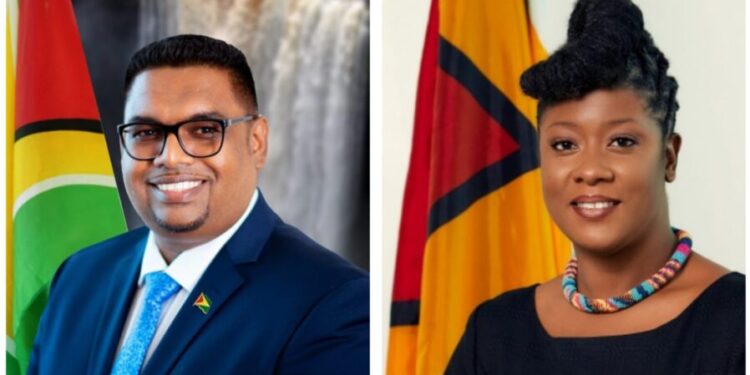
The op-ed also criticises President Irfaan Ali and his administration for ignoring urgent calls for a “living wage,” including recent demands from the Guyana Public Service Union (GPSU). Lewis calls the government’s periodic $100,000 cash grants — roughly US$450 — “an insult,” arguing they are not sustainable or adequate to meet families’ basic needs.
“Their diets are choices. Ours are consequences of poverty,” he wrote. “While they indulge, we tighten. Their fluctuating weight is not due to an inability to place food on the table; ours is.”
Lewis also condemned the visible opulence of the political class, calling it “a national disgrace” that those who serve, protect, and transport government officials struggle to afford food, water, and shelter for their families.
“The politicians are governing without conscience,” he warned. “President Ali is governing in a manner that sows division in a society whose Constitution declares all citizens equal.”
Calling for mass mobilisation, Lewis urged workers across race, class, and political lines to unite in defense of their rights and in pursuit of justice. He framed the economic hardship as not just a policy failure, but “a direct attack on our dignity.”
“If we don’t fight for basic rights now, we will lose them all,” he warned, invoking the words of German pastor and Holocaust survivor Martin Niemöller as a caution against silence and passivity.
While the government parades its infrastructure projects as proof of progress, Lewis argues these are hollow victories when citizens can’t afford food, housing, or clean water. Development, he insists, must first uplift people — not just pave roads or erect buildings.
“Building roads — many already crumbling — is not development,” Lewis said “For people to thrive development must have a human face and this element is being ignored.”