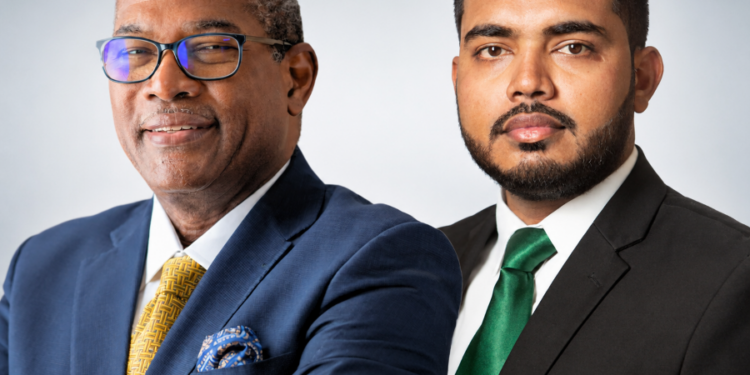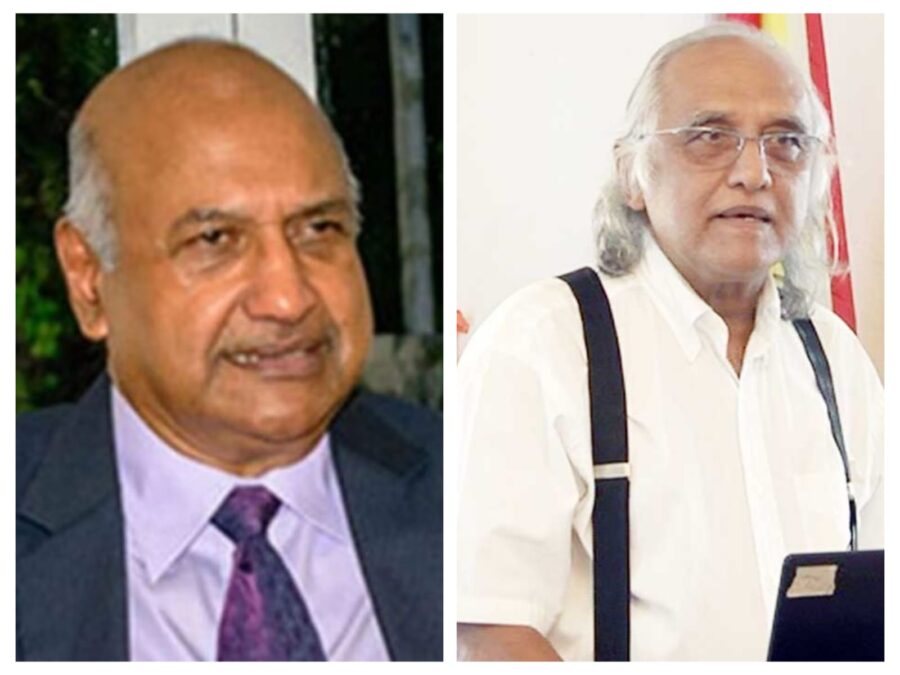
More than a year after the swearing-in of the 21-member Constitutional Reform Commission (CRC), critics are intensifying their calls for accountability as public frustration mounts over the body’s lack of progress. At the centre of the storm is CRC Chairman, retired Chancellor Carl Singh, who has pushed back against scathing public criticism — particularly from attorney and accountant Christopher Ram — while acknowledging the commission’s persistent operational failures.
Ram, in a public letter earlier this month, described the CRC’s performance as “baffling,” especially given what he termed its “big fat budget” and distinguished membership, which includes some of the country’s most senior legal minds and high-ranking political figures. His criticism is anchored in the belief that the CRC has underperformed drastically despite being allocated G$218.9 million in the 2025 national budget.
“More than a year after its establishment, the Commission has little to show beyond reported orientation sessions and internal familiarisation exercises,” Ram wrote, calling the body’s decision to suspend work until after elections “absurd” and a violation of its constitutional obligations. He also accused the CRC of breaching Article 119A of the Constitution, which mandates periodic reporting to the National Assembly.
But Justice Singh has dismissed those claims as based on a fundamental misunderstanding of the Constitution. Speaking to Stabroek News, Singh clarified that Article 119A refers to the Parliamentary Standing Committee for Constitutional Reform, not the CRC. “This article actually deals with a report, but not for me… That obligation is the obligation of the Parliamentary Standing Committee, not the Constitutional Reform Commission,” he explained.
He further noted that references to “Article 19A” are entirely incorrect, as such a provision does not exist. “Article 19 provides that every citizen has the right to own personal property. So I am a little concerned about this erroneous reporting, and it flows from Mr Ram’s erroneous contention,” Singh added.
Still, Singh did not shy away from addressing concerns about the Commission’s sluggish pace. He admitted to “teething problems” including a delay in securing office space and basic furniture, low attendance at meetings, and bureaucratic bottlenecks that have hampered operations. “Attendance by commissioners has been a problem,” Singh said, “and I hope that going forward, I am likely to see an improvement.”
The Commission’s work has also been hindered by its reliance on the Ministry of Legal Affairs to disburse funds. Despite public perception, Singh emphasized that the CRC does not directly control its G$218.9 million budget. “We have no accounts department. We don’t write cheques… we have to make requests to a government agency when we have to get a computer or a chair or a fan or paper,” he said. “So Mr Ram is not really correct when he speaks of the resources and the fat budget.”
Singh also took issue with the suggestion that the CRC had completely ceased operations. He clarified that while meetings were suspended, the Commission continued to publish educational material and remained open. He cited the need for edification, noting that many commissioners lacked legal backgrounds and required grounding in constitutional provisions. “How are you going to reform something that you don’t know very well?” he asked.
The CRC has been widely criticized not just by Ram, but also by the Guyana Human Rights Association (GHRA), which called the body’s “non-performance” grounds for dissolution. The GHRA suggested that members, including the Chair, should resign “as a matter of principle.”
Ram, comparing the current CRC to the 1999 Commission, highlighted how much was accomplished in just six months back then, despite fewer resources. “That body, operating under greater constraints, delivered results,” he noted, adding that today’s Commission had the benefit of that legacy and unfinished recommendations.
Justice Singh indicated he would lobby members to consider reforms that allow the CRC to manage some of its own operational expenses. “Speaking personally, it’s not an acceptable circumstance for me, but I must abide by the position adopted by my members,” he said.
Despite Singh’s rebuttal, the political and public pressure is unlikely to ease. With both major political parties having repeatedly promised constitutional reform in their manifestos, continued stagnation at the CRC threatens not just the credibility of the commission, but the larger project of democratic renewal in Guyana.
Whether the CRC can overcome its inertia, or whether it becomes another failed experiment in governance, remains to be seen. For now, the public waits — and so far, constitutional reform remains more promise than progress.