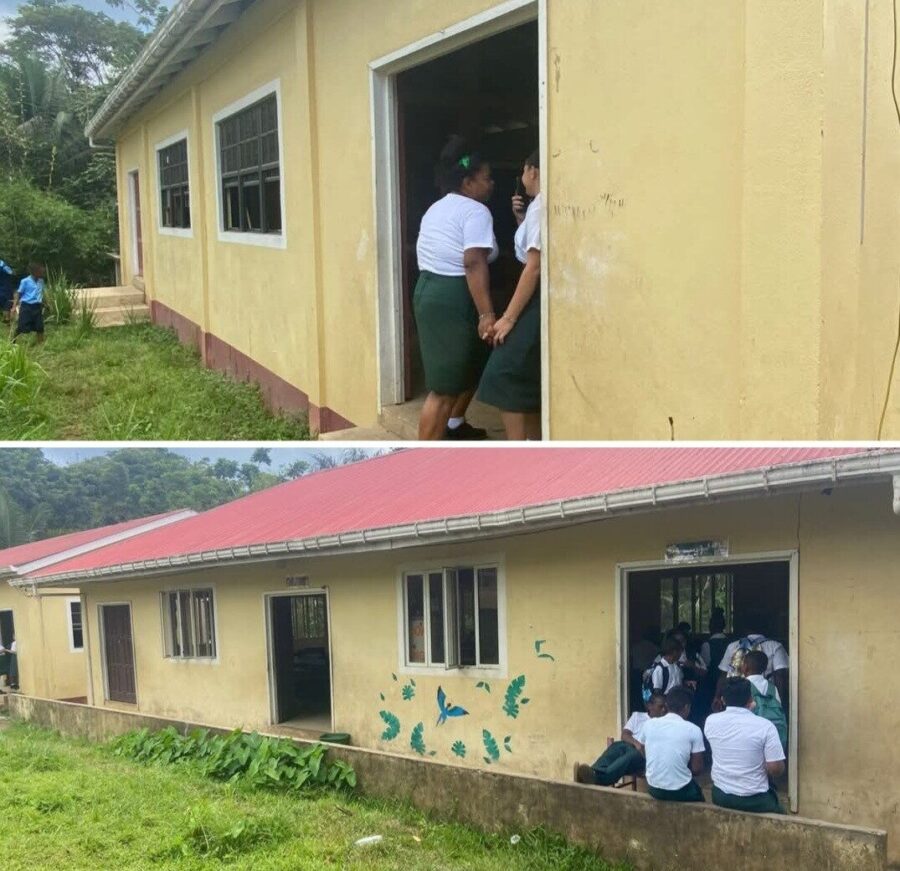
By Mark DaCosta- The stark reality of teacher shortages in Guyana’s educational system is highlighted by the failings at Matthew’s Ridge Secondary School, located in Region 1 (Barima-Waini). Currently, this institution is grappling with an acute shortage of qualified educators, having only two teachers available for its 199 students. This alarming situation raises serious questions about the government’s commitment to providing equitable education across our nation, particularly in remote areas.
The essence of the matter is clear: the lack of teachers at Matthew’s Ridge has resulted in half-day sessions for grades 7 to 9, while grades 10 to 11 are compelled to be in school for the full day. With a student-teacher ratio soaring to 25 to 1, students here are at a distinct disadvantage compared to their peers in coastal schools, where resources and staff are more readily available. As educational quality rapidly deteriorates in Matthew’s Ridge, the broader implications for our nation’s development are grave, threatening to exacerbate educational inequalities and hinder the prospects of indigenous and rural communities.
Azruddin Mohamed, leader of the Opposition and the WIN party, has consistently advocated for the rights of these marginalised groups. His recent statement regarding the educational crisis at Matthew’s Ridge underscores a systemic failing that has persisted unfettered under the current government. Since the 1 September elections, he has remained steadfast in his commitment to bringing these critical issues to light, often using his own resources to support disadvantaged communities. His efforts highlight a stark contrast to the apparent inaction from the ruling PPP government, which seems indifferent to the needs of those living in the hinterlands.
In his powerful statement, Mohamed revealed, “The parents and teachers are complaining in many parts of the country.” By shining a light on the inadequacies of the education system, he implores the Ministry of Education to act swiftly. “We urgently call on the Ministry of Education to ensure additional teachers are sent to Matthew’s Ridge Secondary School to ensure that students there are not left behind,” he urged. Without immediate intervention, the ramifications for the students will be disastrous. Many will fall behind in their academic pursuits, ultimately limiting their opportunities for higher education and employment, perpetuating a cycle of poverty and disenfranchisement.
The disparity in educational resources between urban and rural schools in our country has always been a contentious issue. Students in coastal areas continue to thrive, often receiving superior educational experiences due to better student-teacher ratios and more qualified staff. This contrast was starkly illustrated when comparing the Caribbean Secondary Education Certificate (CSEC) results of students from Matthew’s Ridge to those from coastal institutions where education resources are plentiful. The educational outcomes of these students matter immensely; they will shape the future workforce and leadership of our nation.
Furthermore, the repercussions of this teacher shortage extend beyond the classroom. A poorly educated populace can have dire implications for the socio-economic development of our entire country. When regions like Matthew’s Ridge do not receive the investment they critically need, they are left to flounder, resulting in a generation that is ill-equipped for the challenges of the modern workforce and an economy that thrives on knowledge and innovation. It is a cyclical problem: without intervention, educational weaknesses will lead to broader economic stagnation, affecting all Guyanese.
If not for Mohamed’s relentless advocacy, many might remain oblivious to the dire conditions faced by communities like Matthew’s Ridge. His continued efforts underscore a crucial point: the systemic neglect of indigenous and rural populations must be addressed with urgency. The ramifications of inaction are severe, and without additional teachers and resources, the aspirations of countless students may be irrevocably stifled.
It is imperative that the government acknowledges and acts upon these pressing educational deficiencies. The plea for help from Matthew’s Ridge is not just a call for additional teachers — it is a demand for equity and justice in our educational system. The future of our nation relies on ensuring that every child, regardless of where they live, receives a quality education. As we reflect on these issues, let us hope that the government heeds the call of its opposition and takes meaningful steps to rectify the situation. The well-being of our nation’s children — and the strength of our future — depend on it.