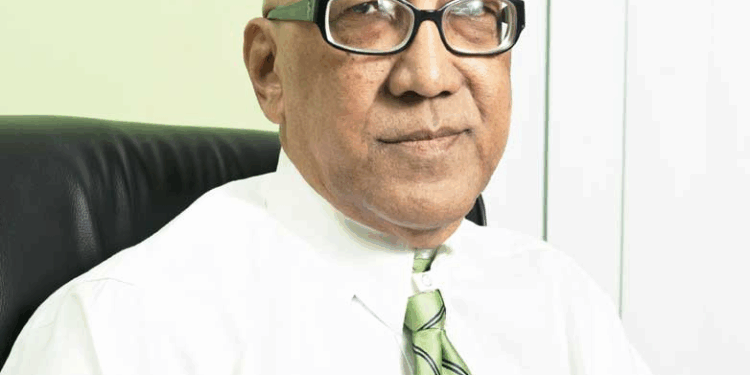
By Timothy Hendricks- In Guyana’s dynamic political landscape, few chapters have proven as pivotal; or as chastening -for the A Partnership for National Unity (APNU) as the arc from its 2015 electoral victory to its devastating collapse in the 2025 electoral cycle. At the center of this narrative stands retired Brigadier David Granger, a figure whose legacy is being reshaped by allies and adversaries alike, reflecting both the promise and the peril of a movement at a critical juncture.
The historical record is clear: David Granger, following in the footsteps of People’s National Congress(PNC) founder-leader Linden Forbes Burnham and Desmond Hoyte, remains the only other leader to guide the Party to electoral triumph in 2015. His victory was not forged through bombast or division but through a rare and deliberate act of bridge-building in a nation often fractured by ethnopolitical divides.
Granger’s leadership was not defined by flamboyance but by principle- a commitment to coalition-building, national unity, and steady governance. His understated statesmanship lent the PNC/APNU brand a different kind of visibility, and a renewed sense of legitimacy and gravitas, resonating with undecided voters and briefly restoring the coalition’s stature on the national and international stage.
Yet, as history so often reminds us, political loyalty is fleeting, and gratitude is a scarce commodity.
The 2020 election, one of Guyana’s most contentious and divisive in recent memory, marked a turning point. When Granger faltered, the coalition’s fragile unity unraveled, and the accolades that once greeted his coalition-building efforts gave way to sharp recriminations. Party stalwarts who had praised his vision turned into vocal detractors, demanding his resignation with little regard for the structural weaknesses or internal betrayals that undermined the alliance. The clamour for accountability was deafening; yet curiously selective.
Today, under Aubrey Norton’s leadership, the APNU faces a crisis far graver than the setbacks of 2020. The recent local and regional elections were not merely a defeat but a rout, exposing a party plagued by disorganisation, financial strain, and a failure to mobilise even the most basic electoral operations.
Reports of unpaid polling agents and a lack of coherent strategy paint a damning picture; not of a faltering base, but of a leadership in disarray. Where are the voices that once condemned Granger with such fervour? Where is the outcry for accountability now, as the party staggers under the weight of its worst electoral performance in modern history?
The silence is telling. While the current leadership offers little beyond denial and deflection, the party’s grassroots are left to grapple with a growing sense of disillusionment. As defections mount, some to the PPP/C, others to nascent movements like We Invest in Nationhood (WIN), the rank-and-file are urged to remain steadfast. But loyalty to what? A leadership bereft of vision? A movement that offers neither strategy nor hope?
This is not a passing storm but a reckoning; one that demands introspection, not excuses. If the APNU, and the PNC at its core, is to reclaim its relevance, it must confront uncomfortable truths. Leadership is not an entitlement but a responsibility, and when that responsibility is not met, stepping aside is not a defeat but an act of duty.
David Granger was not without flaws. His tenure had its missteps. Yet, he delivered a government, restored international credibility, and, for a time, kindled hope. His shortcomings were deemed unforgivable, yet the current leadership’s failures are met with inexplicable leniency. This contradiction lays bare the state of the party today.
The APNU stands at a crossroads. To avoid slipping into irrelevance, it must act decisively. The lessons of Granger’s rise and fall are clear: unity and vision can elevate a movement, but complacency and denial can just as swiftly dismantle it. If those at the helm cannot steer the party toward renewal, they risk not only losing elections but eroding a movement that has shaped Guyana’s political history.
History, unlike politics, does not forget. The choices made now will define whether the APNU is remembered as a movement that rose to meet its challenges – or one that faltered when it mattered most.

![Haitians deported from the US land in Cap-Haitien, Haiti, on August 27 [Ketlain Difficile/AP Photo]](https://villagevoicenews.com/wp-content/uploads/2026/09/haiti-750x375.webp)