(WiredJA)- The numbers don’t lie, and in Guyana’s increasingly heated political landscape, they tell a story of establishment panic disguised as presidential diligence. As thousands of Guyanese flood the We Invest In Nationahood (WIN) party meetings from Georgetown to Mahdia, President Irfaan Ali has taken to the skies with unprecedented frequency—a aerial campaign blitz that has observers questioning where governance ends and electioneering begins.
The statistical evidence is striking: Ali used state aircraft 43 times between July and August, a dramatic spike from the mere four trips he took across March, April, and June combined. This isn’t gradual campaign intensification—it’s reactive scrambling, and the catalyst is unmistakable: Azruddin Mohamed’s meteoric rise as a genuine political force.
Breaking the Ethnic Electoral Mathematics
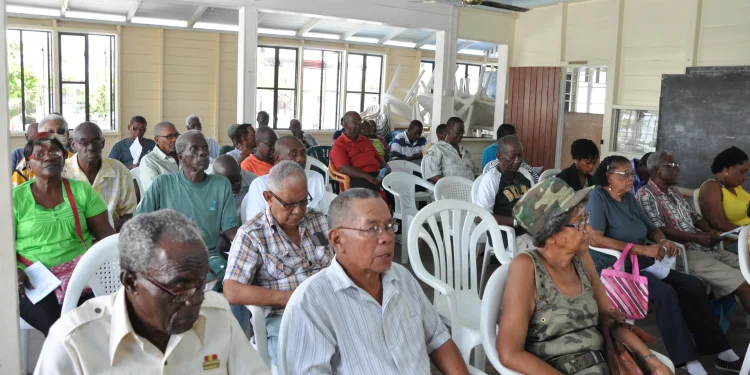
What has truly rattled the established order is Mohammed’s ability to shatter Guyana’s traditional ethnic voting patterns. In Linden, historically a People’s National Congress (PNC) stronghold, WIN meetings draw crowds that listen with the kind of focused attention typically reserved for community elders sharing wisdom. In Skeldon, where East Indian voters have long been considered People’s Progressive Progressive (PPP) loyalists, Mohammed’s message of authentic leadership resonates across ancestral political allegiances.
Perhaps most significantly, Mohamed has made substantial inroads into Afro-Guyanese communities where the PNC has maintained dominance for decades. This cross-ethnic appeal represents more than mere political diversification—it signals a fundamental shift in how Guyanese voters are evaluating leadership beyond the tired calculus of race and inherited party loyalty.
The Amerindian vote, often treated as a peripheral consideration by Georgetown-centric campaigns, has responded enthusiastically to Mohammed’s grassroots approach. His willingness to travel by boat when flights were denied, to sleep in village hammocks, and to engage communities on their own terms has created genuine connections that transcend the transactional relationships that have characterized much of Guyana’s interior politics.
State Resources, Party Gains
The Carter Center’s observation about the “blurring the line between state and party” cuts to the heart of a troubling trend. When a sitting president’s travel patterns so obviously correlate with electoral challenges, questions arise about the appropriate use of public resources. Ali’s 29 flights in August alone—compared to just two in January and zero in February—suggest a campaign strategy funded by taxpayers rather than party coffers.
“The use of state resources for party campaigning runs contrary to Guyana’s international obligations with respect to campaign finance,” the Carter Center noted, highlighting concerns that extend beyond mere political propriety to fundamental democratic governance standards.
This reactive intensification reveals an administration caught off-guard by Mohamed’s authentic appeal. Where the PPP once relied on predictable voter patterns and established political machinery, they now find themselves competing against a candidate whose very presence at remote locations becomes a powerful counter-narrative to their governance style.
The Authenticity Dividend
The contrast in crowd behaviour tells its own story. While traditional political rallies often feature the familiar rhythms of partisan cheerleading and ritual applause, WIN gatherings are marked by something rarer in Caribbean politics: sustained attention. Audiences listen intently, ask substantive questions, and engage with policy discussions rather than merely responding to rhetorical flourishes.
This engagement reflects more than novelty appeal—it suggests genuine hunger for different kinds of political leadership. Mohamed’s educational background, rather than being a liability in a credential-obsessed political culture, has become an asset that speaks to voters tired of being talked down to by their representatives.
The establishment’s response has been telling. Rather than engaging with the substantive questions Mohamed’s candidacy raises about governance, development, and democratic representation, both the PPP and PNC have been forced into defensive positioning, scrambling to match his grassroots energy with intensified traditional campaigning.
Democratic Implications Beyond 2025
Regardless of electoral outcomes, Mohamed’s impact on Guyanese politics is already permanent. He has demonstrated that authentic community engagement can challenge even the most entrenched political establishments, that voters are willing to look beyond ethnic arithmetic when presented with genuine alternatives, and that Guyana’s democratic culture is healthier than many observers assumed.
The establishment’s scramble—epitomised by Ali’s aerial campaign blitz—reveals both the vitality of Guyana’s democratic competition and concerning questions about the appropriate use of state resources during electoral periods.
As election day approaches, the Mohamed phenomenon has already achieved something remarkable: forcing an entire political class to justify their relevance rather than simply assuming it. In a democracy, that alone represents a significant victory for the people of Guyana.