Jamaica faces a democratic crisis hiding in plain sight: a nation of citizens governed by laws they have never been taught to understand.
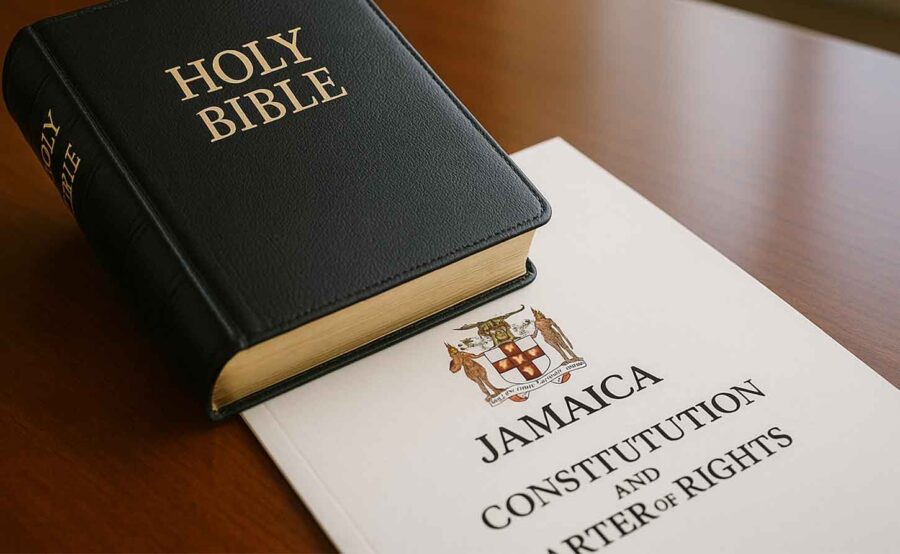
While approximately 90% of Jamaicans have read the Bible—drawing spiritual and moral guidance from its pages—a staggering 90% have never even seen Jamaica’s Constitution. This paradox reveals a fundamental flaw in our educational system and explains much about our declining democratic engagement.
Jamaica’s voter turnout has plummeted to historic lows, dropping from 60.4% in 2007 to just 37.36% in 2020—the lowest since independence, excluding the boycotted 1983 election. The solution is neither complex nor costly, but it requires decisive action: Jamaica’s Constitution must be taught in schools, beginning at the primary level.
The Constitutional Knowledge Gap
Jamaica’s Constitution, enhanced by the Charter of Fundamental Rights and Freedoms in 2011, guarantees citizens essential rights including life, liberty, freedom of expression, education, a healthy environment, and the fundamental right to vote. Yet most Jamaicans remain unaware of these protections that govern their daily lives from birth to death.
This ignorance is not accidental—it is structural. Jamaica’s current curriculum emphasizes religious studies, mathematics, science, and arts, but provides minimal constitutional education. Students learn about distant lands and abstract theories while remaining strangers to the legal framework that shapes their own society.
Citizens have the right to challenge public bodies when their constitutional rights are infringed, but how can they exercise rights they don’t know exist? This knowledge deficit transforms citizenship into a passive experience rather than an active engagement with democratic governance.
The Democratic Participation Crisis
The correlation between constitutional illiteracy and political disengagement is undeniable. Research shows that voters aged 18-25 make up only 11% of those who cast ballots, while voters over 55 account for 30%. Young Jamaicans are not inherently apathetic—they are uninformed about their power and responsibilities within the democratic framework.
Historical analysis reveals that when Jamaica lowered the voting age to 18 in the 1970s, young voters became a decisive force, but this engagement has steadily declined as constitutional education has remained absent from schools. The pattern is clear: without understanding their rights and civic responsibilities, young citizens withdraw from democratic participation.
A Curriculum Built for Democracy
Since independence, Jamaica has worked to “Caribbeanize” its curriculum, moving away from British-modeled education to content that reflects Jamaican experience and development needs. Constitutional education represents the logical culmination of this evolution—teaching students about the legal foundation of their own society.
The integration need not burden an already packed curriculum. Constitutional principles can be woven into existing subjects:
- Social Studies: Exploring how constitutional rights apply to daily life
- Mathematics: Analyzing voting patterns and demographic representation
- Language Arts: Reading and interpreting constitutional text
- Science: Understanding environmental rights guaranteed in the Constitution
Primary school introduction is crucial. Just as children learn to read and write as fundamental skills, they must learn their rights and responsibilities as foundational citizenship tools. Age-appropriate constitutional education would teach young Jamaicans that they are not subjects to be governed, but citizens with agency in their democracy.
The Policy Imperative
Three immediate steps can transform Jamaica’s democratic engagement:
First, mandate constitutional education in the National Standards Curriculum. Jamaica is already implementing a new curriculum for grades one through nine, emphasizing “21st century skills” and learner-centric teaching. Constitutional literacy is the ultimate 21st-century skill for democratic citizens.
Second, develop age-appropriate constitutional materials. Jamaica has successfully created culturally relevant textbooks that are “reprinted every year and presented free of cost to each child in primary grades”. The same approach should apply to constitutional education materials.
Third, train teachers in constitutional instruction. Educators need professional development to teach constitutional principles without partisan bias, focusing on rights, responsibilities, and democratic processes rather than political positions.
Beyond the Classroom
Constitutional education creates informed citizens who understand their power. Jamaica’s Constitution guarantees the right to vote and to be registered to vote, but guarantees mean nothing without awareness. When citizens understand their constitutional rights to information, assembly, and expression, they become active participants rather than passive observers.
The benefits extend beyond voting. Constitutionally literate citizens can better navigate interactions with government agencies, understand their workplace rights, and participate meaningfully in community decisions. They become the engaged citizenry that democracy requires.
The Path Forward
Jamaica stands at a crossroads. We can continue accepting declining democratic participation as inevitable, or we can address its root cause: constitutional illiteracy. The choice is ours, and the time is now.
The Ministry of Education must act decisively to integrate constitutional education into Jamaica’s curriculum. Parliament must appropriate resources for teacher training and materials development. Communities must support this democratic investment in our children’s future.
Jamaica’s Constitution is not an abstract document gathering dust in legal libraries—it is the living foundation of our democracy. When every Jamaican child learns their constitutional rights alongside their multiplication tables, we will have citizens prepared to build the just, peaceful, and prosperous society our founders envisioned.
The question is not whether we can afford to teach constitutional literacy—it is whether we can afford not to.
The author argues that constitutional education is fundamental to democratic citizenship and must be integrated into Jamaica’s primary school curriculum to address declining voter participation and civic engagement. WiredJA