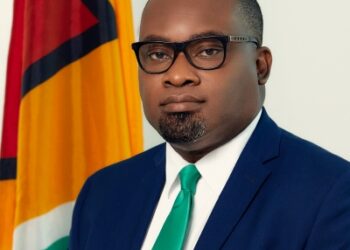
Political analyst and former minister in the People’s Progressive Party (PPP) government, Dr. Henry Jeffrey, has unleashed a scathing critique of the government, accusing it of deliberately impoverishing African Guyanese communities and weaponising state power to maintain its grip on political dominance.
In his last Sunday’s article titled “African Pauperisation, Ethnic Audit and Inclusivity,” Jeffrey issues a bold challenge to all democratic-minded parties. He is calling on the parties to urgently address the historic injustices faced by African public servants through financial reparations, launch a comprehensive national ethnic disparity audit, and push for far-reaching constitutional reforms that foster true political inclusivity.
Jeffrey lays bare the PPP’s 25-year campaign to suffocate African Guyanese economically, especially those in the public sector. As the party’s ethnic majority waned, he asserts, it “deliberately strangled every area of social life where Africans held sway to bend them to its political will.”
He condemns the “amoral and illegal refusal” of the PPP to honour proper collective bargaining, which has devastated the standard of living for mainly African public servants.
The resources stolen from these workers must be accounted for and repaid, Jeffrey insists. The cost is irrelevant—fair compensation is the only just response to this inhumanity.
Tracing this injustice back to the Economic Recovery Programme of the late 20th century, Jeffrey recalls how public servant wages plummeted under policies that stripped away their economic dignity.
He says though late President Cheddi Jagan tried to restore fairness by linking wages to inflation and GDP growth, his successors abandoned these safeguards after his passing.
Jeffrey charges that the PPP’s return to power in 2020 intensified this pauperisation. Between 2020 and 2023, public sector wages shrank drastically from 6.3% to 3.1% of GDP, while capital expenditure—largely benefiting PPP-aligned private interests—soared from 6.7% to 13.4%. The 2024 budget only deepened these inequalities, with capital spending skyrocketing 905% compared to a 109% rise in recurrent expenses.
Highlighting the PPP’s callousness, Jeffrey points to the meager 8% wage increase offered to public servants in 2022, despite IMF projections of 9.4% inflation. It was only after intense external pressure that health workers saw increases between 13% and 74%.
“The regime was forced to relent,” he notes, “even receiving public praise from the U.S. ambassador.” Yet teachers, vital to Guyana’s future, remain critically underpaid. Despite a Gross National Income per capita near US$30,000, the average teacher earns just US$6,500 annually, far below counterparts in countries with similar wealth.
This glaring neglect shows just how far behind Guyana is in valuing its educators amid one of the fastest-growing economies in the hemisphere, Jeffrey declares.
At the heart of Jeffrey’s vision is the Ethnic Disparity Audit and Rectification Initiative, championed by the International Decade for People of African Descent Assembly–Guyana (IDPADA-G). This urgent audit, to be overseen by the Ethnic Relations Commission, would collect and publish detailed data on disparities in employment, health, land distribution, law enforcement, and education. Persistent ethnic discrimination fuels mistrust and division, Jeffrey warns. “Without reliable data, Guyana cannot confront these inequities or track progress.”
Jeffrey concludes that the root of Guyana’s woes lies in the outdated, permissive post-colonial political system, inherited from British rule, which enables unchecked authoritarianism. The very first priority of any new government must be bold constitutional reforms to build an inclusive political framework, he urges. While skeptical that the PPP will lead this change, Jeffrey insists it is essential to prevent Guyana from descending further into political tyranny.