The Emancipation of Africans from enslavement was the most important episode in the evolution of the nation. Emancipation was not a short, swift, sudden event that culminated on 1st August 1838. It was, rather, a slow, sustained struggle of the enslaved Africans that extended over a period of two centuries of resistance, revolt, running away and marronage in their quest for freedom.
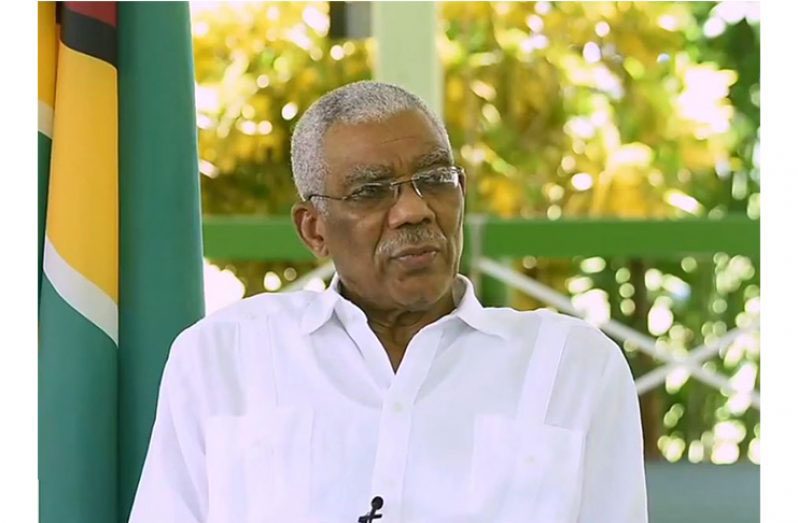
Former President David Granger, speaking on the programme – The Public Interest – explained that the Trans-Atlantic Trade in Captive Africans and the system of enslavement were crimes against humanity that prevailed for nearly 600 years. They are the most uncivilized legacy of western civilization and the descendants of the victims of the ‘Trade’ and the ‘System’ still suffer racism and racial discrimination evident in the deprivation of human rights and human safety.
The Former President recounted that African resistance to captivity and slavery and their enduring zeal to free themselves ignited the Emancipation Movement. The Berbice Revolt, Demerara Maroon War, Demerara Revolt and Essequibo Revolt and several lesser uprisings, however, were all cruelly suppressed. He explained, also, that then as now, Caribbean sugar was relatively expensive and inefficient but enriched a few who prospered in the protected markets under the mercantilist system.
Advocates of the emergent capitalist system that was based largely on commodity manufacture and commerce argued that industrialized countries could become richer by buying cheaper sugar from more efficient producers rather than by protecting privileged West Indian plutocracies. Free labour in new territories which did not require armed force to suppress revolts was more profitable than enslaved labour in West Indian colonies which, as a result, lost their comparative advantage in sugar production.
Mr. Granger said further that public opinion – influenced by the ideas of the Enlightenment and the ideals of Evangelism in the Christian Church in the slave-trading states of Western Europe – had been aroused against slavery. Influential ‘anti-slavery’ societies ceased to tolerate human enslavement as a part of Christian civilisation.
The Emancipation movement occurred over a long period. During the phase of the ‘abolition’ of the slave trade, no captive could be brought into a British colony from any ship and British ships were prohibited from carrying captives, from March 1807. The ‘amelioration’ phase followed. The British Government, in May 1823, recommended ‘amelioration’ measures to limit field work to ten hours; reduce the amount of lashes to 25; prohibit the flogging of women; permit enslaved Africans to marry and forbid the fragmentation of families by sale; allow Africans to own property and give evidence and other changes, all short of freedom.
The British Parliament finally passed the Slavery Abolition Act in 1833 to be effective from 1st August 1834. This Act, however, prolonged the oppression of the Africans by inventing the ‘Apprenticeship’ System under which praedial labourers were compelled to continue to work weekly for 45 hours up to 1840 and domestic labourers up to 1838. ‘Emancipation’ came finally when all apprentices were freed, on 1st August 1838 two years before it was intended, because planters perpetrated abuses, the apprentices resisted and production faltered. Guyana’s planters, however, were awarded £4,297,117 10s 6½d as compensation for the loss of 84,915 enslaved Africans. The Africans got four more years of hard labour.
The Former President expressed the opinion that the consequences of Emancipation are inestimable. Demographic change was triggered by indentured immigration which, in the following 80 years, introduced over 340,000 Chinese, East Indians, West Europeans, West Africans and West Indians into Guyana, weaving the ethnic tapestry that is evident today. Economic change resulted from the cultivation of new crops to satisfy the consumer needs of the populace.
The elementary education system was established, governmental administration was erected and police and prison services were started. Specie (coinage) was introduced in large amounts to pay wages and facilitate sales and banks were opened to garner savings and make loans. Geographical change transformed the pattern of human settlement as thousands of free men and their families who had thriftily hoarded their meagre earnings founded free villages along the coastland in the great Village Movement.
The modern Guyanese nation – in its elemental economic, demographic, geographical and governmental forms – emerged only with Emancipation in 1838. Massa day done! The Emancipation Movement laid the foundation for the transformation of Guyana’s plantations into a nation.