A few weeks ago, Mr. Ralph Ramkarran claimed that the constitutional immunity of the president is a ‘diabolical travesty … equating our president to a monarch’ and should be cleansed from the Constitution. In so doing he opened what could be an important discourse about what are the major constitutional problems the constitution reform process needs to consider and solve. For me, a major problem revolves around Guyana’s ‘plurality’ and ‘closed list’ system in the context of ethnic voting.
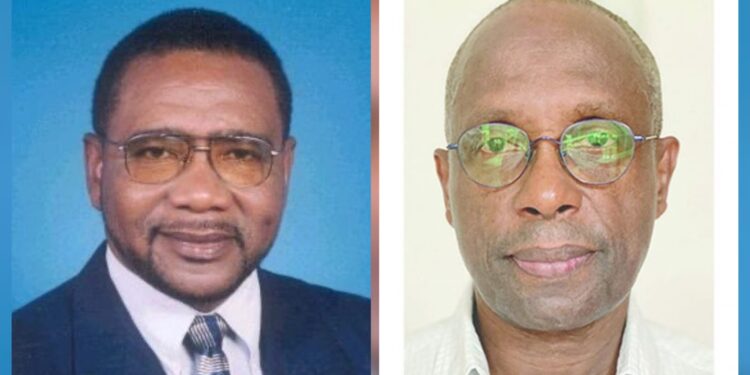
In response to Ralph’s uncertainty about why the present formulation of presidential immunity in the Constitution was not expunged during the 2000 reform process and his suggestion that the People’s National Congress (PNC) may be partly responsible for this omission, Mr. Christopher Ram made the point that the PNC presented a far more substantial case than the PPP to the 2000 reform commission. This is understandable, for although the PPP had committed to reforming the ‘disgraceful’ and ‘undemocratic’ 1980 Burnham constitution, it had to be dragged screaming and kicking to the reform table!
The PNC was, however, obviously wedded to aspects of the old constitution that both Ralph and Chris find troubling, or it would have at least made sufficient noise to make it impossible for Ralph, who was the chair of the commission, to be unsure about how the presidential immunity provisions are still in the constitution.
Contrary to Ralph, Chris argued that ‘Properly interpreted, the immunities are not unreasonable.’ I agree. In 2020, I said that ‘The US Constitution does not grant the president immunity from liability for either official or unofficial conduct, but in practice the situation is likely to be similar to that of Guyana’ (‘Constitutional reform: presidential immunities,’ SN: 19/08/2020).
What is of much greater interest to me is Chris’s position that ‘It is the executive presidency which is the real diabolical travesty. And that is what cries out for cleansing.’ The president ‘is more answerable to his Party’s Congress and to a Cabinet appointed by her or him than to the people or their parliamentary representatives; makes an overwhelming majority of constitutional and statutory appointments, including members of the Integrity Commission, Boards and Agencies; who is the sole authority for the appointment of a Commission of Inquiry; and of all diplomatic representatives; who pays no taxes but yet grants concessions as if s/he owns Guyana; and who can refuse to assent to legislation passed even unanimously by the people’s parliamentary representatives. Worse, the President exercises these powers even as Head of a Minority Government.’
Given the ‘iron law of oligarchy’, particularly when supplemented by that undemocratic nonsense called ‘democratic centralism’, things might be worse than Chris thinks. When, for example, a PPP president is head of the party, he is de facto answerable to no one except the acolytes that he has placed on the executive committee. When the president is not the head of the party, as in Soviet times, he is answerable to the leader of the party who is de facto answerable to no one!
I agree that the constitutional powers of the president should be restricted, but since opportunities to abuse the constitutional rules are almost universal, what is much more important is the willingness of any government that purports to be democratic to capriciously manipulate the rules – as the PPP has been doing – to further its autocratic ends.
The United Kingdom is a parliamentary system that has for centuries been on the democratic road but take note of ‘10 Times (Prime Minister) Boris Johnson Nearly Broke Democracy ….’ in his 2 years and 348 days in office (https://unlockdemocracy.org.uk/).’ For example, the Supreme Court found that he illegally shut down Parliament in September 2019 for five weeks to avoid scrutiny of the Brexit legislation; in 2021 he let one of his ministers found guilty of breaking the Ministerial Code by bullying her Civil Service team keep her job; he endorsed cronyism by trying to abolish the cross-party Parliamentary Standards Committee and replace it with his party-led alternative when it found one of his MP in breach of lobbying rules; he changed the Ministerial Code to protect himself in the middle of an inquiry into his holding parties during the COVID lockdown; he ignored national security advice and placed the son of an ex-KGB agent in the House of Lords, and although he resign as PM, he stayed on as leader of the Conservative party for months with one quite sure how that was going to work.
The author concluded that the grey areas of the British unwritten constitution are bad for democracy and that a written one will help to safeguard democracy, and so it may. However, Boris Johnson ran afoul of a strong judiciary and the existence of a united public opinion. He eventually decided to resign when the latter kicked in and by-election defeats kept coming, and to his own MPs he became ‘damaged goods’.
Guyana is a good example of the absence of both these normal democratic ways of preventing a determined government from abusing constitutional weaknesses that undermine democratic aspects of the constitution to achieve their ends. Desmond Hoyte did not have to pay much attention to these because he had in his armory the only sure way of stopping a recalcitrant regime: direct political action, popularized by him as ‘more fire!’
But knowing full well that its ethnic vote would not shift, the PPP sensibly used a range of government interventions such as ending trade union recognition by avoiding collective bargaining, undermining all independent African-related institutions, etc. to make the lives of PNC supporters impoverished and uncertain, as it seeks to whittle away the possibility of their taking direct political action!
Guyana has a mixed presidential/parliamentary political system, and as I have previously observed, this mixture ‘coupled a most questionable element of the parliamentary system … to presidentialism and thus created a potentially toxic brew (SN: Future Notes 25/05/2011)!’ One can become the president of Guyana if their party receives, say, 20% of the votes at the national and regional elections so long as no other party receives as much. At a minimum, this plurality system should be scrapped and replaced with a majoritarian one: an individual/party must gain at least 50% of the votes to win the presidency. Indeed, given Guyana’s problematical ethnic bicommunal nature, a supermajority of 60% or more of support should be the requirement, as in Suriname.
The closed list proportional system makes MPs unable to act independently because they are usually beholden to their oligarchic party leadership rather than to their constituencies, and this should also be scrapped. (Constitutional reform: dismantling the ‘Burnham’ constitution,’ Future Notes, SN: 26/08/2020). These two acts will mitigate some of the negative effects resulting from the fact that mainly because of ethnic voting Guyana does not have an effective united public opinion to automatically hold governments accountable.