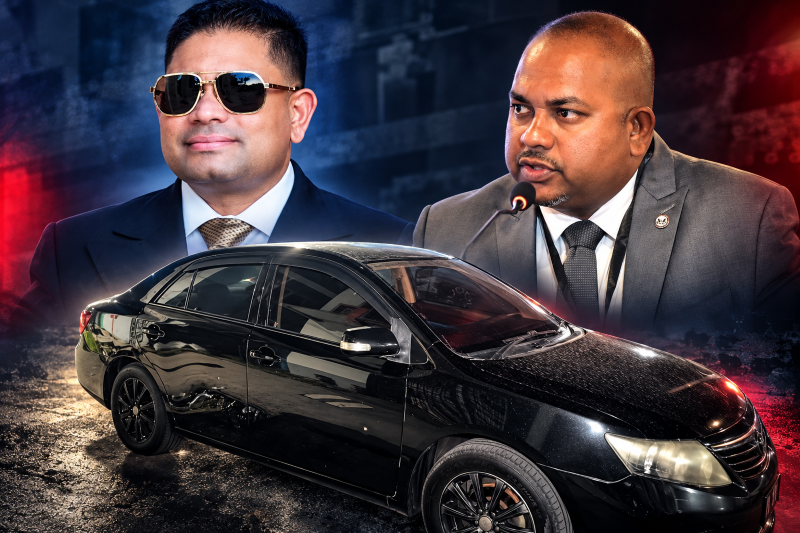
The investigation into the October 12 shooting incident involving Opposition Leader Azruddin Mohamed has taken a new turn, with reported forensic findings indicating that gunshot residue was detected on Mohamed and his driver, Eugene Thorne, while the Opposition Leader’s lawyers insist newly obtained surveillance footage supports their claim that he never possessed or fired a gun.
The latest development was reported by HGP Nightly News in a post published on Saturday evening, which identified Senior Science Officer Vishal Jaigobind of the Guyana Forensic Science Laboratory as the source of the reported findings.
According to the report, forensic tests conducted on Mohamed and Thorne returned positive results for gunshot residue. The findings, if confirmed and properly interpreted, could become an important part of the investigation into the confrontation outside the Kitty residence of Senior Superintendent Prem Narine, head of the Police Force’s Special Branch.
But Mohamed’s legal team is challenging the suggestion that the Opposition Leader was armed or fired a weapon. His lawyers say they have obtained additional surveillance footage which, they contend, captures what happened during the incident and supports their client’s account.
The confrontation occurred outside Narine’s Barr Street residence in Kitty on October 12. During the encounter, Narine reportedly discharged his service weapon. The circumstances surrounding the discharge, including the actions of those present, have since become the subject of police investigation and public scrutiny.
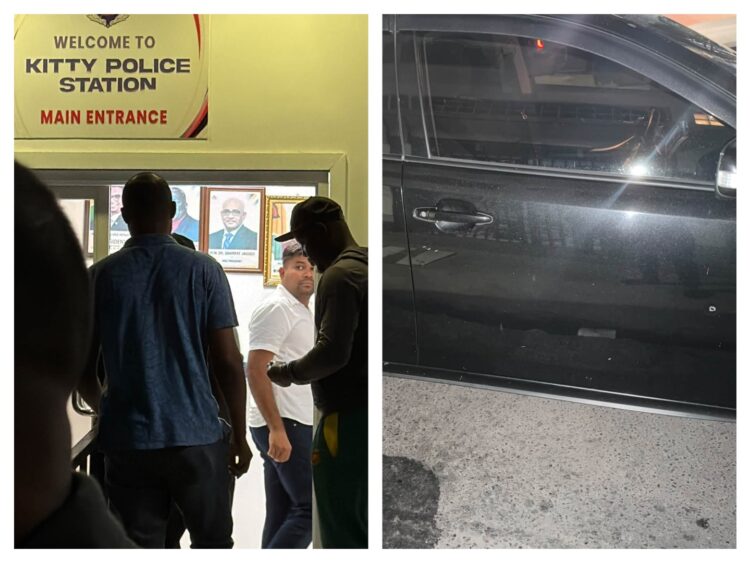
Mohamed, Thorne and Mario Mohamed were subsequently arrested and charged in connection with alleged firearm and ammunition offences and attempting to pervert the course of justice. All three were later granted bail.
The reported forensic results introduce another layer to a case already marked by conflicting accounts. However, the detection of gunshot residue does not, by itself, establish that an individual fired a firearm. Investigators must consider the circumstances of possible exposure, the collection and handling of samples, the laboratory findings and other available evidence before drawing conclusions.
The newly obtained footage could also prove significant, particularly if it provides a visual record that can be examined against the accounts given by those involved. Its evidential value, however, will depend on its authenticity, completeness and what it actually shows.
The competing claims place renewed attention on the transparency and thoroughness of the investigation. The forensic findings and surveillance footage will need to be assessed together, rather than either being treated as conclusive in isolation.
The central question is whether the newly obtained surveillance footage will substantiate Mohamed’s lawyers’ position that he was neither armed nor responsible for discharging a firearm during the October 12 confrontation.
That question remains unresolved. The reported laboratory findings are not a determination of guilt, and Mohamed and the other accused remain entitled to the presumption of innocence as the matter proceeds through the courts.
See the new footage here: