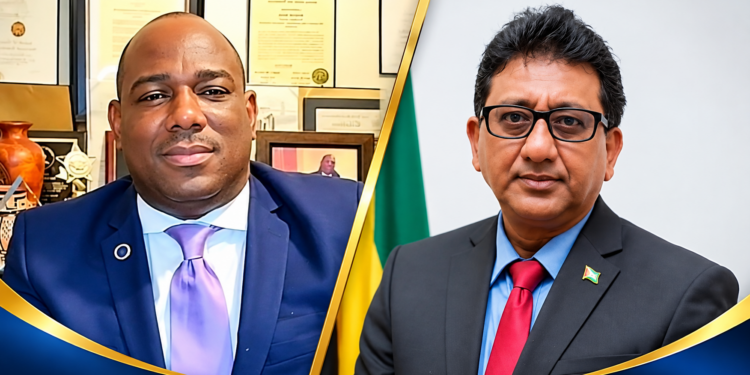
The We Invest in Nationhood (WIN) Movement says the repeated arrests, investigations and detention of Opposition Leader Azruddin Mohamed represent an escalating threat to Guyana’s democracy, calling on the international community to scrutinise the government’s treatment of political opposition.
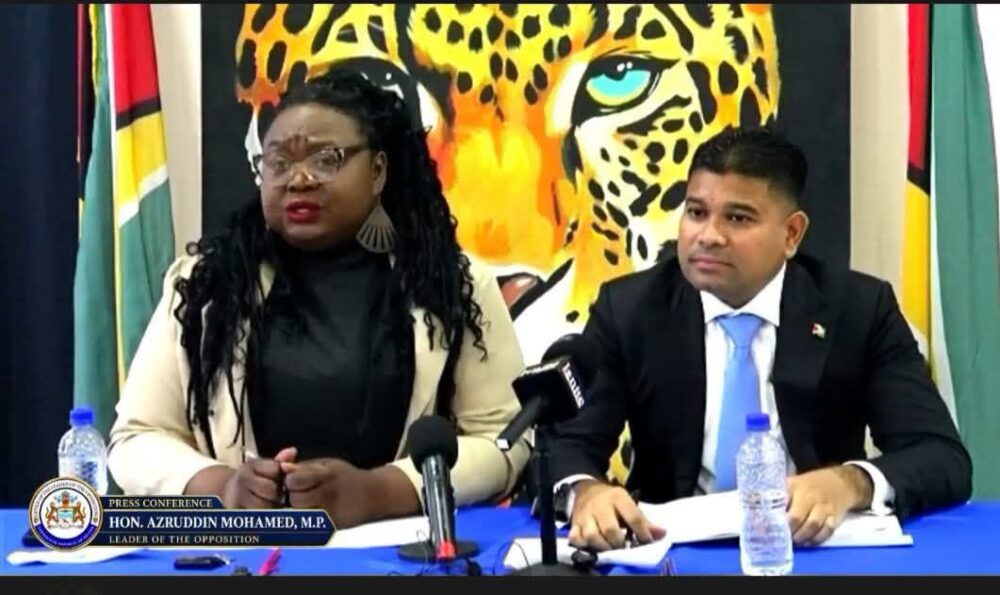
WIN General Secretary and Member of Parliament Odessa Primus said Mohamed’s latest remand to prison has taken the situation beyond an individual legal matter, raising wider concerns about the ability of elected representatives to hold the government accountable without fear of intimidation or persecution.
In a statement, Primus outlined a series of arrests, police operations and property seizures involving Mohamed over the past year, arguing that the developments reflect an increasingly troubling pattern.
She recalled that Mohamed and his father were arrested in October 2025, days before Parliament’s first sitting, when he was expected to assume the position of Leader of the Opposition.
In February 2026, the Special Organised Crime Unit (SOCU) conducted an operation at the Mohamed family’s former business premises, during which cash, documents and electronic devices were seized, according to Primus.
She also cited further attempts in March to challenge Mohamed’s continued bail over alleged breaches of police-reporting requirements.
In August, Mohamed was arrested following a joint-services operation involving his vessel at Friendship, which was subsequently detained. Primus said he was again arrested in September in connection with allegations surrounding drone activity and security protocols, while his phone, laptop and vehicle were reportedly retained by police.
She further highlighted Mohamed’s detention for approximately 81 hours following the October 12 incident involving Senior Superintendent Prem Narine, followed by his latest arrest and remand alongside Police Constable Ryan Greene over allegations concerning the release of surveillance footage.
“What began with repeated arrests and investigations has now escalated to the incarceration of the Leader of the Opposition,” Primus said.
She also pointed to the closure of bank accounts belonging to WIN parliamentarians and other actions which, she said, have affected the party’s ability to function and its elected representatives’ capacity to carry out their duties.
Primus maintained that the justice system must not be used to intimidate or silence government critics, stressing that allegations must be determined through the courts and accused persons afforded due process.
“The rule of law must apply equally to everyone. It must never become an instrument for intimidating, punishing, or silencing political opponents. Allegations must be tested in court, and every accused person is entitled to due process and a fair hearing.”
She called on diplomatic missions and international human rights organisations to pay attention to the developments, speak out and hold the government accountable.
Addressing Guyanese, regardless of political affiliation, Primus said the treatment of the Opposition Leader should concern the wider population because of its implications for the country’s political institutions and the ability of elected representatives to perform their constitutional roles.
She also urged WIN supporters and members across the country to remain vigilant and prepared to participate in peaceful protest.
The party is planning a protest action, with Primus saying details of the assembly time and arrangements would be announced shortly. She urged supporters to turn out in large numbers when the call is made.
Mohamed and Greene were remanded to prison on October 30 after appearing before the Sparendaam Magistrates’ Court on charges under the Cybercrime Act relating to the alleged unauthorised access to and disclosure of electronic data. Both were denied bail and ordered to return to court on November 24. The allegations have not been proven in court.
Primus described the developments as a defining moment for Guyana, concluding that political opposition is an essential feature of democratic governance.
“The right to oppose a government is not a favor granted by those in power. It is a fundamental democratic right that no government has the authority to take away.”