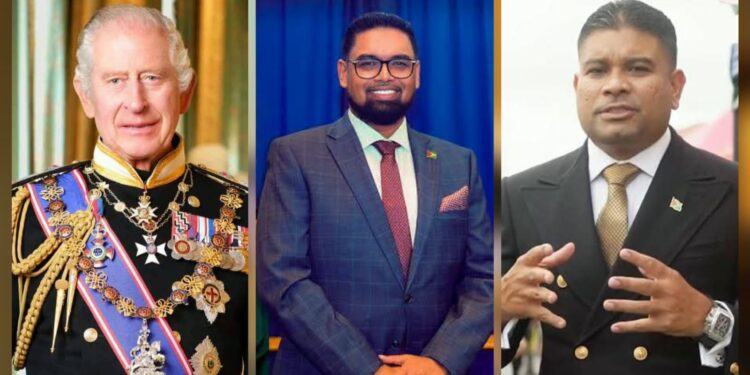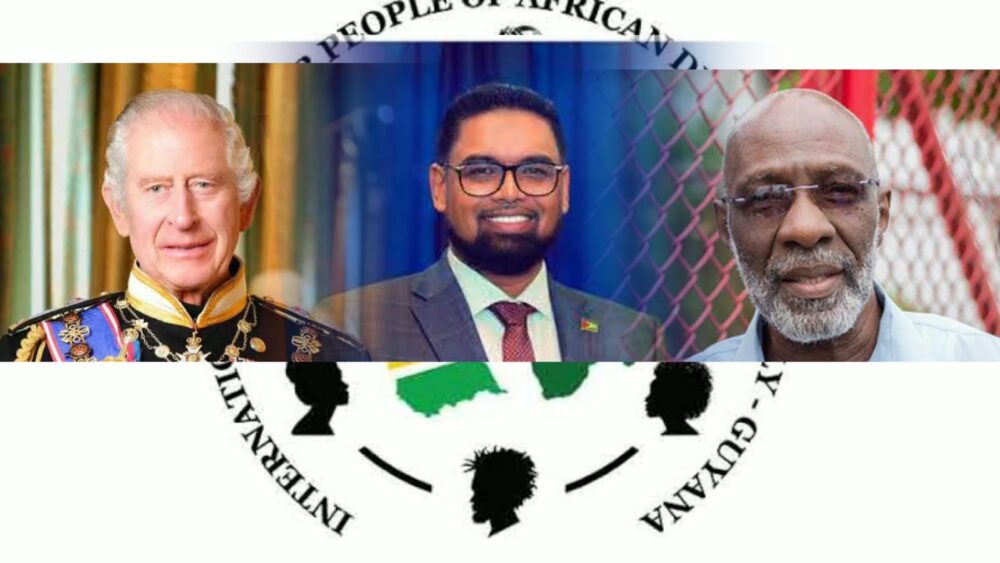
The International Decade for People of African Descent Assembly–Guyana (IDPADA-G) is urging President Dr Mohamed Irfaan Ali to use the October 29–30 visit of King Charles III and Queen Camilla to press Britain for reparations for slavery and colonialism while committing his government to a funded, accountable programme to address the enduring consequences of those injustices in Guyana.
In a statement dated October 25, 2026, and signed by its Chairperson, Vincent Alexander, IDPADA-G called for the royal visit to move beyond diplomatic engagements and expressions of historical regret towards concrete commitments on reparatory justice.
The organisation argued that Britain’s historical responsibility for enslavement and colonial exploitation must be addressed alongside the Guyanese government’s responsibility to confront inequalities and unresolved grievances within its own jurisdiction.
“Domestic action is not a substitute for British reparations, and it should not wait for Britain’s response,” the letter stated.
IDPADA-G welcomed Ali’s public support for reparations and his recognition that an apology alone would be insufficient. However, it is calling on the President to translate those statements into measurable action, particularly as Guyana’s expanding petroleum revenues present an opportunity to address longstanding economic and social disparities.
Slavery’s legacy and unresolved inequalities
In its appeal, IDPADA-G recalled the contribution of enslaved Africans to Guyana’s development, including the reclamation of coastal lands, construction of drainage and irrigation systems, and establishment of the agricultural economy that shaped the country’s colonial development.
The organisation also highlighted the achievements of formerly enslaved Africans who, after emancipation without compensation, pooled their resources to purchase plantations and establish independent villages. Victoria, established in 1839, stands as a prominent example of collective economic advancement by formerly enslaved people.
According to IDPADA-G, colonial policies subsequently undermined collective landownership and economic independence in these communities, leaving historical grievances that require examination and redress.
The organisation also cited findings from the United Nations Working Group of Experts on People of African Descent following its 2017 visit to Guyana. The experts identified deficiencies in the enjoyment of economic, social and cultural rights and recommended targeted development measures, improved access to affordable financing and greater inclusion of African-Guyanese history in school curricula.
These findings, IDPADA-G argues, reinforce the need for a national process that examines both historical injustices and their present-day consequences.
Six measures proposed
IDPADA-G wants Ali to announce a national reparatory justice process during the royal visit, beginning with inclusive consultations involving African-Guyanese communities, farmers, entrepreneurs, women, young people, cultural organisations, researchers and members of the Diaspora.
The proposed programme would include an independent, evidence-based assessment of historical and contemporary disadvantages affecting African Guyanese, with particular attention to landownership, access to financing, public procurement, participation in the petroleum economy and intergenerational wealth.
The organisation is also seeking an independent review of substantiated historical land claims, protection of legitimate land rights, and investment in drainage, flood protection and community infrastructure.
On economic empowerment, it has proposed a productive-capital facility to support African-Guyanese businesses, cooperatives and farmers, backed by technical assistance and transparent access to economic opportunities.
Additional measures would include investment in African-Guyanese history, archives, heritage sites and burial grounds, as well as a review of school curricula to strengthen the teaching of African history.
To guard against the process becoming merely symbolic, IDPADA-G is calling for transparent oversight, independent evaluation and annual public reporting on implementation.
The organisation has proposed August 1, 2027—Emancipation Day—as the start of implementation for the first approved and funded measures, following consultations, independent assessments and preparation of a preliminary framework.
Oil wealth and the question of reparations
Guyana’s rapidly expanding oil economy adds urgency to the debate over how national wealth should be distributed and whether historically disadvantaged communities are benefiting equitably from the country’s economic transformation.
IDPADA-G maintains that petroleum revenues offer an opportunity to confront structural inequalities rather than allowing historical disadvantages to persist alongside growing national wealth.
Its proposal also places Guyana’s domestic responsibilities within the broader international reparations movement. The organisation argues that recognition of slavery’s historical impact must be accompanied by practical measures promoting justice and development, consistent with the objectives of the United Nations Decade for People of African Descent.
The October 29–30 royal visit therefore presents an opportunity for the government to clarify what reparations mean in practical terms, both in its dealings with Britain and in its policies at home.
In its closing appeal, IDPADA-G urged Ali to demonstrate leadership on both fronts.
“We urge you to use it to demonstrate leadership on both fronts: to seek justice from Britain for the wrongs of enslavement and colonialism, and to commit Guyana to a measurable, accountable process of repair at home,” the letter stated.
Whether the visit produces specific commitments on reparations, funding and implementation remains to be seen. For IDPADA-G, however, the central demand is clear: international calls for historical justice must be matched by concrete domestic action to address the lasting consequences of slavery and colonialism.