Dear Editor,
His Majesty King Charles III is scheduled to arrive in Guyana on October 29, 2026.
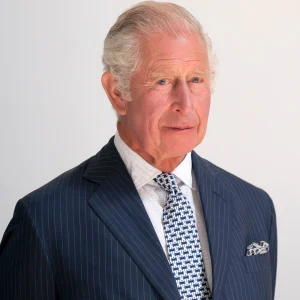
There will undoubtedly be elaborate security arrangements, carefully coordinated movements, intelligence assessments, police escorts, and the usual grand display of state hospitality.
Lovely.
But before we roll out the proverbial red carpet and congratulate ourselves on hosting British royalty, perhaps we should consider a rather inconvenient question.
What exactly will the King’s security team make of a country where the elected Leader of the Opposition alleges that the Head of Special Branch attempted to assassinate him?
Not a random criminal. Not an unidentified gunman lurking in some dark alley.
Although, given Guyana’s history of controversial police shootings, including the 2018 seawall killings of three men that an eyewitness described as executions, perhaps the imagery is not entirely misplaced.
The police disputed that eyewitness account. The deaths prompted an investigation and a recommendation for a coroner’s inquest.
Eight years later, we are confronting another deeply controversial police shooting.
This time, the elected Leader of the Opposition was inside the vehicle.
And the officer at the centre of the allegations?
The HEAD OF SPECIAL BRANCH.
The senior police officer entrusted with intelligence and national security responsibilities.
On October 12, 2026, Opposition Leader Azruddin Mohamed and two members of his staff were travelling through Kitty when Senior Superintendent Prem Narine discharged several rounds from his service firearm in the direction of their vehicle.
That much is acknowledged in the police account.
The disagreement concerns WHY.
Narine claims he heard what appeared to be a gunshot and responded. Mohamed maintains that he and his employees were subjected to a calculated assassination attempt. The defence has also raised serious questions about the subsequent discovery of an alleged firearm beneath the accelerator pedal, following an earlier search that reportedly yielded nothing.
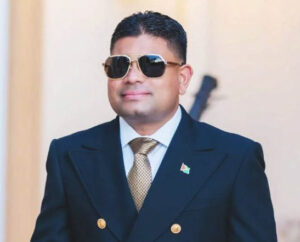
An extraordinary sequence of events, whichever account one accepts.
And the public is still entitled to ask what the forensic evidence, CCTV recordings, ballistic examinations and complete chain of custody actually establish.
Now, consider the implications.
The same national security establishment expected to coordinate with British royal protection personnel is facing serious questions about the conduct of one of its most senior intelligence officers.
This is not some trivial political disagreement about who said what at a press conference.
A constitutional officeholder was inside a vehicle at which a senior police officer admittedly fired his weapon.
There are reported bullet holes. There are competing accounts. There are allegations of evidence tampering. There are questions about the handling of the vehicle and the firearm allegedly recovered from it.
And somewhere in this remarkable situation, Guyana must prepare to assure the representatives of the British Crown that its security arrangements are dependable, professional and beyond reproach.
One would imagine that the people responsible for protecting a monarch are rather particular about these things.
Moving on.
There is also the controversy surrounding reports that an elected Member of Parliament travelled through Cheddi Jagan International Airport with more than 40 rounds of ammunition.
The allegation was publicly denied by the parliamentarian concerned, and the circumstances have not been independently established.
Nevertheless, the controversy illustrates why serious claims about aviation security require verifiable facts rather than sensational headlines.
Was there an actual security breach? Were screening procedures followed? What evidence supports the original report? And have the relevant authorities provided a sufficiently clear account?
Airport security is not a decorative feature of an international terminal. It is an essential component of national and international aviation safety.
But wait.
Perhaps the more important issue is not whether King Charles will be adequately protected. His Majesty will benefit from a sophisticated royal protection operation, supported by British expertise and coordinated arrangements with Guyanese authorities.
The question is what happens when the royal aircraft departs.
Will the same urgency surrounding intelligence gathering, threat assessments, protective escorts and public safety extend to the ordinary Guyanese who must continue living here?
Will there be comparable seriousness about investigating allegations against senior police officers?
Will the public finally receive the so far unreleased CCTV footage and a comprehensive explanation of the October 12 shooting at the Leader of the Opposition?
And will the fundamental right to personal security be treated as a constitutional obligation rather than a privilege determined by political standing?
The Government of Guyana must know that security is not merely the ability to assemble a convincing motorcade for an internationally important visitor.

The Guyanese people must have the confidence that the institutions entrusted with protecting them will exercise their authority lawfully, impartially and accountably. That is security.
A police officer’s rank does not place his conduct beyond scrutiny. A government institution does not become credible merely because its officials insist that it is.
Guyana is preparing to showcase its biodiversity, development, international partnerships and growing economic importance. There will be speeches. There will be photographs. There will be carefully choreographed engagements and enthusiastic declarations about the country’s progress.
And there is nothing inherently wrong with any of that.
But international prestige is not a substitute for domestic accountability. A country can welcome royalty, host international conferences, construct large buildings and announce billions in development expenditure all while still confronting serious questions about the conduct of its public institutions and of course, while the people starve and struggle to survive
These realities are not mutually exclusive.
The protection of King Charles III should be treated with the utmost seriousness.
But the life of the elected Leader of the Opposition is not worth less because he does not wear a crown. Neither is the life of the ordinary Guyanese citizen.
And that, Editor, is the point.
The measure of a country’s security institutions is not simply how effectively they protect the powerful when the world is watching. It is how lawfully, consistently and impartially they protect EVERYONE when the cameras are gone.
King Charles will spend a short time in Guyana.
The rest of us have to live here.
The royal motorcade will eventually leave. The unanswered questions about our national security institutions will not.
Yours, royally concerned,
Hana Mohamed