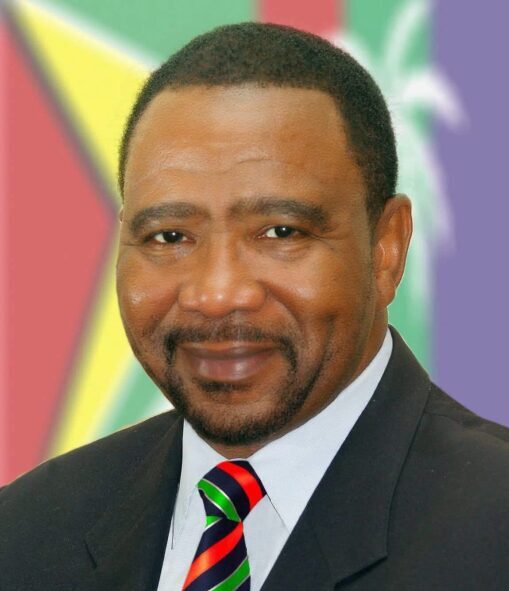
Guyana today bids farewell to Robert Herman Orlando Corbin, the former leader of the People’s National Congress Reform (PNCR), Leader of the Opposition, parliamentarian and government minister, whose decades in public life placed him at the centre of some of the country’s most consequential political developments.
The day’s funeral proceedings will begin with a viewing at the PNCR headquarters, Congress Place, Sophia, before Corbin’s body is taken to Parliament Buildings, Brickdam for a final viewing. From there, the funeral procession will proceed to St. Andrew’s Kirk, Brickdam where the funeral service will be held.
Following the service, Corbin will be cremated at Ruimzeight Foreshore, West Coast Demerara.
The final arrangements will continue on Saturday with the committal and interment of his remains at the family plot in Scots Church Cemetery, Christianburg, Linden. His ashes will also be committed to the Demerara River between the mouths of the Muraru and Katapully creeks.
Corbin died on October 4 at age 78. He led the PNCR from 2002 to 2012, guiding the party through a consequential period in Guyana’s political history while pursuing political dialogue and agreements with the governing People’s Progressive Party/Civic (PPP/C).
His political career included advocacy for constitutional reform, political cooperation and greater accountability in governance. Yet, as tributes are paid to the former opposition leader, the record of agreements negotiated with the PPP/C administration during Bharrat Jagdeo’s presidency remains a contentious part of Guyana’s political history.
Jagdeo has recalled his engagement with Corbin as an example of political cooperation and a willingness to move beyond partisan divisions in the national interest. However, that account is difficult to reconcile with longstanding concerns that agreements reached with the opposition under his presidency.
The failure to honour agreements negotiated under Jagdeo’s presidency casts serious doubt on his portrayal of those engagements as examples of meaningful political cooperation. Corbin pursued dialogue and negotiated commitments in the hope of advancing reform and addressing longstanding political divisions, but the unresolved record raises a fundamental question: what value is there in agreements signed if the government does not honour them?
Jagdeo’s account must be measured against the commitments made and whether they were honoured, not merely the willingness of political leaders to sit at the negotiating table. Political cooperation is demonstrated by the fulfilment of promises, not the signing of agreements or boastful recollections of political engagement, particularly when those engagements produce little or nothing in the way of tangible results.
Earlier tributes, including a Night of Reflection at Congress Place, brought together party members and supporters to remember Corbin’s leadership and contribution to the PNCR.
As family, friends, colleagues and supporters gather to pay their final respects, Corbin’s passing provides an occasion to reflect on his years in public office and the causes he championed. It also brings renewed attention to the obligations of governments to honour agreements reached through political dialogue and to the importance of accountability in preserving public trust.
Corbin’s contribution to Guyana’s political development will remain part of the national conversation. So, too, should the record of those who negotiated with him and the extent to which the commitments made during those engagements were fulfilled.