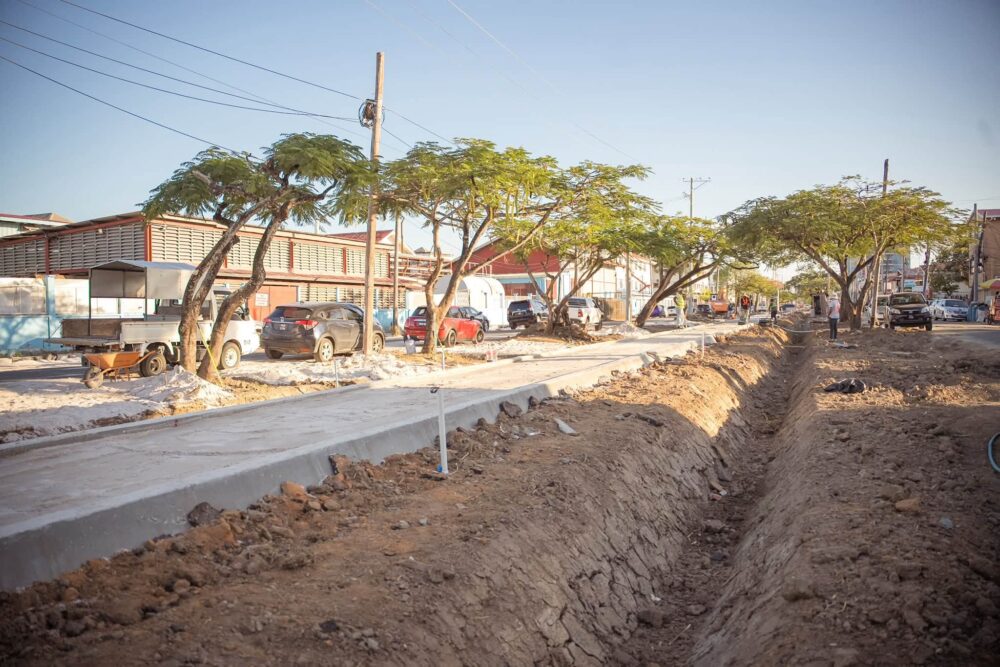
By Mark DaCosta-The Georgetown City Council was involved in the initial planning of the Thomas Street redevelopment but was subsequently sidelined from key decisions concerning the project’s final design and execution, a city councillor has disclosed, raising serious questions about transparency, accountability and respect for local government.
The concerns have been reinforced by former Mayor and Prime Minister Hamilton Green, who, in a letter published on October 7, 2026, criticised what he viewed as the failure to meaningfully involve municipal authorities in decisions affecting the capital.
At the heart of the controversy is a troubling question: what value does consultation have if an elected municipal authority participates in the early planning of a project but is excluded when critical decisions are made?
In an interview with Village Voice News, the councillor said the Council participated in the initiative’s initial planning, which involved a company that had collaborated with the King’s Foundation. Early discussions focused on improvements to the city’s markets and the wider urban environment.
However, the councillor informed that City Hall was left out as the initiative advanced to its final design and implementation. The councillor also argued that ideas developed through the municipality were subsequently pursued by the People’s Progressive Party/Civic (PPP/C) Government without adequate recognition of City Hall’s contribution.
The account raises concerns about whether the council was treated as a genuine partner or merely involved at the preliminary stage before decisions affecting the municipality and its residents were taken elsewhere.
Projects within Georgetown may require central government input and approval, but that makes coordination with City Hall more important, not less. The councillor said the municipality was not represented when the foundation followed up on the initiative, leaving questions about its involvement in the final arrangements.
Green warns of democratic erosion
Green’s criticism extends beyond the details of the Thomas Street project to the principles of inclusionary democracy and the role of local government in national development.
In his letter, he described the situation as:
“A flagrant breach of a principal provision and the spirit of our constitution, which speaks of inclusionary democracy”.
Article 13 of Guyana’s Constitution provides for citizens’ participation in the decision-making processes of the State, particularly where decisions affect their well-being. Green’s concerns centre on whether that principle is being respected when decisions affecting Georgetown proceed without meaningful municipal involvement.
His remarks also reflect a broader concern about the relationship between central government and local authorities. When municipal leaders feel excluded from decisions affecting their communities, questions arise about whether local governance is being treated as a meaningful democratic institution or an administrative formality.
Green expressed his frustration in pointed terms:
“When will we stand up to be men and women and not mice?”
The rhetorical question conveys his concern that citizens and institutions are failing to challenge decisions they believe undermine democratic participation. His argument is that public involvement cannot be reduced to appearances or preliminary discussions; it must carry weight when decisions are made.
The former mayor also questioned whether Guyana was abandoning the principles and institutions established by earlier generations in the country’s journey towards independence.
“Why are we destroying the foundations which our fore-bearers built in our journey to independence?”
For Green, the implications extend well beyond the appearance of a renovated street. They concern the preservation of democratic values, the authority of elected local representatives and the right of communities to have a meaningful voice in decisions that shape their surroundings.
Beyond appearances
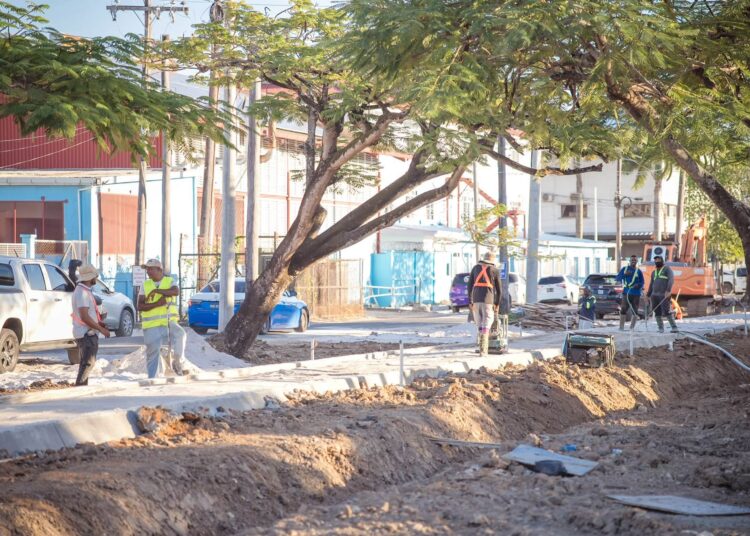
The Thomas Street redevelopment forms part of the Healthy Streets Initiative, which aims to create more pedestrian-friendly public spaces, introduce greenery and strengthen climate resilience along the corridor from Lamaha Street towards Church Street. The initiative is also aligned with Guyana’s Low Carbon Development Strategy 2030.
These objectives could improve the urban environment for residents, pedestrians and businesses. However, the value of the project will depend not only on its design but also on transparent decision-making, effective coordination and a credible plan for long-term maintenance.
The councillor questioned whether sufficient attention had been given to the resources and arrangements needed to maintain the area, including waste collection, cleanliness and ongoing upkeep. Without clear responsibility and adequate funding, a redeveloped public space can deteriorate after the initial investment.
A project should therefore be judged not simply by how it looks when completed, but by whether it remains clean, accessible and functional in the years ahead.
Thomas Street must be about more than appearances. It must also be a test of whether the Government respects local democracy, consults elected representatives and accounts to the public for how development decisions are made.
If City Hall is expected to help maintain the upgraded area, it should not be treated as an afterthought in the decisions that shape it. Georgetown’s residents deserve a project that delivers lasting public value, while the municipality deserves a meaningful role in determining the future of the city it is elected to serve.