The Guyana Police Force has launched an investigation into serious allegations of rape and threatening behaviour against Deputy Commissioner of Police Fizal Karimbaksh, but the senior officer has not been placed on administrative leave, raising questions about how the Force balances due process with the need to protect the integrity of an investigation involving one of its highest-ranking officers.
The investigation was confirmed on Friday, October 2, after several days of questions from the media about allegations made by a serving female Police Inspector against Karimbaksh, who heads the Special Organised Crime Unit (SOCU).
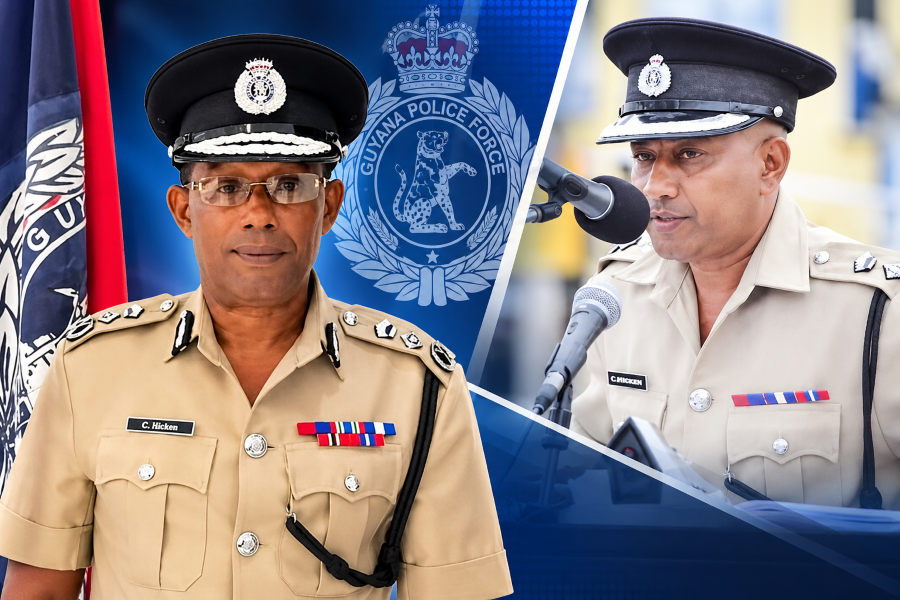
The Police Force said Commissioner of Police Clifton Hicken had established a team to conduct a “thorough investigation” into the allegations.
“The Guyana Police Force wishes to assure the public that the allegations are being treated with the seriousness they warrant and that the investigation will be conducted professionally, impartially and in accordance with established procedures.”
The Force also said the investigative process must be allowed to proceed fairly and that due process would be afforded to all parties.
However, the decision to keep Karimbaksh on duty has emerged as a central issue.
Home Affairs Minister Oneidge Walrond has publicly stated that she believes the Deputy Commissioner should be placed on administrative leave while the investigation continues.
“It is my view, and I hold this strong view, that he should be sent on administrative leave pending the investigation.”
Walrond said the Police Service Commission would ordinarily have responsibility for such a decision, but the Commission is currently not constituted. She said she would therefore have to discuss the matter with Hicken.
The policing implications
Administrative leave is not a finding of guilt. In cases involving allegations against senior law-enforcement officers, however, temporarily removing an accused officer from operational authority can serve a different purpose — protecting the investigation, potential evidence and witnesses while avoiding the perception that the officer can influence the process.
That concern is particularly relevant in this case because Karimbaksh is a Deputy Commissioner and head of SOCU, giving him seniority and authority within the Force.
The issue therefore extends beyond the presumption of innocence. Professional policing requires investigations to be conducted in a manner that is not only impartial but seen to be impartial.
The question is whether an officer accused of serious criminal conduct should continue exercising operational authority over police personnel while an investigation into those allegations is underway.
The A Partnership for National Unity (APNU) has called for Karimbaksh to be placed on administrative leave, arguing that doing so would protect the integrity of the investigation and the complainant.
The position is not without precedent within the Force. In November 2025, Walrond said officers accused of sexual misconduct at the Police Training College had been removed from duty while disciplinary proceedings were pending.
“The matter is before the Office of Professional Responsibility, and they were removed immediately after the report came to our attention,” she said at the time.
Treatment of the complainant
The handling of the female Inspector is another important test of professional standards.
Walrond said the Inspector, who had been stationed at SOCU, was transferred to another unit at her own request. The Minister said the transfer was intended to remove her from a situation in which she might feel uncomfortable.
But separation from the accused is only one element of victim-sensitive policing.
Guyana’s Sexual Offences Act requires police to record and investigate every reported sexual offence. It also contains specific protections concerning the treatment of complainants. The Act states that a complainant should not be required to recount the allegation in the presence of the accused unless she wants to do so, and that any necessary identification procedure must be conducted in a manner sensitive to the complainant’s wellbeing.
The law also protects the identity of complainants and witnesses in sexual-offence cases from publication.
These provisions underscore that a professional investigation is not simply about questioning the accused and complainant. It must also ensure that the complainant is protected from unnecessary intimidation, exposure or further trauma.
Guyana’s Sexual Offences and Domestic Violence Policy Unit also provides survivor support, counselling, advocacy and shelter services through the 914 hotline and other programmes.
The Police Force has promised an impartial investigation. What remains unresolved is whether Karimbaksh will be removed from operational duties while that investigation proceeds.
The allegations against him remain unproven, and he is entitled to due process and the presumption of innocence. But the credibility of the investigation will also depend on whether the public, police ranks and the complainant can have confidence that rank and authority cannot influence the outcome.
For a police force seeking to demonstrate professional standards, that distinction is crucial: due process protects the accused, while independent safeguards protect the investigation and the integrity of the institution itself.