President Irfaan Ali says the MV Barima tragedy must usher in a new culture of safety, infrastructure, leadership and responsibility.
But the government’s own procurement records, maintenance reports and public statements raise a difficult question: if the Barima was considered safe to operate, why had the government already launched a major docking and rehabilitation programme for the vessel — and why was the procurement process still unfolding immediately before the disaster?
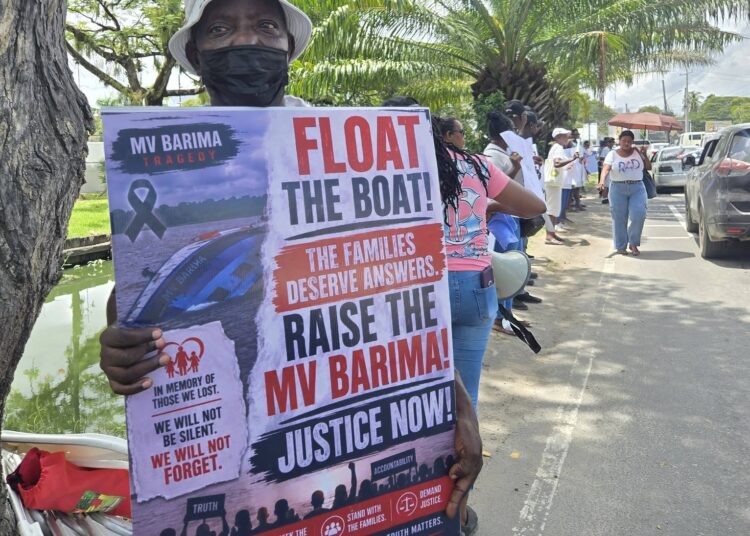
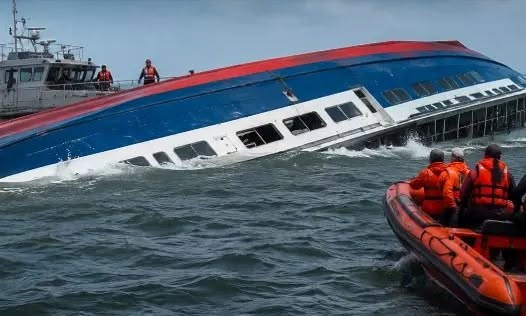
The 87-year-old vessel sank on July 18, 2026, while travelling from Georgetown to Port Kaituma.
Months earlier, the government had publicly announced plans to spend G$124.5 million on docking and rehabilitation of the Barima. On March 9, the Department of Public Information announced that the Transport and Harbours Department was inviting contractors to bid for docking and overhaul works on the Barima, with an engineer’s estimate of G$124.5 million.
The National Procurement and Tender Administration tender documents put the precise estimate at G$124,539,250 for Lot 2, the Barima. Five companies submitted bids, ranging from G$105 million to G$123.99 million.
Then came a remarkable development.
Public procurement records show awards under the same Transport and Harbours Department contract for the docking and rehabilitation of the Ma Lisha, MV Barima and MB Hercules dated July 17 — one day before the Barima sank. The published records list the contract under three lots and show awards to companies including Gopie Investment, Guyana Port Inc. and J&M Shipping. The public record does not, in the material reviewed, clearly identify which individual supplier was assigned each lot, so the precise Barima awardee should be established from the full procurement file.
The timing is extraordinary.
A vessel scheduled for a multimillion-dollar rehabilitation programme was still carrying passengers the day before the disaster.
The Government Said There Was No Warning
Two days after the sinking, Public Works Minister Juan Edghill insisted there was nothing indicating the vessel was unseaworthy.
“There was no report of any kind that suggested the vessel was unseaworthy. It was in line for dry docking in keeping with the schedule,” Edghill said.
The government maintained that the Barima had last been dry-docked in 2024 and was due for its next scheduled docking during the second half of 2026. Prime Minister Mark Phillips subsequently said the vessel had undergone repairs in 2024 and was deemed seaworthy, with its next scheduled dry-docking expected later in 2026.
But subsequently published internal maintenance records have complicated that account.
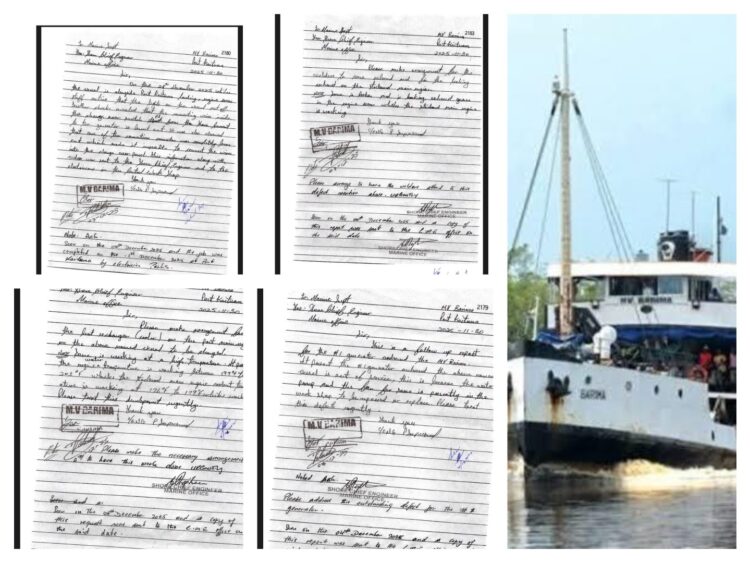
Kaieteur News reported that leaked maintenance logs, requisitions and technical reports spanning months contained repeated warnings about mechanical and safety problems aboard the vessel. The newspaper reported 20 engine-related complaints and eight generator-related failures, with documents signed by technical personnel and endorsed within the Transport and Harbours Department.
Among the reported warnings was a January 2026 engineering report concerning heavily corroded main-engine fuel lines, with a warning that they could break while the vessel was operating. Other records reportedly cited an inoperable VHF system, GPS problems, defective emergency equipment, generator failures, overheating engines, leaking exhaust and inadequate engine-room ventilation.
Those records do not, by themselves, prove that the Barima was legally unseaworthy or establish what caused the sinking. But they raise a question that the government cannot simply answer with references to a scheduled dry-docking. What did the authorities know, and when did they know it?
The Money Was There
The issue is also not simply one of whether funding was available. G$11.2 billion was budgeted for the river transport sector in 2026, including G$570 million for reconditioning ferry vessels.
The government therefore had a substantial programme for ferry rehabilitation, and the Barima had a specific engineering estimate exceeding G$124 million.
The unanswered question is whether the vessel should have remained in passenger service while those works were awaiting execution.
Ali’s Test of Leadership
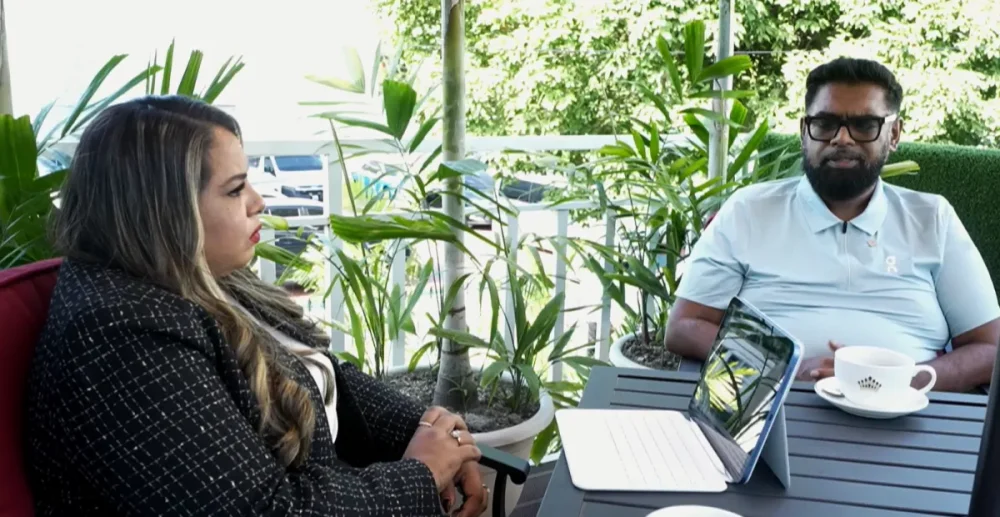
In his interview with journalist Fareeza Haniff, Ali described the tragedy as a continuing personal burden.
“That tragedy continues to be a heavy weight. Still a lot of sleepless nights. It is something that I wish never happened. It was something I wish the families in our country would have never had to go through.”
He added:
“It happened. I’m the leader. And a leader must not only be a leader in the good times. You have to be a leader in every circumstances, in every season. You have to be there.”
Ali now says the disaster must produce:
“A new culture of safety, infrastructure, leadership and responsibility.”
That promise will ultimately be measured not by speeches after the disaster, but by what the evidence shows happened before it.
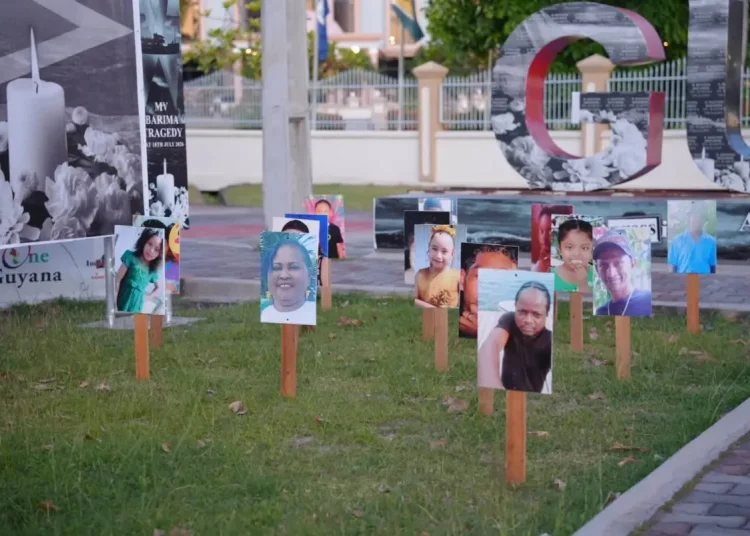
The Commission of Inquiry has been given a broad mandate to examine the Barima’s seaworthiness, maintenance history, compliance with maritime requirements and any negligence, misconduct, dereliction of duty or institutional failures that may have contributed to the tragedy.
The central questions are therefore unavoidable.
- Why was a vessel requiring G$124.5 million in planned docking and rehabilitation still carrying passengers?
- What did the maintenance warnings trigger?
- Who authorised continued operation?
- Why was a major rehabilitation contract still being processed immediately before the disaster?
- And most importantly, did anyone in authority know that the vessel’s condition warranted action beyond routine maintenance?
Ali says leadership means being there “in every circumstances, in every season.”
The families of the Barima victims now have a far more consequential test of that leadership. Will the government accept accountability if the evidence ultimately leads back into its own agencies, decisions and chain of responsibility?Because a genuine culture of safety cannot begin after a vessel sinks. It must begin when the first warning is received.