By Mark DaCosta- Residents of Santa Cruz in Region One are still waiting for a promised safe-water system, with A Partnership for National Unity (APNU) Member of Parliament Sherod Duncan reporting that equipment and infrastructure intended to deliver the project remain unattended and disconnected. The situation has renewed questions about why a water project first identified for the community years ago has yet to produce the basic service residents were promised.
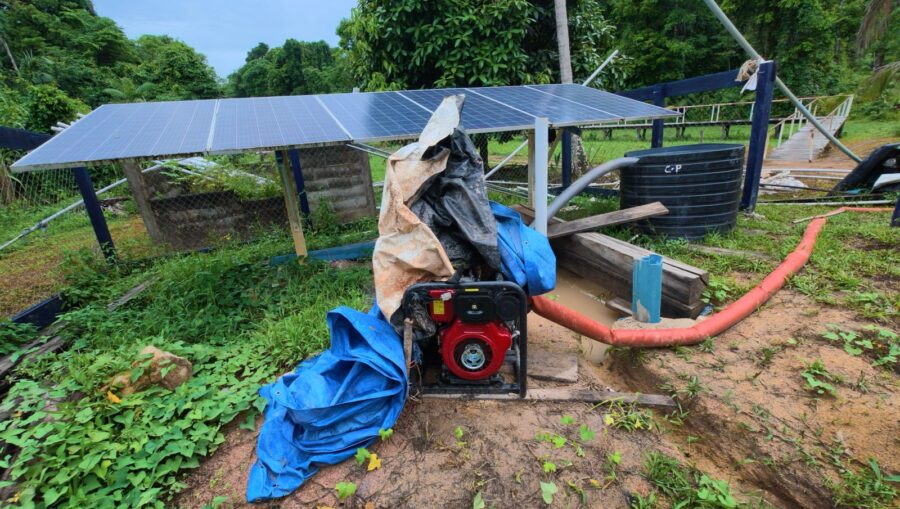
In a statement issued on September 12, Duncan reported that during a recent visit to the area, he observed what he described as an “unattended and abandoned” water-supply installation with “no functioning, connected” system.
The timeline of official announcements highlights a delay between planning and execution. Santa Cruz was shortlisted by Guyana Water Inc. (GWI) for well drilling in 2022, following a November 2021 announcement. The Ministry of Finance’s 2024 Mid-Year Report projected drilling completion for the second half of that year, and in January 2025, then-Housing and Water Minister Collin Croal named Santa Cruz for a new water-supply system.
Duncan has subsequently stated that residents “deserve a clear account of what became of those commitments”.
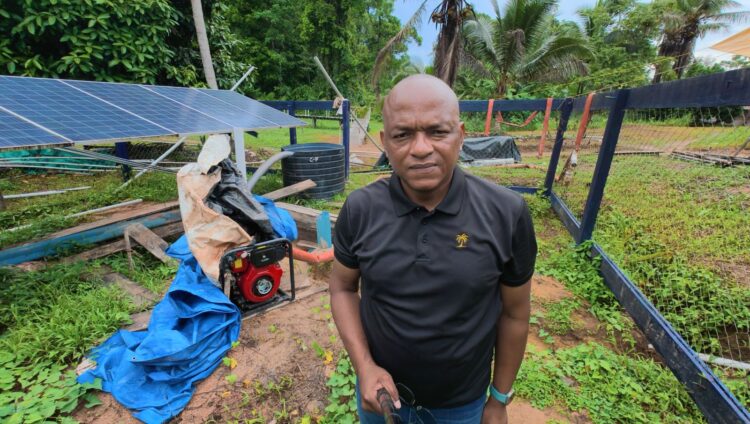
Santa Cruz and other Waini hinterland settlements have historically relied on untreated river water. The hinterland water programme, utilising wells and solar-powered distribution, was designed to transition these communities away from river pumping.
The media has previously reported on GWI’s acknowledged challenges with contracted well drilling, including a stated local shortage of supervisory skill sets, which underscores the necessity of site-level accountability.
Duncan emphasised that delivering materials does not equate to a finished project, asserting:
“Panels, pipes, and machinery cannot be counted as water delivered to a household.”
He maintained that a promise is only fulfilled when a system is “completed, tested, connected and supplying safe water”.
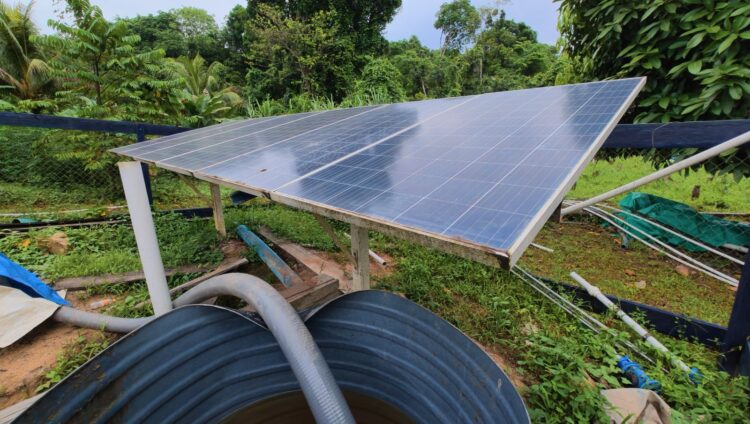
Consequently, Duncan has requested that GWI and the responsible ministry publish the project’s scope, contractor details, contract value, payments made, timelines and any extensions. He has also called for an urgent inspection and a “firm completion timetable, with interim water assistance wherever needed”.
The 2026 National Budget allocates G21.6 billion for the water sector, dedicating G1.5 billion to expand access for more than 37,000 hinterland residents through wells, distribution networks and solar power.
At the same time, the government has advertised new tenders, including a G75 million system for Mabaruma in Region One, while Minister Croal has projected full treated-water coverage within two years.
Against this backdrop, reports of unattended equipment in Santa Cruz prompt scrutiny over project execution and whether resources allocated to improve water access are translating into functioning services for communities that need them.
As Duncan noted:
“Public accountability must be measured by those results.”