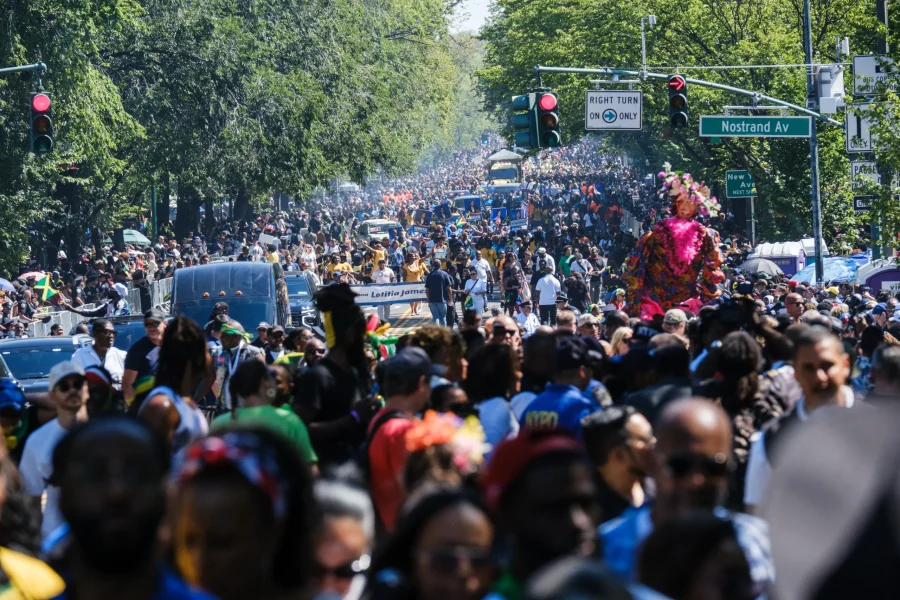
Thousands of Caribbean nationals and their descendants gathered along Brooklyn’s Eastern Parkway on Monday for the annual West Indian American Day Parade, celebrating the region’s culture and heritage amid heightened security and several violent incidents.
The parade, one of New York’s largest celebrations of Caribbean culture, featured colourful costumes, national flags, steel-pan music, floats, food and dancing, bringing together communities from Jamaica, Haiti, Guyana, Trinidad and Tobago, Barbados and other Caribbean nations.
The celebration was accompanied by a major police presence, following concerns about violence at previous events. Thousands of officers were deployed, while additional screening and security measures were implemented along the parade route. Organisers and police also planned for the parade to conclude earlier than in previous years in an effort to reduce security risks.
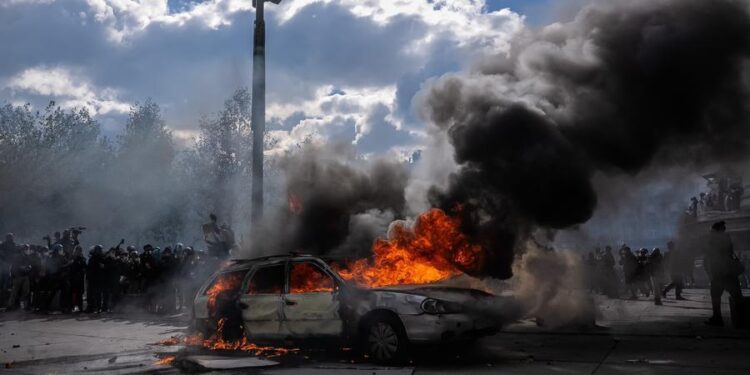
Despite those precautions, several violent incidents were reported before and during the festivities. Police said a number of people were injured in separate incidents, including shootings and stabbings near the parade route. Investigations were continuing, and authorities had not established whether the incidents were connected.
The incidents did not prevent the parade from proceeding or diminish the participation of thousands of spectators and marchers.
Haitian Community Faces Immigration Uncertainty
This year’s celebration also carried particular significance for New York’s Haitian community, which has been affected by uncertainty surrounding US immigration protections.
Reporting by The New York Times indicated that the termination of Temporary Protected Status for Haitians contributed to a more muted Haitian presence at the event. Some Haitian New Yorkers who traditionally participate in large numbers reportedly stayed away, while others marched in support of Haitian immigrants and called for the restoration of protections.
The immigration concerns added another dimension to a parade that has long served as both a cultural celebration and a public expression of Caribbean identity in New York.
Culture Takes Centre Stage
Across Eastern Parkway, Caribbean flags, music, elaborate costumes and performances showcased the diversity of the region’s diaspora.
The event provided an opportunity for communities to celebrate their heritage and maintain cultural connections across generations, while also highlighting the continuing contribution of Caribbean immigrants and their descendants to New York City.
Although the reported violence renewed questions about security at large public celebrations, the overwhelming focus of the day remained Caribbean culture, community and identity.
The parade once again demonstrated the enduring importance of the annual gathering as a major cultural event for New York’s Caribbean population, even as organisers and authorities confront the challenge of keeping future celebrations safe.