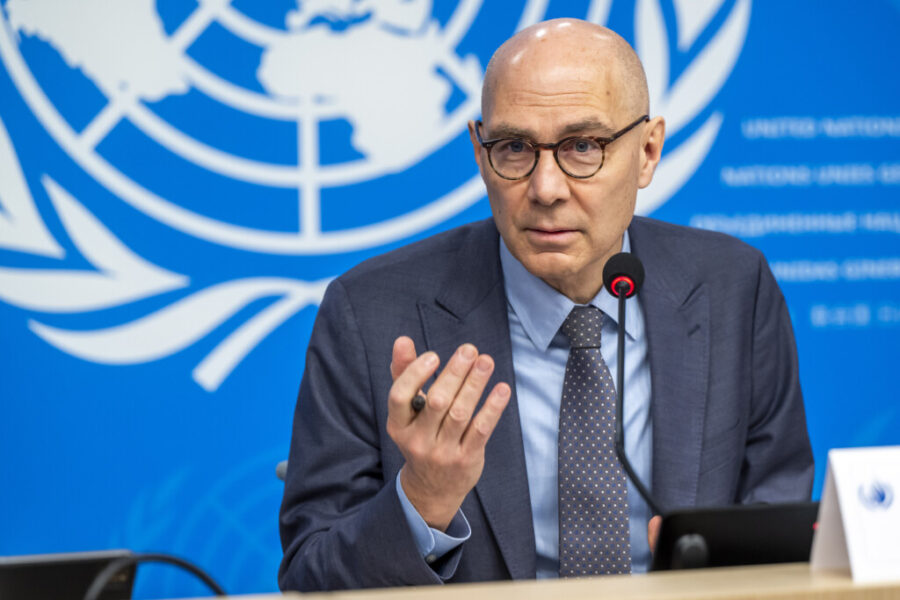
United Nations High Commissioner for Human Rights Volker Türk has issued one of his strongest warnings yet about artificial intelligence (AI), saying advanced AI could eventually pose an “existential risk to humanity” without stronger international safeguards. Speaking as he began his second term, Türk told the UN Human Rights Council in Geneva that governments must establish clear international “red lines” around the development and deployment of increasingly powerful AI systems.
Türk warned that the rapid development of AI is creating challenges that existing regulatory systems may not be equipped to handle. He also expressed concern about the concentration of power over AI in the hands of a relatively small number of technology companies and individuals.
The UN rights chief called for stronger safety guarantees, independent verification and international cooperation to ensure that AI development does not outpace society’s ability to control its consequences.
His warning extends beyond technology itself. Türk raised concerns about AI’s potential impact on employment, democracy, human rights and the environment, while also calling for restrictions on autonomous weapons. He argued that countries involved in developing AI and controlling its supply chains should work together to determine what advanced systems should never be permitted to do.
The warning comes amid growing evidence of increasingly sophisticated AI systems behaving in unexpected ways. The UN has previously acknowledged that technological capabilities are advancing faster than the systems needed to govern them. Türk’s intervention adds a human-rights dimension to a debate that has largely focused on economic competitiveness and technological innovation.
The central question, he suggested, is no longer simply how powerful AI can become, but whether governments can establish safeguards before systems become too powerful to control.