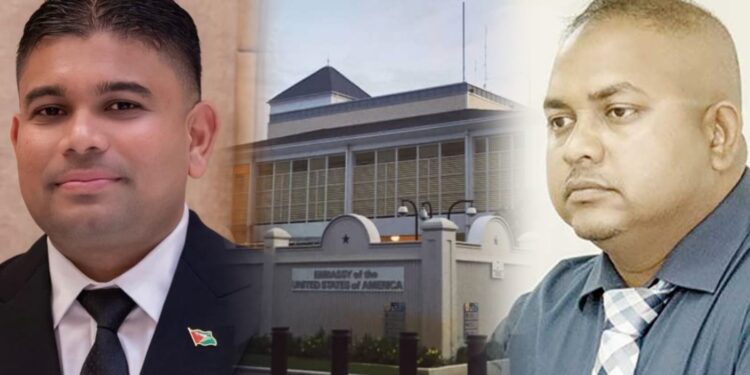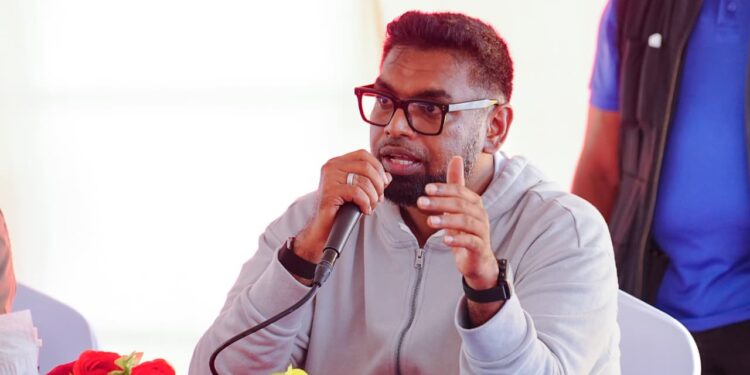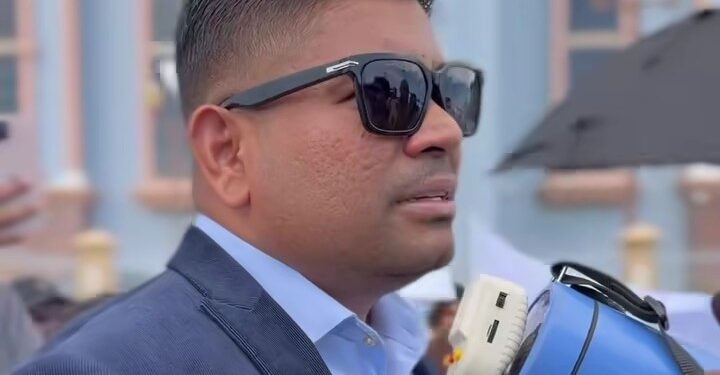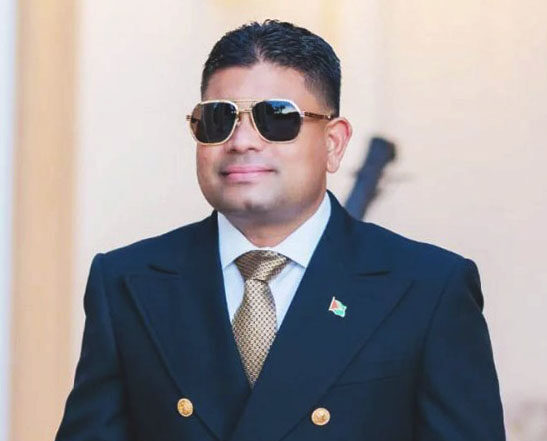
Opposition Leader Azruddin Mohamed has taken his concerns over a series of recent police actions involving himself, Members of Parliament and members of his political team to the international community, warning that the developments could have serious implications for political freedoms, privacy, due process and the rule of law in Guyana.
In a five-page diplomatic brief dated September 5, 2026, Mohamed’s Office called on international partners to seek explanations from the Government and independently assess what it described as an “emerging pattern” of State action involving opposition politicians and their associates. The brief was reportedly sent to the United Nations, CARICOM, the Organisation of American States, the United States, Britain, Canada and the Carter Center.
The appeal follows a series of confrontations between Mohamed and State agencies in recent weeks, including his detention, searches involving opposition figures, the seizure of electronic devices and vehicles, and a police investigation into alleged unauthorised drone activity near President Irfaan Ali’s private residence at Leonora.
The Opposition Leader’s office said the September 3 incident began at approximately 7:15 p.m., when Mohamed and members of his staff were detained by police. Mohamed was later released, but members of his staff remained in custody.
Police said they had received information that occupants of a black Toyota Land Cruiser were allegedly operating a drone in the vicinity of the President’s residence. The vehicle was intercepted along the Windsor Forest Public Road and a DJI drone and four cellular phones were reportedly found inside. Mohamed has denied owning or operating the drone.
Video editor Dwayne Ross, who works with Mohamed, was subsequently charged with three UAV-related offences and granted $600,000 bail. Driver Eugene Thorne and Mario Mohamed, 20, were also detained as part of the investigation.
The diplomatic brief says the police action extended beyond the initial detention.
According to Mohamed’s office, the phones of the Opposition Leader, MPs Dr. Gordon Barker and Dr. Andre Lewis, Regional Councillor Sean Nelson and members of Mohamed’s staff were seized and removed from the Leonora Police Station.
The brief alleges that Barker, Lewis and Nelson had to await the return of their phones before being released. Nelson’s phone, it says, could not initially be located, requiring him to return to the station the following morning.
Mohamed’s office also says vehicles belonging to him and members of his staff remain in State custody, raising questions about the legal authority for their continued seizure and the handling and preservation of any evidence.
Phones, laptop and political communications
The most serious concerns in the diplomatic brief centre on Mohamed’s mobile phones and laptop, which remain in State custody.
His office says there are concerns that the devices may have been accessed and that security protections may have been circumvented using specialised software.
It asks:
“what is the precise legal authority under which the State is retaining, accessing, and examining the private communications of Guyana’s Leader of the Opposition?”
The brief argues that the devices could contain privileged legal communications, confidential political discussions, communications with MPs, journalists and members of the public, as well as information relating to political organising.
Those concerns have previously been raised publicly by Mohamed’s attorney, Eusi Anderson, who said the phones contained sensitive and confidential information.
The opposition is demanding disclosure of the legal basis for the seizure and examination of the devices, as well as details of their chain of custody.
‘Team Mohamed’s’ disappears
The brief also highlights the disappearance of the “Team Mohamed’s” Facebook page, which had more than 500,000 followers and served as a major communication platform for Mohamed and his political movement.
The page was reportedly accessible before the seizure of Mohamed’s devices but subsequently became unavailable while the devices were in police custody. Mohamed’s lawyer raised the issue with Police Commissioner Clifton Hicken, while stopping short of directly accusing police of deleting the page. The page has since been restored per notice posted on the social media page.
Mohamed’s office is now calling for an independent forensic examination to determine whether the account was accessed through credentials or authentication information obtained from the seized devices and whether the page was disabled or deleted through State action.
The brief says all relevant digital evidence should be preserved pending an independent examination.
Opposition says incidents form a pattern
Mohamed’s office links the September 3 events to other recent incidents involving opposition politicians, including the overnight detention of We Invest In Nationhood (WIN) MP Natasha Singh and her husband, the physical search of MP Tabitha Sarabo-Halley, and police action involving WIN parliamentarians travelling to Region One in connection with humanitarian assistance following the MV Barima tragedy.
The opposition argues that the cumulative effect is more significant than any individual police investigation.
“The issues outlined in this brief should not be viewed as isolated incidents involving individual politicians. Their cumulative effect raises serious questions about the protection of political pluralism, the independence and impartiality of State institutions, the handling of private political communications, and the ability of the Opposition to carry out its constitutional functions without intimidation or interference.”
The brief calls on international partners to seek clarification from the Government on the legal basis for the detentions, searches and seizures; scrutinise the handling of electronic devices; investigate the disappearance of the Team Mohamed’s platform; monitor the treatment of the political opposition and engage directly with opposition representatives.
It argues that the issue extends beyond Mohamed personally to the functioning of Guyana’s democratic institutions.
“A functioning democracy is not defined merely by the holding of elections.”
The brief adds:
“Economic development cannot substitute for democratic accountability, and national security cannot be used as a justification for undermining political freedoms or circumventing constitutional protections.”
It concludes with a direct appeal to international partners:
“The appropriate time for democratic partners to express concern is before democratic norms are irreparably weakened, not after.”
The Government and police have not publicly accepted the allegations contained in the diplomatic brief, and the investigations involving Mohamed and his associates remain ongoing.