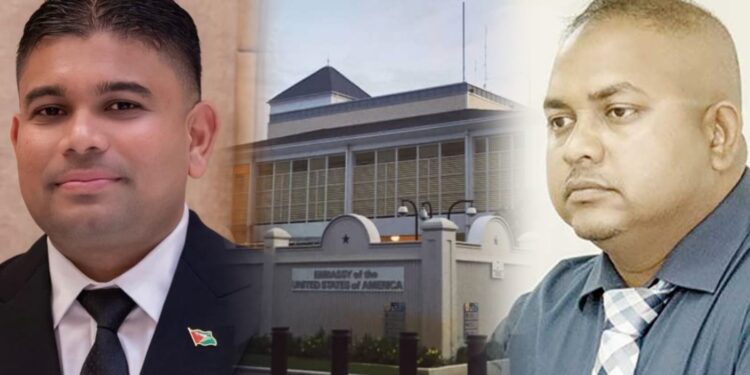
Two A Partnership for National Unity (APNU) Members of Parliament (MPs) are demanding that the Government disclose the full terms of Guyana’s migration cooperation framework with the United States, arguing that the arrangement was implemented before Guyanese and Parliament were given meaningful information about its scope and implications.
The demand by MPs Sherod Duncan and Ganesh Mahipaul comes after Government confirmed that Guyana has received six third-country nationals—four Cubans and two Afghans—deported from the United States under a one-year migration cooperation framework negotiated over several months.
The Government says the individuals are skilled, non-criminal and were vetted before being accepted. It has also said the arrangement is temporary, does not constitute permanent resettlement, and that the International Organization for Migration (IOM) will cover the costs of receiving, housing and supporting the individuals. Guyana retains the right to reject anyone proposed for relocation.
But Duncan said the issue is not the nationality of the migrants or whether Guyana should assist people in need. His concern, he said, is the manner in which the agreement was negotiated and implemented without sufficient public disclosure.
“My concern is not with the nationality of these persons, and this matter must not be reduced to hostility towards migrants. My concern is with how the Government conducts the affairs of this country and the accountability owed to Guyanese and to Parliament.”
Duncan said Guyanese still do not know critical details of the arrangement, including the maximum number of people Guyana could be required to receive, their precise immigration status, whether they will be allowed to work, the extent of Guyana’s independent screening, reporting requirements and what happens if onward relocation becomes impossible.
He is calling for the full publication of the Guyana-US Migration Cooperation Framework, with only narrowly defined redactions where necessary for privacy or operational security.
The MP also questioned Guyana’s broader immigration and border-management systems, pointing to previous parliamentary concerns he has raised about work permits, foreign workers and the security and staffing of riverine and other entry points.
“Migration must be managed, not improvised; security must be planned, not assumed; and international agreements affecting who enters and remains in Guyana must be subjected to transparency, parliamentary scrutiny, and clear public accountability.”
Mahipaul, meanwhile, warned that the issue goes beyond the immediate six arrivals and concerns whether Guyana has the institutional capacity to assume additional international responsibilities.
He questioned whether state agencies have the independence, professionalism and resources required to monitor and protect those placed under the programme while also meeting the needs of Guyanese citizens.
“Guyanese people have always been known for our hospitality and willingness to help others. My concern is whether our country has the institutional capacity to properly manage and monitor this programme and live up to the responsibilities it is accepting.”
Mahipaul pointed to ongoing challenges involving utilities, housing, healthcare, immigration, security and social services.
“Guyanese are naturally hospitable people. We welcome people. We help people. We open our doors to people in need. But hospitality must not mean that Guyanese citizens become last in their own country.”
The Government has sought to address some of those concerns, stating that the IOM—not Guyana—will bear the costs of housing and supporting the individuals, while Guyana retains responsibility for admission, legal stay, protection and removal. The Government also says those accepted may seek international protection where applicable and will have access to legal representatives and family members.
The opposition MPs, however, are demanding answers on the programme’s scale, housing arrangements, monitoring mechanisms, responsible agencies, enforcement if conditions of stay are breached, independent oversight and safeguards against political interference.
Mahipaul ended with a broader warning:
“Guyana can be compassionate without being careless. We can be hospitable without neglecting our own citizens. We can cooperate internationally while insisting that our institutions are strong enough to protect the interests of everyone involved.”
He added:
“Help others, yes. But let us not continue creating a Guyana where everyone else gets priority while Guyanese are told to wait.”
The six arrivals have now turned what had been a months-long, largely undisclosed negotiation into an operational policy, intensifying demands from the parliamentary opposition for the agreement to be placed before the public and subjected to scrutiny.
“Guyanese must not come last in Guyana,” Mahipaul said.