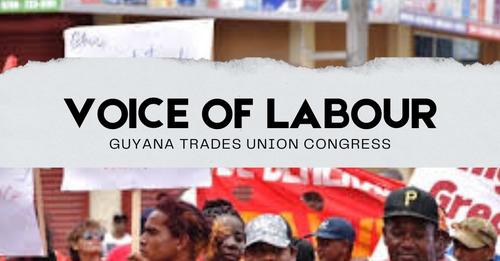
A trade union is often most visible when workers are on a picket line, demanding higher wages, safer workplaces or a collective agreement. But the real strength of organised labour is not the protest. It is the rights and collective power that exist before workers ever reach that point.
That is why workers should understand how easily those rights can be weakened—not necessarily through one dramatic act, but through fear, silence, division and the gradual erosion of collective organisation.
The right to organise is a fundamental labour right. The International Labour Organisation (ILO) identifies freedom of association and collective bargaining among its fundamental principles and rights at work. ILO Convention No. 87 protects workers’ right to establish and join organisations of their own choosing, while Convention No. 98 provides protection against anti-union discrimination and interference.
Guyana’s Constitution also protects freedom of association, including the right to form or belong to trade unions for the protection of workers’ interests, as well as the right to strike, subject to constitutional limitations.
Yet having a right on paper does not automatically mean workers will be able to exercise it effectively.
Rights can be lost through surrender before they are taken away through law.
A worker who becomes afraid to join a union because of possible victimisation has a right, but may not feel free to exercise it. A worker who refuses to attend a union meeting because management might view the participation negatively has a right, but fear is already limiting its use.
The ILO specifically warns against anti-union discrimination, including dismissal or prejudice because of union membership or participation in union activities. It also says employers should not intimidate, threaten or coerce workers into decisions about whether to organise.
Another way workers lose power is division.
Management does not have to defeat a strong union directly if workers can be persuaded that the interests of one group are different from those of another. Permanent workers can be placed against temporary workers. Younger workers can be separated from older workers. Public-sector employees can be portrayed as having different interests from private-sector employees.
Once workers stop seeing themselves as having common interests, collective bargaining becomes weaker.
And when collective bargaining becomes weaker, the individual worker faces the employer alone.
That is precisely why collective bargaining matters. The ILO describes it as a fundamental right and a key means through which workers and employers establish fair wages and working conditions.
Workers can also lose rights through indifference.
A union cannot remain strong if members only become interested when salaries, benefits or jobs are threatened. Rights require participation. Workers must attend meetings, understand collective agreements, elect representatives, question leadership and know the procedures available when disputes arise.
Trade union leaders, too, have a responsibility. A union that stops listening to its membership, becomes excessively political, fails to account for its decisions or treats workers as followers rather than owners of the organisation can weaken the very institution established to protect them.
The ILO emphasises that workers’ organisations should be able to organise their administration, elect representatives and conduct their activities without improper interference.
The greatest danger, therefore, is not always an employer openly declaring that workers have no rights. It is a workplace where workers become afraid to speak. A society where workers believe challenging authority will cost them their livelihood. A union membership that becomes passive. And a generation of workers that inherits rights without understanding the struggles that created them.
Rights survive when people use them.
Workers must know their constitutional protections, understand their collective agreements, participate in their unions and challenge unlawful discrimination or interference through the appropriate channels.
The lesson of the trade union movement is simple: what workers fail to defend today may not be available to defend tomorrow.
Freedom of association is not merely a workplace benefit. The ILO considers it integral to democracy because it allows people to organise collectively to protect their economic interests and broader freedoms.
Once workers understand that, they understand something even more important:
The loss of one worker’s rights can become a warning to all workers.
- International Labour Organisation (ILO) — Fundamental Principles and Rights at Work.
- International Labour Organisation (ILO) — Freedom of Association and Protection of the Right to Organise Convention, 1948 (No. 87).
- International Labour Organisation (ILO) — Right to Organise and Collective Bargaining Convention, 1949 (No. 98).
- Constitution of the Cooperative Republic of Guyana — Articles 21–23, 38, 147 and 149C, addressing labour rights, trade unions, collective action and participation in State decision-making.