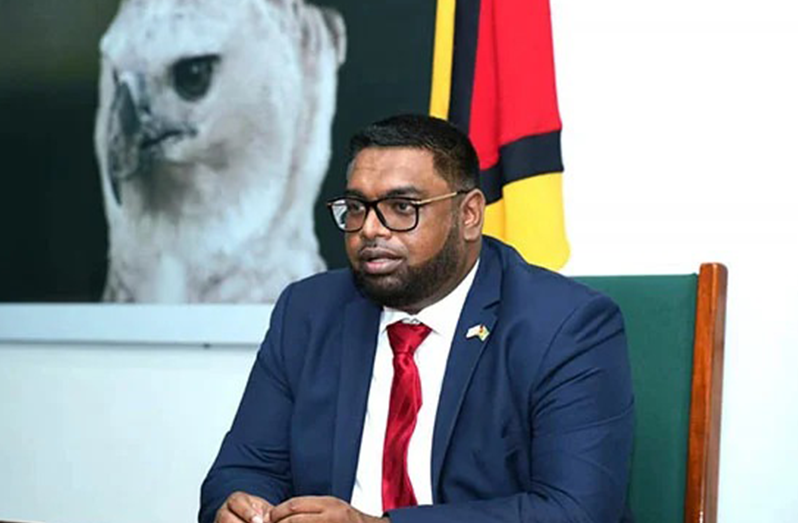
As Guyana commemorates Amerindian Heritage Month, the nation must pause and reflect honestly on the condition, aspirations and future of its First Peoples. Last evening, I listened carefully to the address delivered by President Irfaan Ali at Whirl Wind Village, Sophia. While speeches and expressions of appreciation for Indigenous peoples are important, our First Peoples deserve far more than ceremonial words. They deserve meaningful action, economic empowerment, ownership and opportunities capable of transforming their communities for generations to come.
Amerindian Heritage Month should not be reduced to a period when politicians visit Indigenous communities, deliver speeches, celebrate their culture and make promises. It must be a time when the country asks a fundamental question: What tangible economic opportunities are being created to place Indigenous people in control of their own future?
One area where the Government of Guyana can make a significant difference is Indigenous tourism ownership. Guyana possesses extraordinary natural beauty, wildlife, rivers, forests and Indigenous cultures with enormous potential for sustainable tourism. Yet too often, the greatest economic benefits from tourism flow to businesses and investors from outside the communities where these attractions are located. That approach must change.
The Government should establish an Indigenous Tourism Ownership Programme designed in consultation with Indigenous leaders, village councils, communities and other stakeholders. The objective should be straightforward: Indigenous communities should not merely participate in tourism; they should own it.
Under such a programme, the Government could provide initial capital financing, technical assistance, training and business support, while the Indigenous village or community retains ownership of the enterprise. The programme could support village-owned eco-lodges and guest houses, tour boats and river excursions, birdwatching and wildlife businesses, Indigenous craft and cultural shops, fishing and angling tours, jungle and forest excursions, cultural and heritage experiences, traditional food and culinary tourism, and nature tours, community transportation services, camping and adventure-tourism facilities, as well as traditional arts, music and cultural performances.
These would only be starting points. The communities themselves should determine which businesses are appropriate for their environment, culture and aspirations. Nobody in Georgetown should be deciding from an office what an Indigenous community needs or what kind of enterprise can succeed in that community.
This is the fundamental change Guyana needs. Our Indigenous brothers and sisters should not always be treated as beneficiaries of Government programmes. They should be owners, entrepreneurs, employers and investors in their own communities.
Imagine a village owning an eco-lodge where visitors stay. The village owns the property and the boats. The village employs the tour guides, produces and sells its crafts, provides the food and conducts the cultural tours. The village earns the revenue, and that revenue is reinvested into education, healthcare, infrastructure, youth programmes and further economic development. That is what empowerment should mean.
The Government has an important role to play, but Government assistance must not become Government ownership. Initial capital could come through a dedicated Indigenous Tourism Development Fund, providing grants or low-interest financing for viable community-owned projects. However, the Indigenous community must retain ownership and have a meaningful say in how the enterprise is managed.
Such a programme would require proper governance, transparent accounting, professional training and business development support. Indigenous entrepreneurs should receive training in hospitality, accounting, marketing, digital commerce, tour management, environmental conservation and customer service. The Government can also assist communities in accessing international tourism markets and developing partnerships with airlines, hotels, travel agencies and online booking platforms. But the Indigenous community must remain at the centre of the enterprise.
Any serious Indigenous development programme must be designed with Indigenous communities, not merely for them. The Government must sit down with village councils, Indigenous leaders, young people, women, entrepreneurs, traditional leaders and community members and ask what they want for their communities, what businesses they believe can succeed, what resources they already possess, what support they need and how their culture and traditions can be protected while creating economic opportunities.
Development cannot be imposed from Georgetown. It must be built in partnership with the communities themselves. The people who live in these communities understand their land, rivers, forests, traditions and challenges better than any consultant or politician.
There is also another issue that must be confronted honestly. Our Indigenous people must not become political decorations. Every political party should respect the fact that our First Peoples are citizens of Guyana whose dignity, livelihoods, culture, land, education and economic future must be placed above partisan politics.
Indigenous communities should not only be remembered during elections, political rallies or Heritage Month celebrations. They deserve attention every day of the year. Guyana must move beyond the politics of photographs, speeches and promises. Our Indigenous people deserve measurable results. They deserve businesses, jobs, modern infrastructure, quality education, healthcare, reliable transportation and connectivity. They deserve opportunities for their young people to remain in their communities because they can build prosperous lives there. Above all, they deserve ownership and dignity.
The Government of Guyana has an opportunity to demonstrate that Amerindian Heritage Month can become more than a month of speeches. Let it become the beginning of a new national policy of Indigenous economic ownership. Let the country establish community-owned tourism enterprises, put capital into the hands of Indigenous communities, train Indigenous entrepreneurs, create opportunities for Indigenous youth, strengthen village economies and protect Indigenous culture and the environment while creating sustainable income.
When tourists travel into Guyana’s hinterland, the Indigenous communities whose lands, rivers, forests and cultures make the experience possible must be among the principal owners and beneficiaries of that tourism economy. It is not enough for outsiders to profit while the communities receive occasional employment, small contracts or ceremonial recognition.
President Irfaan Ali and the PPP Government have an opportunity to move from words to action. Amerindian Heritage Month should not end with another speech. It should begin with a programme, a budget, a timeline and measurable results.
Our First Peoples have contributed to the story of Guyana since long before the modern State existed. Their culture, knowledge, traditions and relationship with the land are an indispensable part of our national identity. We must therefore ensure that their future is not determined by dependency, political promises or outside ownership.
Let Guyana build Indigenous communities that own, operate and benefit from the economic opportunities within their own homeland. Let the country stop repeatedly failing its First Peoples. Let their livelihoods, culture, dignity and future be paramount.
Amerindian Heritage Month must be about more than remembering our First Peoples. It must be about empowering them and not to subject them.
Pt.Ubraj Narine, JP, COA
Former Staff Sgt.(GDF), Mayor
City of Georgetown