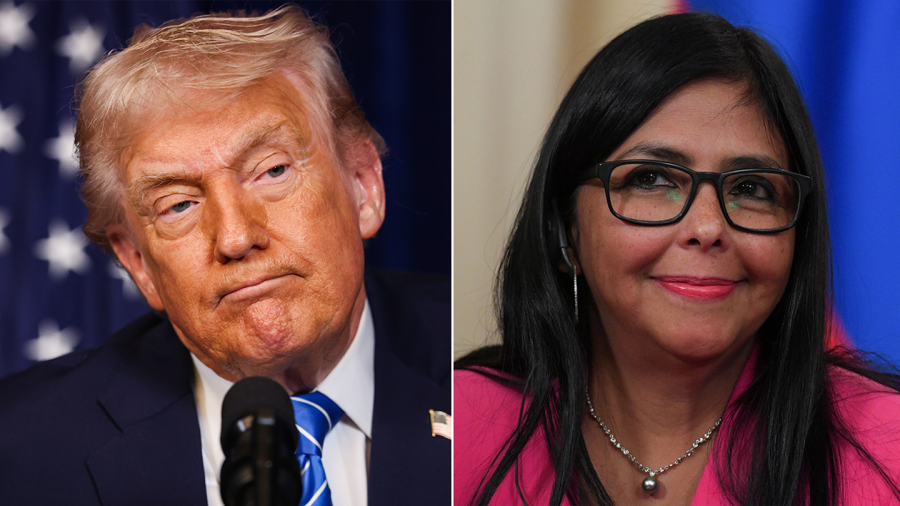
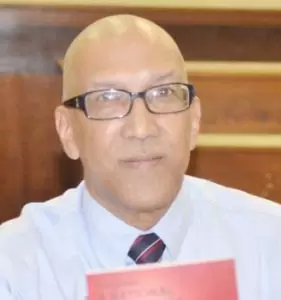
Social commentator GHK Lall has described the newly announced US-Venezuela oil agreement as a potentially transformative development for the region, while questioning its transparency, the identities of those behind it and how long the arrangement will survive.
In a column published in Village Voice News on September 1, Lall dubbed the agreement “The Donny and Delcy Show,” referring to US President Donald Trump and Venezuela’s interim President Delcy Rodríguez.
The agreement gives a US-backed private venture rights to develop 17 Venezuelan oil fields containing about 65 billion barrels of proven reserves. The arrangement involves North American Blue Energy Partners (NABEP), controlled by Venezuelan businessman Alejandro Betancourt. The US government is taking a 35% stake in the venture and will have preferential access to oil produced.
Lall questioned the manner in which the agreement was negotiated and the personalities involved.
“It’s the Donny and Delcy Gong Show. A quarter of Venezuela’s premier national treasure, a concealed deal, a very shaky setup, executed when there was no moon.”
He also took aim at what he sees as a contradiction between Washington’s stated commitment to the rule of law and its dealings with Rodríguez and Betancourt.
“What’s fascinating to a peasant like me is that the U.S. speaks of law and order, and rule of law … and still cuts a huge oil deal with the Caracas Top Cat, Excellency Delcy Rodrigues, and with a man of means named Betancourt.”
The agreement has already attracted scrutiny from lawmakers, analysts and legal experts, particularly because it was negotiated without congressional involvement and details were initially withheld. Reuters reported that experts and lawyers have questioned the deal’s legal foundation and called for greater transparency.
Lall, however, sees a potentially significant benefit for Guyana.
“Closer to Guyana’s place in this new US-Venezuela contraption, I see a positive.”
He argues that improved US-Venezuela relations could remove a major geopolitical obstacle to expanded oil exploration in Guyana’s offshore Stabroek Block, where ExxonMobil has made multiple discoveries.
His argument comes as Trump has confirmed ExxonMobil is among the major companies preparing to return to Venezuela’s oil industry. Exxon and ConocoPhillips had previously exited Venezuela after the nationalisation of their assets under the Hugo Chávez government.
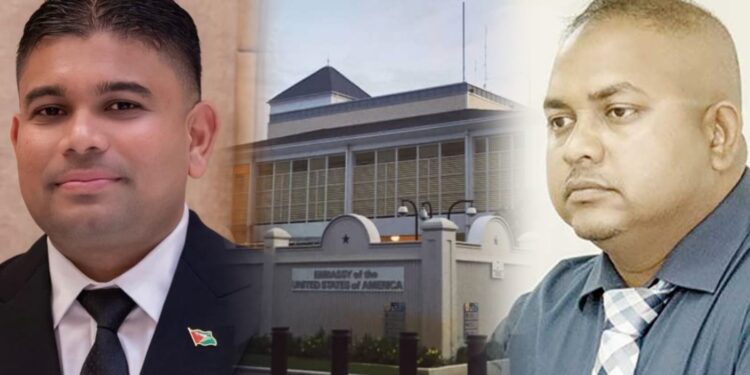
Lall also linked the Venezuelan development to Guyanese businessman Azruddin Mohamed and the US interest in his affairs, suggesting that Washington’s focus could extend beyond the specific allegations or assets currently under scrutiny.
He advised Mohamed to cooperate strategically with US authorities.
“My advice to him is simple: give the Americans what they want, but extract the biggest returns for himself. In black and white. Witnessed. Stamped. Sealed and signed.”
Lall further predicted that the US-Venezuela rapprochement could eventually affect the longstanding Guyana-Venezuela territorial dispute.
“Last, I foresee an end to the Guyana-Venezuela border mishmash.”
He questioned whether the current oil-driven rapprochement could ultimately reshape the dispute over Venezuela’s claim to Essequibo, while warning that the agreement itself may be tied closely to the political fortunes of Trump and Rodríguez.
“I believe this best oil deal ever will only last as long as Donny and Delcy are in charge. Remember I said so.”
The US-Venezuela arrangement comes against the backdrop of Washington’s intervention in Venezuela earlier this year and the removal of Nicolás Maduro, followed by Rodríguez assuming the interim presidency. The oil agreement has consequently become both an economic deal and a major geopolitical development with potential implications for Guyana, Venezuela and the wider Caribbean.