The agreement, announced Friday, is designed to revive Venezuela’s battered oil industry through U.S. investment and private-sector participation. Trump said the United States had secured majority control of the reserves through a partnership with private business, while Venezuelan interim President Delcy Rodríguez said the agreement covers 17 strategic oil fields and has a target of more than 1.5 million barrels per day.
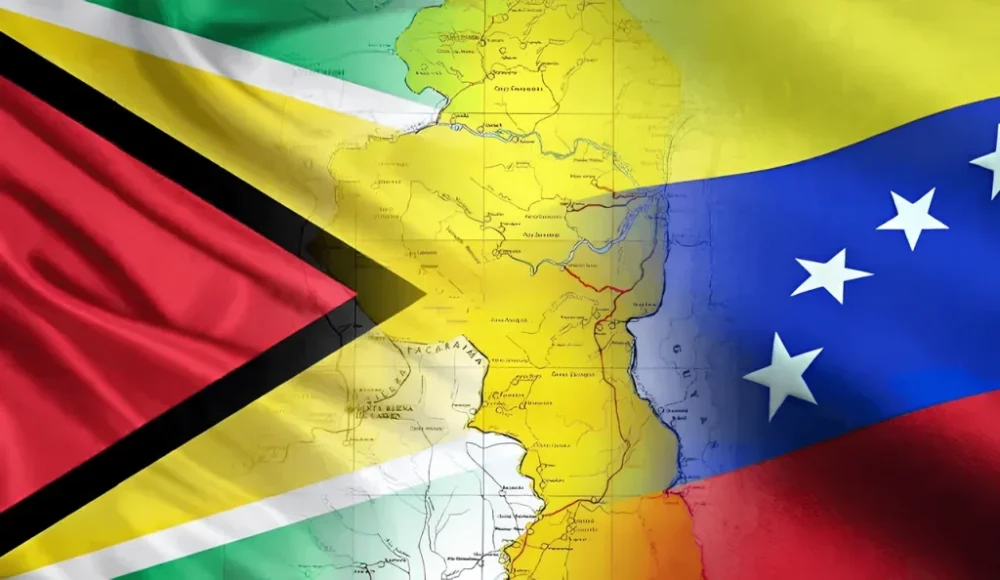
For Guyana, the most immediate question is whether a deeper U.S. economic stake in Venezuela will strengthen Washington’s interest in preventing renewed tensions over Essequibo.
Guyana has long argued that Venezuela’s claim to the region cannot threaten Guyana’s sovereignty or its offshore oil operations. At the same time, ExxonMobil, a major U.S. company, remains the operator of Guyana’s Stabroek Block, where oil production has expanded rapidly. ExxonMobil says it has made more than 30 discoveries offshore Guyana since 2015.
The strategic relationship is therefore complicated: Washington now has potentially enormous interests in Venezuelan oil while U.S. companies continue to have enormous interests in Guyana’s oil. That could make regional stability more valuable to the United States than ever.
A stronger U.S. stake — and a stronger Venezuela?
Rodríguez said the 25-year arrangement could generate about $209 billion in revenue for Venezuela, based on a benchmark oil price of $65 a barrel, while attracting approximately $100 billion in investment. A successful revival of Venezuela’s oil industry could eventually produce a wealthier and economically stronger neighbor for Guyana.
That matters because Venezuela’s claim to Essequibo has not disappeared. A stronger Venezuelan economy could give Caracas greater resources to pursue its regional ambitions, although the new U.S. relationship could simultaneously constrain Venezuela from taking actions that threaten American interests.
For Guyana, therefore, the agreement creates a paradox: the United States may have more leverage over Venezuela, but Venezuela could also eventually have more financial resources.
Oil prices present another risk
That could become significant for Guyana, whose government revenues are increasingly tied to petroleum. Guyana’s position has nevertheless improved considerably as production costs are recovered under the Stabroek Block agreement. President Irfaan Ali said this month that Guyana’s share of production had risen to approximately 39.8 percent, as the consortium’s cost recovery declined.
Lower international oil prices, however, would reduce the value of every barrel Guyana sells.
A long-term calculation for Georgetown
Despite Trump’s promise of increased U.S. oil supplies and lower gasoline prices, analysts say rebuilding Venezuela’s oil industry will take years because of damaged infrastructure, underinvestment and the country’s history of political and economic instability.
The deal itself also remains partly opaque. The United States has not released the full agreement, and conflicting accounts have emerged over its structure and duration. Trump has described U.S. majority control of the reserves, while Rodríguez has emphasised Venezuelan ownership and sovereignty.
For Guyana, the emerging reality is therefore neither entirely good nor bad.
A deeper U.S. presence in Venezuela could provide Georgetown with a stronger geopolitical shield against threats to its territory and offshore oil industry. But a successful Venezuelan oil revival could also produce a stronger competitor for markets and potentially place downward pressure on oil prices.
The Trump deal has consequently made Venezuela’s oil future an issue Guyana cannot afford to watch from the sidelines.