By Rannie Whyte
Part One: From Solidarity to Action
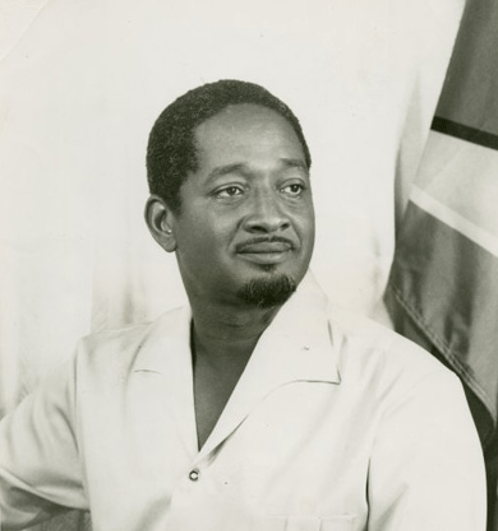
Forbes Burnham made support for African liberation and opposition to apartheid a major element of Guyana’s foreign policy.
The history of the liberation of Southern Africa is usually told through the courage and sacrifice of Africans themselves and the support provided by the Frontline States, Cuba, the Soviet Union and international anti-apartheid movements.
Far less attention is given to a small Caribbean and South American nation thousands of miles away that committed its limited diplomatic, financial and human resources to that struggle.
That country was Guyana.
Under the leadership of Forbes Burnham, Guyana became one of the more outspoken developing countries in support of African liberation.
Its contribution was not confined to speeches condemning apartheid.
Guyana contributed money, personnel, education, diplomatic representation and political support. It joined international sporting and economic pressure against apartheid and, during the extraordinarily tense environment of the Cold War, became involved in the logistics surrounding Cuba’s intervention in Angola against South African forces.
Burnham did not accomplish this alone.
Guyana possessed an exceptional corps of diplomats and international statesmen, among them Sir Shridath Ramphal, Frederick “Fred” Wills, Sir John Carter, Rashleigh Jackson, Noel Sinclair and others.
They helped translate Guyana’s political commitment into action at the United Nations, the Commonwealth, the Non-Aligned Movement and in direct negotiations with some of the world’s most powerful governments.
This record deserves to be remembered.
A small country taking a large position
Guyana became independent in 1966 with enormous development challenges of its own.
It was neither wealthy nor militarily powerful.
Yet Burnham increasingly placed Guyana alongside the anti-colonial and anti-apartheid movements of Africa.
It is important to acknowledge that support for African liberation in Guyana did not originate exclusively with Burnham or the PNC.
Progressive political forces in both the PPP and PNC had long opposed colonialism and racial discrimination.
What Burnham did after assuming governmental power was to transform that tradition of solidarity into a significant component of Guyana’s foreign policy.
At the 1970 Non-Aligned Movement summit in Lusaka, Zambia, Guyana committed itself financially to the African liberation struggle.
Guyana’s National Assembly later recorded an annual contribution of US$50,000 to the liberation struggle.
For a young developing country facing serious economic and social problems of its own, this was not an insignificant commitment.
The message was clear.
Guyana was not merely wishing Africans well from the other side of the Atlantic.
It was prepared to commit scarce national resources to their freedom.
Zambia: solidarity expressed through people
One of Guyana’s most practical contributions occurred in Zambia.
Newly independent African countries inherited states that had been deliberately deprived of sufficient numbers of trained African professionals and administrators.
Zambia, which became one of the crucial Frontline States in the struggle against white-minority rule in Southern Africa, urgently needed skilled personnel.
Guyana responded.
More than 100 Guyanese public servants and professionals were sent to Zambia, including doctors, engineers, lawyers, administrators and other skilled personnel.
This was a substantial contribution for a country with Guyana’s small population and limited professional resources.
Burnham also established Guyanese diplomatic representation in Lusaka, placing Guyana closer to the political centre of the Southern African liberation struggle.
This was liberation diplomacy in practical form: a small postcolonial country sharing the human resources it possessed with another newly independent nation.
Guyana also provided training opportunities for Namibian and Zimbabwean students, helping prepare personnel for the day when those territories would be governed by their own people.
Guyanese travel documents were reportedly made available to some liberation personalities whose movement internationally was restricted.
Among those identified in Guyanese accounts were Namibian leader Theo-Ben Gurirab and ANC representative John Makatini.
These forms of assistance are important because liberation was never simply about winning a military struggle.
Countries such as Zimbabwe and Namibia would need administrators, educators, professionals and diplomats once independence was achieved.
Guyana understood that.
Burnham, Angola and great-power politics
Perhaps the most dramatic example of Guyana’s willingness to take risks for Southern African liberation came during the Angolan crisis of 1975–76.
When Portugal withdrew from Angola, competing liberation movements fought for control of the country.
South African forces intervened from the south against the MPLA, while Cuba responded with military assistance to the MPLA.
The conflict rapidly became entangled in Cold War politics.
For a small country such as Guyana, becoming involved in such an international confrontation was no minor diplomatic decision.
The United States was intensely concerned about Cuban military involvement in Angola.
Declassified American diplomatic documents show U.S. officials closely monitoring whether Guyana would permit Cuban aircraft travelling between Cuba and Africa to transit Guyanese territory.
What is well documented is that Guyana was prepared to facilitate Cuban use of its airport in connection with the Angolan airlift despite considerable geopolitical pressure.
That placed Burnham’s government in direct disagreement with Washington during one of the most sensitive moments of the Cold War in Southern Africa.
The importance of the issue should not be exaggerated.
Guyana did not determine the outcome of the Angolan war, nor is there strong evidence to support some later claims that Guyanese soldiers themselves fought in Angola.
But allowing Guyanese territory to assist the Cuban airlift carried political consequences.
Burnham was demonstrating that, where he believed African liberation was at stake, Guyana would not automatically follow Washington’s position.
Fred Wills: defending Guyana before the great powers
Frederick Rudolph Wills, Guyana’s Foreign Minister from 1975 to 1978, deserves a prominent place in this history.
Wills was not simply delivering diplomatic messages.
He operated at the centre of some of the most difficult foreign-policy questions confronting Guyana during the Cold War.
American diplomatic records show Wills engaging senior United States officials directly over Angola, Cuba, apartheid and Southern Africa.
In discussions with American policymakers, Wills argued that South Africa’s military intervention beyond its own borders could not be separated from Pretoria’s determination to preserve apartheid.
He understood that apartheid South Africa was attempting to create a strategic buffer around itself by influencing or destabilising neighbouring African states.
By March 1977, Wills was sitting across the table from U.S. Secretary of State Cyrus Vance, explaining Guyana’s position.
Wills made clear that Guyana was strongly opposed to apartheid and had supported the MPLA because South Africa had intervened in Angola.
He defended Guyana’s willingness to permit Cuban use of its airfield during the Angolan airlift.
That historical record is particularly significant because it is contained in the official diplomatic archives of the United States.
Wills therefore deserves to stand alongside Guyana’s better-known diplomatic figures.
His role demonstrates that Burnham’s African policy was supported by serious diplomats capable of articulating and defending Guyana’s position even before the world’s most powerful governments.
More than rhetoric
This first phase of Guyana’s involvement tells us something important about Burnham’s approach to Southern Africa.
He was prepared to move beyond declarations of solidarity.
Guyana contributed money.
It sent professionals.
It trained Africans preparing for independence.
It established diplomatic links with the Frontline States.
And during the Angolan crisis, it was prepared to take diplomatic risks that brought it into disagreement with the United States.
For a country of Guyana’s size, those were consequential decisions.
But the story did not end with Zambia or Angola.
Guyana’s opposition to apartheid would soon extend into international diplomacy, sport, sanctions, public consciousness and direct support for the African National Congress.
Part Two will examine the extraordinary Guyanese diplomats who carried this policy internationally, Guyana’s sporting boycott of apartheid, its support for Nelson Mandela and Oliver Tambo, and the lasting significance of Forbes Burnham’s African policy.