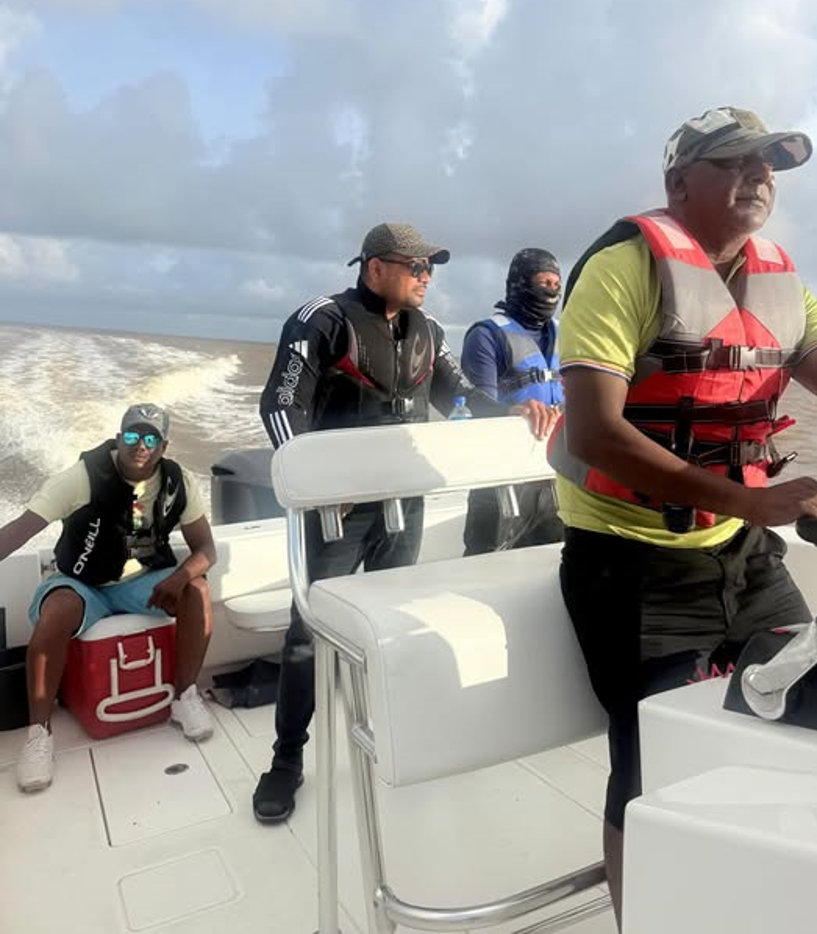
By Mark DaCosta- The same vessel used by Opposition Leader Azruddin Mohamed to assist authorities in the search for victims of the tragic MV Barima incident is now in the custody of those authorities, after it was intercepted and detained during an early-morning operation on August 26.
Mohamed, Leader of the Opposition and head of the We Invest in Nationhood party, said the vessel had been used not only in the MV Barima search-and-rescue effort but also to deliver assistance to some of Guyana’s most underserved communities—people he said are “often difficult to access and whose people are frequently forgotten.”
The vessel was intercepted at Friendship Wharf by members of the Guyana Police Force, Guyana Defence Force and Coast Guard. Mohamed was reportedly on board, accompanied by several Members of Parliament from his party. Authorities cited “reasonable suspicion” of illegal activities before searching the vessel and subsequently detaining it.
Despite conducting a search of the vessel with no illegal items found, the authorities decided to detain the boat, claiming that necessary documentation was not produced. Mohamed questioned the officers about the legal basis for this detention, specifically the provisions of the Maritime Act under which he was being arrested. The response he received was vague and unsatisfactory, raising concerns about the legitimacy of the officers’ actions during this incident.
In his statement, Mohamed articulated that this vessel is not just a personal asset; it is essential for reaching communities that are “often difficult to access and whose people are frequently forgotten.” The boat had been engaged in significant charitable work, including a distribution drive providing much-needed clothing and supplies to victims of the tragic MV Barima incident and other residents in the Port Kaituma and Mabaruma regions.
As the Leader of the Opposition remained in custody at the Marine Wing of the Ruimveldt Police Station, he expressed significant disquiet about the nature and intent behind the detention. He highlighted that “no amount of harassment or intimidation will stop us from serving the people of Guyana,” reinforcing the narrative of a government attempting to stifle dissent and obstruct community efforts. Mohamed’s frustration also stems from the lack of a formal seizure notice or any clear explanation from the authorities regarding the rationale behind their actions.
This incident has alarming implications, as it reflects not just on the treatment of political figures, but on the state of governance in our nation as a whole. The selective enforcement of laws and the apparent targeting of opposition leaders raise serious questions regarding the integrity of our state institutions.
Moreover, the timing of this detention is particularly concerning, as it directly coincided with Mohamed’s scheduled court appearance. This suggests that the actions taken by the authorities may not be merely about law enforcement but rather a calculated move to undermine his political standing ahead of critical engagements.
According to many observers, the detention of Azruddin Mohamed and his vessel represents a troubling episode in the political landscape of our country. It challenges every citizen to scrutinise the motives behind such actions and to stand in solidarity with those who are fighting for the rights and well-being of all Guyanese.