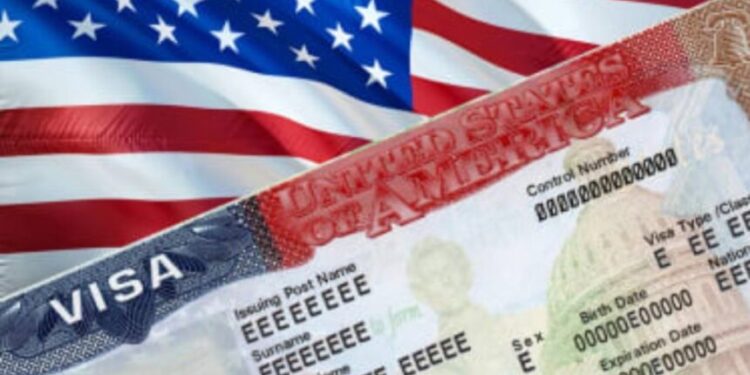
A Manhattan judge has struck down the Trump administration’s blanket suspension of immigrant visas for nationals of 75 countries — eleven of them CARICOM member states. The reprieve came from an American courtroom, not from Caribbean diplomacy. That distinction should trouble us.
MONTEGO BAY, Jamaica, August 26, 2026 – Calvin G Brown – From 21 January 2026, a Jamaican mother approved to join her son in Brooklyn, a Barbadian nurse sponsored by a Florida hospital, a Vincentian bride holding a petition already stamped by Washington — all found their files frozen. Not because a consular officer had weighed their circumstances and found them wanting, but because of the passport they carried. The United States State Department had designated 75 countries whose nationals it judged likely to become a “public charge”, and instructed consulates worldwide to refuse them.
Eleven of CARICOM’s fifteen member states were on that list: Antigua and Barbuda, The Bahamas, Barbados, Belize, Dominica, Grenada, Haiti, Jamaica, St Kitts and Nevis, St Lucia, and St Vincent and the Grenadines. Cuba — not a CARICOM member, but unmistakably of this sea — was included. Guyana, Suriname and Trinidad and Tobago were spared.
On Friday 21 August, Judge Jeannette A. Vargas of the United States District Court for the Southern District of New York vacated the policy outright. Ruling in CLINIC v. Rubio, she held the measure to be contrary to law and issued beyond the statutory authority of Secretary of State Marco Rubio, who possessed no power to order the refusal of visas to applicants otherwise found eligible.
Congress, she wrote, vested consular officers with exclusive discretion to assess each applicant individually; the Immigration and Nationality Act expressly forbids discrimination in the issuance of immigrant visas on grounds of nationality. Refusals grounded solely in the policy were set aside and remanded.
Rescued by a courtroom, not a chancery
Read the plaintiffs’ names carefully. Relief for eleven Caribbean states arrived courtesy of an American Catholic legal charity, a Harlem-based African immigrant advocacy organisation, five prospective immigrants and six United States citizens who filed suit in February. It did not arrive by CARICOM démarche. Not by resolution at the Organisation of American States. Not by the recall of a single ambassador.
Indeed, when the policy first surfaced in January, Antigua and Barbuda’s Ambassador to Washington, Sir Ronald Sanders, noted that no formal notification had reached the affected embassies at all. Sovereign states learned they had been blacklisted by reading it in the American press.
The silver men’s grandchildren
Now weigh what that phrase — public charge — actually alleges about this region, and set it against the record.
Caribbean people have been travelling north to work and sending the money home since before the canal was cut. When Washington took over the Panama project in 1904, West Indians supplied the bulk of a workforce that peaked around 40,000 — Barbadians above all, with Jamaicans, St Lucians, Grenadians, Kittitians, Antiguans and Trinidadians beside them.
They were paid on the silver roll, ten cents an hour against the twenty cents paid in gold to white American hands, inside a Canal Zone that rehearsed Jim Crow in the tropics and buried them by the thousand. And still they saved. Still they remitted.
That money bought land at home, schooled children abroad and financed the next passage — to the cane fields of Cuba, to the wartime farm-labour programmes in Florida and upstate New York, to the London Transport recruiting office, to Brooklyn and the Bronx and Birmingham.
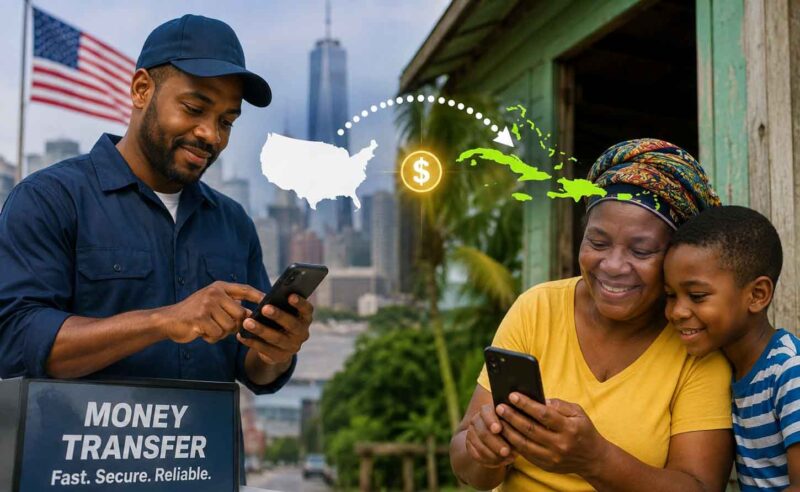
The pattern has never been settlement for its own sake. It is work, thrift, and money going home. It is the barrel and the bank draft; the house rising slowly on a hillside in Hanover, one remittance at a time; the nursing degree, the tuition cheque, the parcel at Christmas.
Jamaica alone recorded US$3.49 billion in remittance inflows in 2025 — net inflows equal to some 14.5 per cent of the country’s entire economy, comfortably exceeding what the island earns from its exports and, in recent years, rivalling what it takes from tourism.
And there is a matter of pride that Washington’s drafters plainly never accounted for. Among Caribbean migrants of every generation, dependence on the state carries a stigma close to shame. The point was never to draw down the American treasury. The point was to work, to send back, and in most cases to come home.
To designate the grandchildren of the silver men as probable burdens on the American purse is not merely unlawful, as Judge Vargas has now held. It inverts the ledger.
The comfortable fiction
The region has long told itself a flattering story: that proximity, a shared parliamentary tradition, a diaspora numbering in the millions and a century of northward migration purchase some special standing in American affection. Washington never made that promise.
Palmerston’s dictum — that nations have no permanent friends, only permanent interests — has been operating doctrine in this hemisphere for generations. This administration merely says the quiet part aloud, likening its posture to the Monroe Doctrine and branding the update the “Donroe Doctrine”.
What has that looked like in our waters? More than two hundred people killed in dozens of strikes on vessels alleged to be carrying narcotics. A Venezuelan head of state seized by American forces in January and flown out of his own country. A tightened embargo on Cuba. Pressure on micro-states to accept third-country deportees and to cool their dealings with Beijing.
And, less dramatically but no less consequentially, a visa architecture that has begun to price the Caribbean passport as a liability: bonds of up to US$15,000 demanded of ordinary visitors from Antigua and Barbuda, Dominica and Grenada, and full entry restrictions on Haiti.
Friendship was never on the table. What the region mistook for affection was tolerance — and tolerance is revocable at the stroke of a diplomatic cable.
What the ruling does not do
Restraint is warranted before the celebrations begin. Judge Vargas struck down the immigrant-visa suspension — the permanent-residence pipeline. She did not disturb the December 2025 proclamation restricting entry, nor the visa-bond regime, nor the quiet tightening of business and visitor processing. Those stand.
The government may yet appeal. And an administration told it may not discriminate openly by nationality retains an arsenal no court can easily reach: delay, backlog, indefinite “administrative processing”, discretionary refusal on grounds never required to be explained.
The lesson is not that American courts saved us. It is that we needed saving, and possessed no instrument of our own with which to do it.
The work ahead
The strongest Caribbean case in Washington is not moral but transactional, and the region should learn to make it that way. Secure Caribbean mobility serves American interests. Reliable travel documents assist American border officers. Rapid criminal-information sharing assists American law enforcement.
Orderly repatriation reduces enforcement disputes. Stable Caribbean economies reduce irregular migration. Our students, patients, business travellers and diaspora families fund American universities, airlines, hospitals and neighbourhoods. Sentiment is not a lever; utility is.
The second task is harder and slower: to stop building a foreign policy on the assumption of a single benefactor. That means functioning free movement under the CSME rather than the perpetual communiqué version of it. It means treating Africa, Latin America, Canada and Europe as markets and destinations rather than as diplomatic decoration. It means a regional response to a nationality-based ban that is louder than the silence of January.
The reprieve is real, and families separated for seven months will feel it in their bones. But it was granted, not won. Until the region can defend the mobility of its own people, the next cable will find us precisely where this one did — reading about ourselves in somebody else’s newspaper.
WiredJA