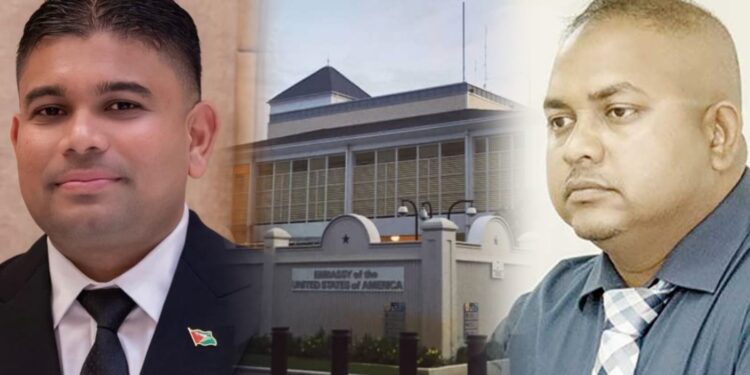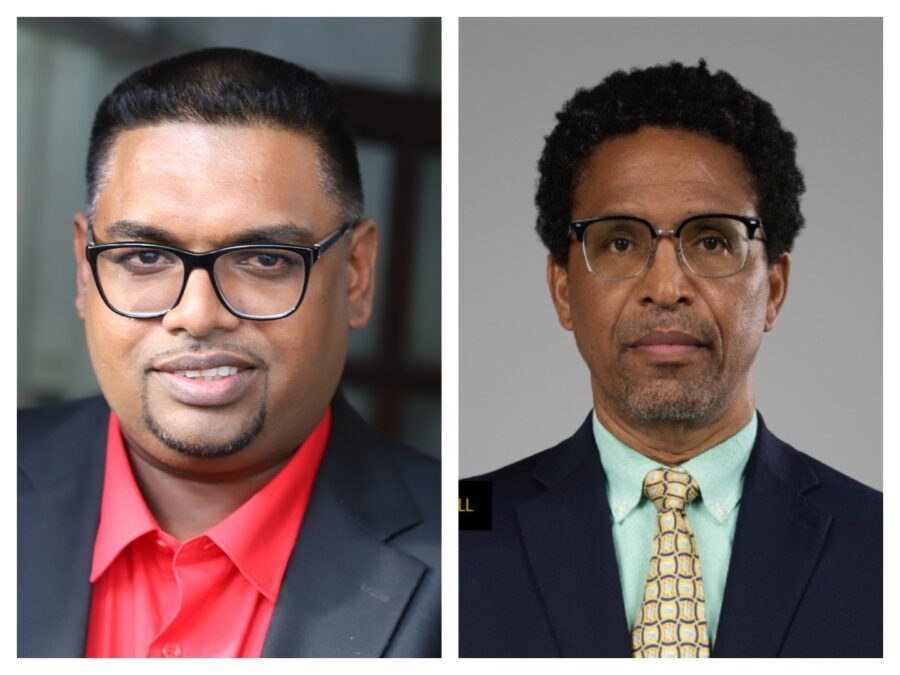
Partnership for National Unity (APNU) lead parliamentarian Dr. Terrence Campbell has challenged legal commentator Kamal Ramkarran’s interpretation of the constitutional requirement governing the appointment of Guyana’s Chancellor and Chief Justice, warning that it could pave the way for an unconstitutional unilateral appointment by President Irfaan Ali.
Campbell made the argument in a letter published Monday, August 17, 2026, by Village Voice News, one day after Ramkarran published a letter in Kiskadee Watch questioning the scope of the Leader of the Opposition’s power to withhold agreement to proposed appointments.
The dispute centres on Article 127(1) of the Constitution, which provides that the Chancellor and Chief Justice “shall each be appointed by the President, acting after obtaining the agreement of the Leader of the Opposition.”
Campbell rejected any attempt to impose conditions on that agreement, arguing that the Constitution deliberately distinguishes “agreement” from provisions requiring “consultation” or “meaningful consultation.”
“In this letter, the writer seeks to impose limitations on the Leader of the Opposition’s power to withhold agreement to proposed appointments to the positions of Chancellor and Chief Justice. It is the first time that I am hearing such an interpretation.”
Campbell said that, in his view, introducing an objective standard into the constitutional provision would amount to an expansion of judicial authority beyond what the framers intended.
“As noble as it sounds, any imputation of objectivity into the clause would amount to overreach and place authority into the hands of judges where the Framers had no intention of doing so.”
He said Ramkarran’s position could be interpreted as encouraging the President to bypass the constitutional requirement.
“I am left to surmise that Mr. Ramkarran’s letter is public encouragement to the President of Guyana to attempt an unconstitutional unilateral appointment of the current acting Chancellor and acting Chief Justice. If that is indeed Mr. Ramkarran’s intention, I can only describe his letter as reckless.”
The controversy comes against the backdrop of a prolonged absence of substantive appointments to Guyana’s two highest judicial offices.
Guyana last had a substantive Chancellor of the Judiciary in 2005, when Justice Désirée Bernard left the post. The last substantive Chief Justice was Carl Singh, who later served in an acting capacity as Chancellor until his retirement in 2017. Justice Bernard was the last person to hold the Chief Justice position substantively before moving to the Chancellorship in 2001.
The prolonged failure to make substantive appointments has also drawn repeated concern from the Caribbean Court of Justice (CCJ).
In November 2017, then CCJ President Sir Dennis Byron, addressing the Guyana Bar Association, expressed concern that Guyana had no substantively appointed Chief Justice and Chancellor, describing the situation as:
“a most unfortunate state of affairs.”
In April 2022, then CCJ President Adrian Saunders, in a similar address to the Guyana Bar Association, also lamented the continued non-appointments to the posts of Chancellor and Chief Justice and called for their immediate appointment.
Campbell stressed that rejection of proposed candidates does not prevent the President from putting forward alternatives.
“What Mr. Ramkarran plus former Presidents of Guyana, and the current incumbent, perhaps forget is that they are not constrained from offering alternatives to the rejected candidates in order to make substantive appointments.”
Campbell revisits CCJ president controversy
Campbell also revisited his criticism of current CCJ President Justice Winston Anderson, saying information received within the previous 24 hours had prompted him to reconsider his earlier call for Anderson’s resignation.
He said he had been advised that Anderson was not the first sitting CCJ president to approach the President and Opposition Leader regarding substantive judicial appointments.
Campbell claimed that former CCJ President Sir Dennis Byron had previously approached then-President David Granger and Opposition Leader Bharrat Jagdeo to advance specific candidates.
“I have every reason to believe my source and this has evoked a little sympathy for Justice Anderson.”
Campbell suggested Anderson may have been aware of Byron’s actions and chose not to use them in his defence.
“First, I now believe that he was aware of the actions attributed to Sir Dennis and decided to ‘take one for the team’ by not using it in his defense.”
He nevertheless maintained that an earlier precedent would not excuse Anderson’s alleged actions.
“The suggestion that Sir Dennis may have acted in a similar fashion to Justice Anderson does not remove, or mitigate, the error in the actions of Justice Anderson.”
Campbell concluded:
“I respect him for apparently taking one for the team. However, Peter may end up paying for Paul.”