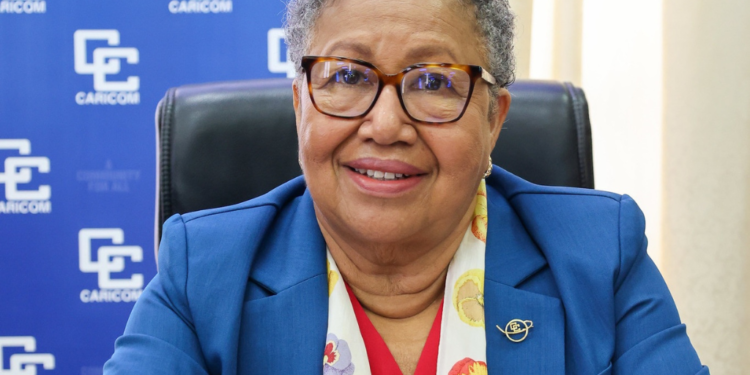
Secretary-General of the Caribbean Community, Dr. Carla Barnett, has called for renewed commitment to protecting the rights, traditions, and contributions of Indigenous Peoples, as the region joined the international observance of the International Day of the World’s Indigenous Peoples on August 9, 2026.
In a message marking the occasion, Barnett said CARICOM stands with the global community in recognising the “enduring legacy, resilience and invaluable contributions” of Indigenous Peoples across the Caribbean and beyond.
“The wisdom, traditions and contributions of the Caribbean’s Indigenous Peoples are an integral part of our shared history, and their voices, leadership and prosperity are essential to an equitable and sustainable Community.”
This year’s observance is being held under the United Nations theme, “Honouring Indigenous Midwives: Safeguarding Life and Well-being,” which highlights the critical role of traditional knowledge systems in healthcare and cultural preservation.
Barnett underscored the importance of indigenous midwives, describing them as “custodians of ancestral wisdom, trusted caregivers and keepers of traditions that strengthen families and communities.”
“Their knowledge, passed down through generations, reflects a holistic understanding of health, life and the interconnectedness of people, culture and the natural environment.”
She noted that Indigenous Peoples across the Caribbean continue to play a vital role as stewards of the region’s natural resources, drawing on deep-rooted knowledge of sustainable agriculture, traditional medicine, language preservation, and systems of governance.
According to Barnett, these practices not only preserve cultural identity but also offer critical lessons for addressing modern challenges, particularly climate change and biodiversity loss, which disproportionately impact Indigenous communities.
The CARICOM Secretary-General also pointed to the bloc’s renewed focus on reparatory justice, referencing the recently relaunched CARICOM Ten-Point Plan for Reparatory Justice: A Manifesto for the Coming Enlightenment. The plan includes provisions for an Indigenous Peoples Development Programme aimed at expanding social and economic opportunities for Indigenous communities.
She stressed that achieving these goals will require inclusive dialogue and policies that respect the rights and aspirations of Indigenous Peoples throughout the region.
“Addressing these issues will require meaningful dialogue and policies that respect the rights, dignity and aspirations of Indigenous Peoples.”
Barnett urged Caribbean citizens and governments alike to use the observance not only as a moment of recognition, but also as a call to action.
“Let us celebrate and honour the rich diversity of our indigenous communities, recognise the valued contributions of indigenous midwives and other knowledge holders, and renew our commitment to protecting their rights and promoting their full and effective participation in every aspect of Caribbean life.”
The International Day of the World’s Indigenous Peoples is observed annually by the United Nations to promote and protect the rights of Indigenous populations worldwide, while highlighting the challenges they continue to face.
Barnett concluded her message with a regional greeting, extending best wishes to Indigenous communities across CARICOM and reaffirming the bloc’s commitment to inclusion, sustainability, and shared progress.