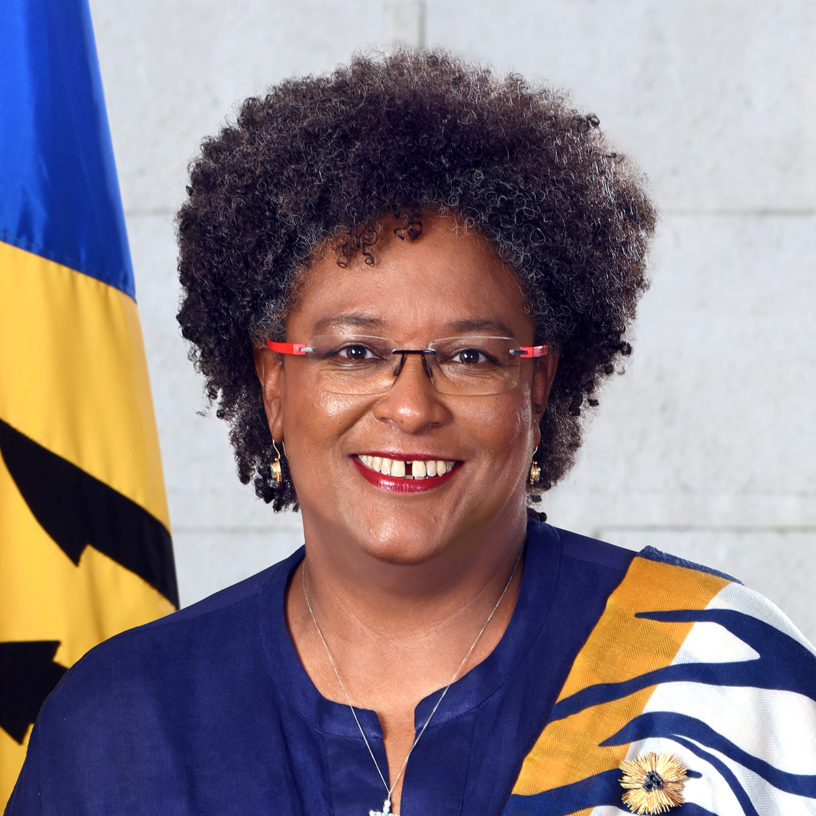
Barbados is moving to deepen its role in the global reparations movement, with Prime Minister Mia Amor Mottley announcing a new scholarship programme aimed at advancing Black Studies and reparatory justice.
The initiative, unveiled during her Emancipation Day message, will fund postgraduate studies through partnerships with the University of the West Indies and the University of Glasgow. At least three Barbadians are expected to pursue master’s degrees in disciplines focused on the legacy of slavery and pathways to justice.
Reparations, in this context, refer to efforts to repair the lasting economic and social harm caused by slavery and colonialism. Caribbean nations, including Barbados through CARICOM, have been seeking reparatory justice from former colonial powers in Europe—particularly Britain—for centuries of exploitation, forced labor, and underdevelopment.
Framing the scholarships as both symbolic and transformative, Mottley said:
“These scholarships are freedom carried into knowledge. Across the same Atlantic that carried our ancestors in chains, their descendants will now travel by choice, rooted in identity and equipped to shape the work of justice.”
The announcement builds on growing international attention to reparations, including discussions at the United Nations General Assembly, where Caribbean leaders have pushed for acknowledgment and material redress.
Mottley also grounded the initiative in Barbados’ own history, paying tribute to Bussa, whose 1816 rebellion symbolized resistance to enslavement.
“Emancipation removed the legal chains, but did not restore the land, wealth or opportunity taken from generations,” she said. “Reparatory justice is truth spoken, responsibility accepted and repair made practical. An apology without repair is eloquence without justice.”
While emancipation marked a legal end to slavery, Mottley argued that its consequences continue to shape inequality across Caribbean societies. The scholarship programme, she indicated, is part of a broader strategy to equip future leaders with the academic and policy tools needed to advance the reparations agenda.
“There can be no freedom where violence silences hope, inequality closes doors or indifference strips another person of dignity,” she said.
By linking education to advocacy, Barbados is positioning the next generation to carry forward the region’s push for justice—transforming historical memory into structured, sustained action on the global stage.