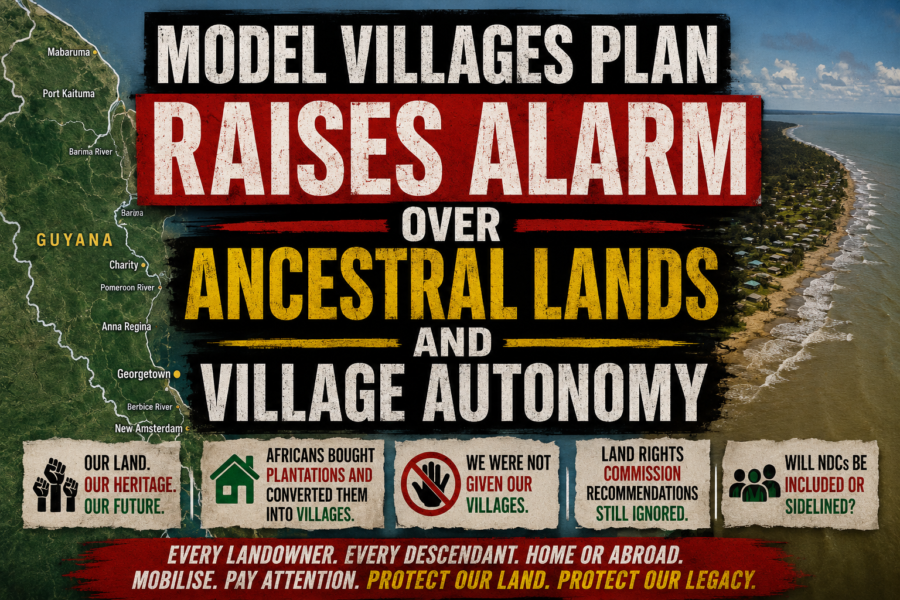
The People’s Progressive Party (PPP) Government’s decision to launch a nationwide series of consultations on its proposed Model Villages Initiative is being viewed by many as more than a discussion about roads, parks and public amenities. For many villagers, community leaders and land rights advocates, it raises profound questions about the future of ancestral lands, village governance and who will ultimately control the development of some of Guyana’s oldest communities.
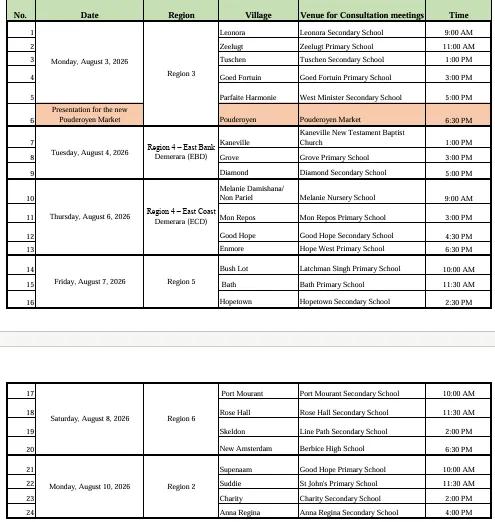
Beginning Monday, August 3, President Irfaan Ali and members of his administration will visit dozens of communities across Regions Two, Three, Four, Five and Six to discuss the initiative, which the Government says is aimed at creating “cleaner, greener, safer and more resilient communities” through improved infrastructure and community participation.
But community leaders and land rights advocates argue that beneath the appealing language lies a proposal that deserves far greater public scrutiny.
Many residents are asking whether the consultations are genuinely intended to gather public input or merely secure public endorsement for decisions that have already been made.
Even more pressing, they say, are questions surrounding land.
Across coastal Guyana, thousands of families occupy lands acquired by their ancestors over generations. Following full Emancipation in 1838, formerly enslaved Africans were not handed villages by the colonial authorities. Instead, through extraordinary sacrifice and collective determination, they pooled their meagre resources to purchase abandoned plantations from former slave owners, transforming them into independent villages governed by themselves.
That historic Village Movement remains one of the greatest achievements in Guyanese and Caribbean history, representing economic independence, self-determination and freedom won through ownership rather than charity.
Between 1839 and 1848, freed Africans collectively purchased more than 15,000 acres of land, establishing about 25 villages on former plantations. The Village Movement became one of the most remarkable achievements of post-Emancipation Guyana, transforming former plantations into self-governing communities owned by the very people who had once been enslaved on them.
To descendants of those pioneers, these lands are far more than parcels of real estate. They are sacred inheritances purchased with sweat, sacrifice and an unwavering determination that future generations would never again be dispossessed.
Against that historical backdrop, community leaders say any proposal affecting village planning, land use, zoning or redevelopment must be approached with the utmost caution.
Land rights advocates point to the Government’s failure to fully implement recommendations of the Commission of Inquiry into Lands, including measures aimed at regularising land ownership, resolving longstanding land disputes and strengthening security of tenure for thousands of Guyanese. They argue that before embarking on ambitious new village transformation projects, the administration should first honour those commitments and provide certainty to landowners whose rights remain unresolved.
Questions are also being raised about the role of Neighbourhood Democratic Councils (NDCs).
Will the elected local authorities, established by law to manage the affairs of their communities, be central to the consultation process, or will the exercise be directed almost entirely from Georgetown? Community stakeholders contend that meaningful consultation cannot occur if NDCs and other local democratic institutions are relegated to the sidelines.
The Government has encouraged residents to attend the consultations and help shape the future of their villages.
Village leaders and land rights advocates, however, say attendance alone is not enough.
They are urging villagers to organise, mobilise and arrive prepared to ask difficult questions. They are calling on every landowner, every family with ancestral ties to village lands, and every Guyanese at home or abroad whose parents or grandparents own property in these communities to pay close attention to what is being proposed.
According to those raising concerns, these consultations should not be viewed as routine community meetings but as discussions that could influence the future use, control and character of lands that generations struggled to acquire and preserve.
Among the questions they believe residents should demand answers to are: Will there be any changes to existing land rights? What legal protections exist for private and ancestral lands? Will landowners be required to surrender any rights for redevelopment? What role will NDCs play in approving or rejecting proposals? And will no development proceed without the informed consent of affected landowners?
The consultations are scheduled to begin in Region Three on August 3 before moving through Regions Four, Five, Six and Two.
For many descendants of the Village Movement, the issue extends beyond infrastructure and beautification. It touches the legacy of ancestors who purchased freedom not simply by leaving the plantation, but by buying the very plantations on which they had once been enslaved and transforming them into thriving villages.
As the consultations get underway, community leaders are urging villagers to remain vigilant and united. They say the decisions made today could shape the future of ancestral communities for generations to come and insist that development must never come at the expense of property rights, local democracy or the hard-won legacy of those who sacrificed everything to own the land they called their own.