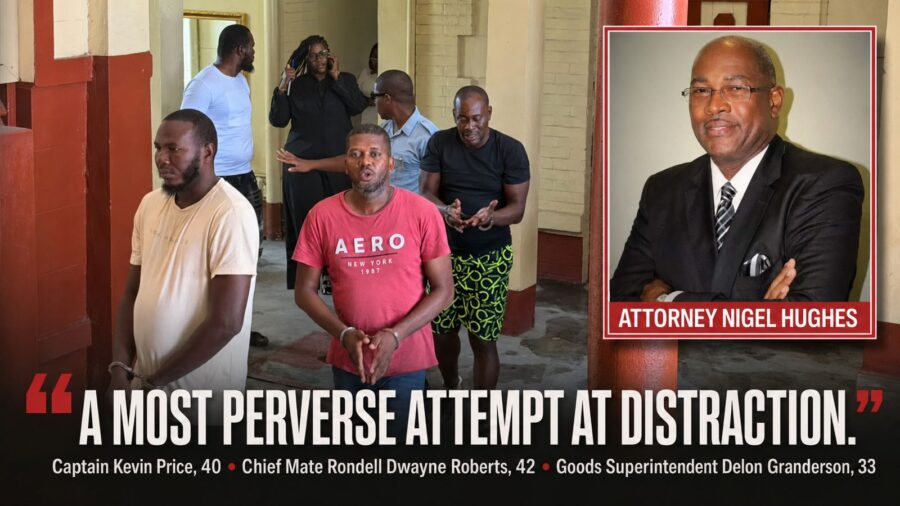
Attorney-at-law Nigel Hughes has accused the State of using murder charges against three Transport and Harbours Department (T&HD) employees as a means of silencing key witnesses before the Government’s Commission of Inquiry (COI) into the deadly sinking of the MV Barima, describing the prosecution as “a most perverse attempt at distraction.”
In a statement posted Tuesday on his social media page, Hughes questioned both the legal basis for the charges and their timing, suggesting they could effectively prevent the captain and crew from giving evidence before the Commission of Inquiry into one of Guyana’s worst maritime disasters.
His comments came hours after the Guyana Police Force announced that, acting on legal advice from the Director of Public Prosecutions (DPP), three T&HD employees had been charged with the common law offence of murder in connection with the deaths of passengers aboard the state-owned ferry.
Charged are Captain Kevin Price, known as “KP,” 40, of Melanie Damishana, East Coast Demerara; Chief Mate Rondell Dwayne Roberts, 42, of Grove Public Road, East Bank Demerara; and Goods Superintendent Delon Granderson, 33, of Fellowship, West Coast Demerara.
The three men appeared before Chief Magistrate Judy Latchman at the Georgetown Magistrates’ Court on Tuesday, where the indictable charge was read to them. They were not required to plead and were remanded to prison. The matter was subsequently transferred to the Charity Magistrate’s Court and adjourned to August 3.
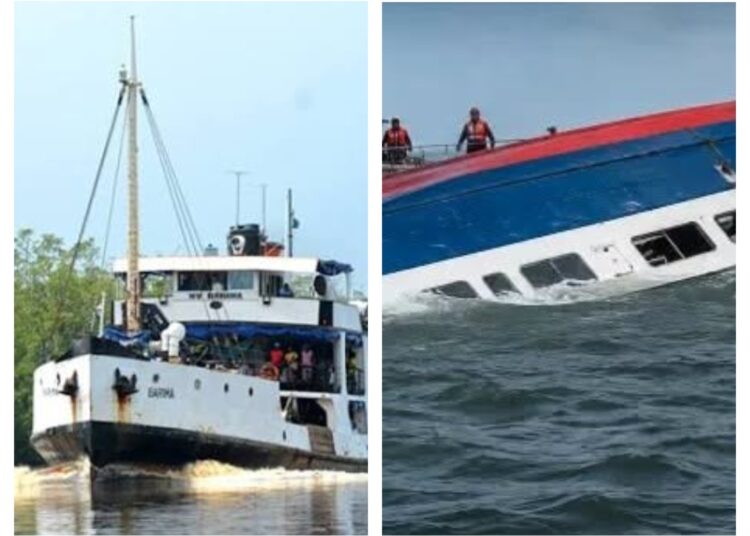
The charges arise from the July 18 sinking of the MV Barima, one of the deadliest maritime disasters in Guyana’s history. The state-owned ferry capsized during a voyage from Georgetown to Port Kaituma, claiming dozens of lives and triggering widespread criticism of the Government’s oversight of the ageing vessel, its maintenance and inspection regime, and the decision to allow it to continue operating.
In his social media statement, Hughes argued that the offence of murder requires proof that an accused intended to kill or cause grievous bodily harm.
“The institution of murder charges against the captain and crew of the MV Barima is a most perverse attempt at distraction.”
“A charge of murder requires that the accused had the intention to kill his victim.”
“In the circumstances of this charge it would mean that the accused when they set sail, had the intention to kill or cause grievous bodily harm to all the persons on board or developed this intention at some stage after setting sail.”
Hughes then suggested the real consequence—or purpose—of the prosecution may be to prevent the accused from participating meaningfully in the Commission of Inquiry.
“Could it be that the real intention here is, the accused having being charged with murder, would not be able to testify before the COI as any testimony at the COI can be used against them at the criminal trial. Hence they will remain silent.”
Under longstanding legal principles, persons facing criminal prosecution generally have the right against self-incrimination and may decline to answer questions in other proceedings if their responses could later be used against them.
Hughes argued that invoking that right could deprive the Commission of Inquiry of testimony from those who were directly involved in operating the vessel on its final voyage.
“Perhaps we have the unique ability to compound what is a tragedy of epic proportions into additional manifest injustice by the institution of murder charges thereby silencing key witnesses before the COI.”
The Government has announced that a Commission of Inquiry will examine the circumstances leading to the tragedy, including the vessel’s seaworthiness, maintenance history, operational decisions, regulatory oversight and the State’s response before and after the disaster.
The decision to pursue murder charges before that inquiry begins is now expected to fuel intense legal debate over whether the criminal proceedings will advance accountability—or compromise the Commission’s ability to uncover the full truth behind one of the country’s worst maritime tragedies.