Trinidad and Tobago has pledged to expand access to affordable specialist healthcare across the Caribbean, offering medical expertise, prosthetic services and paediatric care to fellow CARICOM member states as part of a broader effort to strengthen regional cooperation.
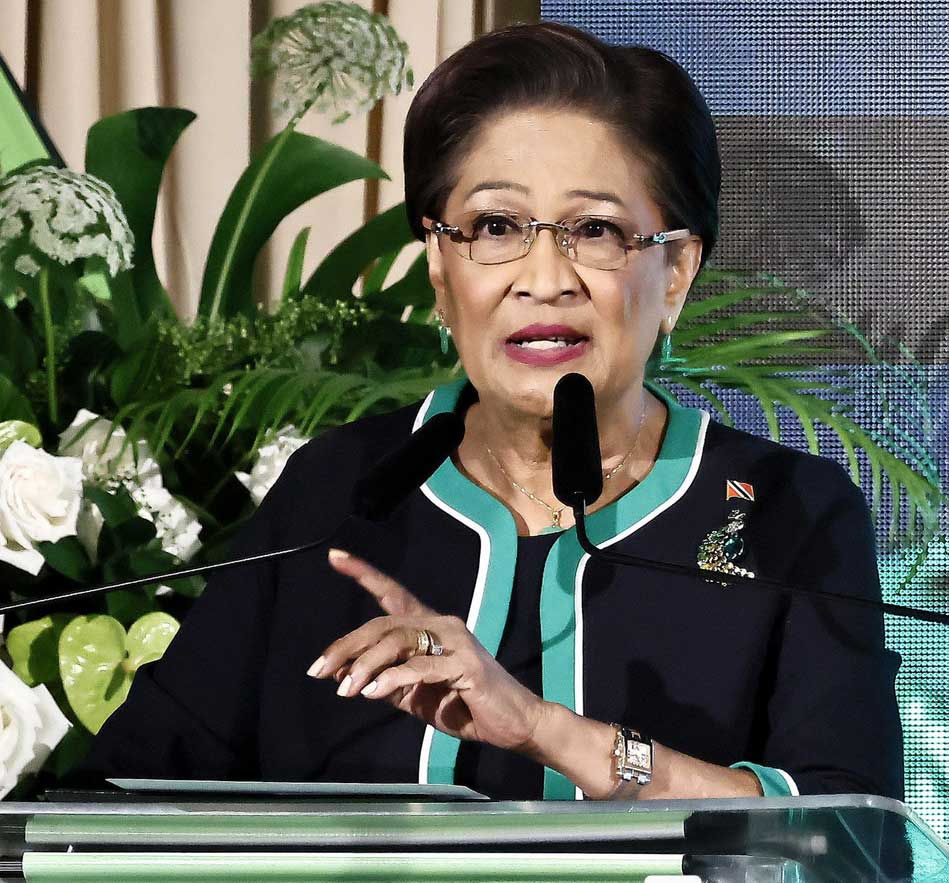
The commitment was made by Prime Minister Kamla Persad-Bissessar during the closing media conference of the 51st Regular Meeting of the Conference of CARICOM Heads of Government, held in Saint Lucia from July 5–8.
CARICOM was established by the Treaty of Chaguaramas on July 4, 1973, by four founding leaders—Prime Ministers Errol Barrow of Barbados, Forbes Burnham of Guyana, Michael Manley of Jamaica and Dr. Eric Williams of Trinidad and Tobago. Today, the regional integration movement comprises 15 Member States and seven Associate Members, with the Conference of Heads of Government serving as its highest decision-making body. The organisation was created to deepen economic integration and functional cooperation while advancing shared goals in areas such as trade, health, education, security and sustainable development.
Addressing regional leaders and the media, Persad-Bissessar said Trinidad and Tobago is prepared to make its medical infrastructure and expertise available to citizens across the Community.
Speaking about the country’s newly established National Prosthetics Centre, she said the facility would provide artificial limbs at significantly lower costs than those charged outside the region.
“We have had help from the Government of India to set up a National Prosthetics Centre for the fitting of artificial limbs. I have set up that centre, and the services will be available to our CARICOM brothers and sisters at an affordable price,” the Prime Minister said.
She noted that obtaining prosthetic limbs overseas can be prohibitively expensive.
“Because when we look at the prices otherwise, for example, in the U.S., the prices range from USD3,000 to USD120,000, depending on the mobility requirements of the artificial limb,” she said.
Persad-Bissessar also highlighted Trinidad and Tobago’s capacity to help address shortages of medical personnel across the region by supplying qualified doctors.
“We do have many medical graduates at the general practice/house officer level, and we have shared with CARICOM Members that we are willing to work with them to provide fully trained doctors, the majority of whom are UWI-trained doctors,” she said.
The University of the West Indies (UWI) has long served as the premier institution for training doctors and other healthcare professionals in the English-speaking Caribbean, supplying much of the region’s medical workforce.
In addition, the Prime Minister offered CARICOM countries access to specialised paediatric care through the Couva Children’s Hospital, one of Trinidad and Tobago’s leading healthcare institutions.
“We have a very highly specialised children’s hospital. So we are offering, at affordable prices, access to the hospital to CARICOM Members,” she said.
The initiative builds on CARICOM’s longstanding commitment to functional cooperation in health, a priority reinforced during the COVID-19 pandemic when member states collaborated on vaccine procurement, disease surveillance and emergency public health responses. Regional leaders have since intensified efforts to improve access to specialist healthcare and reduce the need for Caribbean citizens to seek expensive treatment outside the region.
Persad-Bissessar said the initiatives reflect Trinidad and Tobago’s commitment to advancing regional health security and resilience through shared expertise, specialised medical facilities and affordable healthcare. The offer also aligns with the founding principles of CARICOM, whose architects envisioned that the Caribbean’s small states would achieve greater strength through cooperation, pooling resources and supporting one another in areas where individual countries may lack the capacity to meet every need on their own.