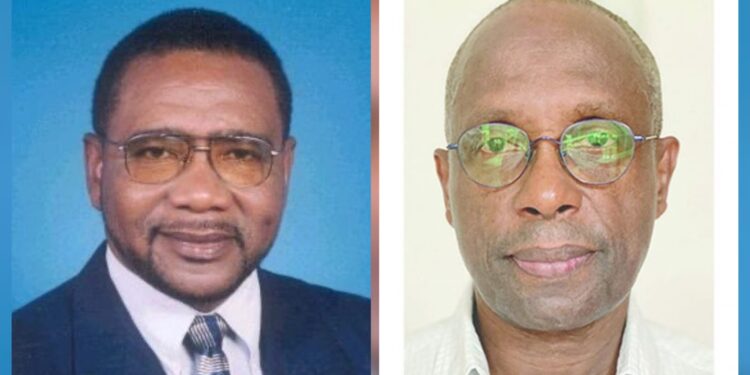
The case involving the International Decade of the People of African Descent Association – Guyana (IDPADA-G) and the Government of Guyana has concluded, and I am somewhat concerned that the plaintiff could possibly think that it has anything to celebrate, for while what it is lauding is useful, it is miniscule in relation to what the defendant will fail to deliver, both in terms of process and content, given its moral and legal obligations. (‘High Court Orders Government to Pay IDPADA-G Outstanding 2022 Subvention’ VV: 25/06/2026).
The International Decade of People of African Descent is a United Nations initiative established in 2013 to promote and protect the human rights of people of African descent, acknowledge their contributions to society, address the legacies of slavery, colonialism and systemic racism while promoting justice and African development worldwide. IDPADA-G was established by the Government of Guyana in 2017 as the national expression of this international aspiration. Together with individual members, the organisation brought together most of the existing African groups, some of which have over decades been dedicated to the support and development of African people in Guyana and elsewhere.
Governments in Guyana have projected themselves as liberal democracies committed to the separation of powers, whereby the legislature, executive and judiciary operate independently to safeguard freedom and ensure government accountability by limiting the power of each other. The judiciary is to serve as an independent arbiter that upholds the rule of law, protects individual and collective rights and ensures that government actions comply with the moral and legal objectives of the constitution.
Writing from his jail cell in Birmingham, Alabama, where he was placed for his role in the 1963 direct action campaign against racism and racial discrimination in United States of America (USA), Martin Luther King Jr. reminded us that ‘An unjust law is no law at all: and we must look to the law of God or natural law to determine what is just.’ He was merely echoing the 1st century Christian philosopher St. Augustine, who claimed that ‘a law devoid of justice is not a true law: it must align with moral truth to be legitimate.’
Much later, and more in keeping with day-to-day realities, by way of his ‘categorical imperative’, the 18th century German philosopher Immanuel Kant advised that we should ‘Act only according to that maxim whereby you can at the same time will that it should become a universal law.’ This is in keeping with what most of us would have learnt from our parents: ‘do unto others as you would have them do unto you.’
It is this kind of legal positioning, which goes beyond what Forbes Burnham would have decried as the narrow positivistic definition of the law that overly prioritises written law, that allowed us to argue in our time for reparation for the abuse of human rights by way of slavery at a time when slavery was legal and when international positive human-rights law was non-existent.
Generally, what is being suggested here is that since the law could be the outcome of unconscionable autocratic government that has captured the state, the judiciary must not only confine itself to the written law but should on all occasions consider what should be done to deliver justice.
Furthermore, states differ in size, ethnic composition, history, wealth, etc., so the process of national democratic political management needs to be adequately contextualised. I Googled ‘how to properly manage an ethnically divided society’ and the following came up: ‘Guyana: political competition is largely structured along ethnic lines, with East Indians and Africans forming the main political blocs. Historical occupational segregation reinforced ethnic divisions, influencing voting patterns and policy outcomes… Ethnicity can both challenge and support democracy, depending on institutional design, political mobilisation, and the management of ethnic inequalities.’
One paragraph (at page 56) in the Carter Centre’s recent final report on the 2025 elections succinctly speaks to this continuing Guyana dilemma by largely repeating what the Centre has been saying for decades. ‘Guyana’s electoral system interacts with a historical pattern of ethnic voting for its two major political parties, although this may have attenuated over time with demographic changes in the population. This has caused elections to be highly polarised, with relatively little crossover voting.
The system does not allow the negotiation of post-election coalitions to form a government, so a party with a plurality of the vote can win the powerful executive presidency and with it the right to appoint the cabinet. This combination of factors gives Guyana’s system a winner-take-all character that has been detrimental for social cohesion and ethnic relations. The system should be reviewed from this perspective as part of constitutional reform’
The political elites of Guyana are aware of the above context and the requirements for good democratic governance. Since the 1950s during the independence discourse, colonial Britain offered the required type of arrangements, but the essentially Indian-supported PPP refused the offer. Fifty years later, after much loss of life and property by way of internecine ethnic/political struggle, in its 2011 and 2015 manifestoes, APNU+AFC, the largely African orientated parties/government that established IDPADA-G, committed to establish shared government arrangements but this did not materialise.
Thus, Guyana is still today a highly ethnically conflictual political society with claims and counterclaims of racial/ethnic discrimination. Guyanese have long been encouraged to stop merely blaming each other and recognise that the main problem is the nature of the social structure, i.e. the interplay resulting from its being a multiethnic/bicommunal society with competitive democratic aspirations.
‘To the extent that the constitutional arrangements ignore this [ethnic context], tension, alienation, disturbances, and underdevelopment result. … It is a mistake to blame the outcome on anyone. Power sharing becomes inevitable because of the logic of political cleavage in competitive democracies.’ (Scott Orr ‘The Theory and Practice of Ethnic Politics: How What We Know about Ethnic Identity Can Make Democratic Theory Better’. 2007).
The judicial dispute that has just concluded is not merely the outcome of some quarrel about financial accountability; indeed, the latter appears a concoction to disguise the real problem. In 2022, the African-orientated organisation Cuffy 250 held its Annual State of African Guyanese Forum under the theme ‘Resisting the emerging apartheid state: economic equity and security.’ Make no mistake, this view is almost universal in the African community and the fact that some members of IDPADA-G participated in the conference, without taking a dissenting position, severely irked the governing PPP, and after many unfounded accusations relating to financial accountability, IDPADA-G’s annual subvention was permanently withdrawn by the government that very year.
As I understand it, IDPADA-G appealed to the court and the court merely ordered the regime to pay the subvention for the remaining months of that year. The fact that some consider this a significant development is itself a strong indication of where Guyana is in the pantheon of democratic polities. In terms of the organisation having creditors and other obligations to meet, the decision is useful, but it is miniscule in relation to the developmental agenda to which the Government of Guyana had committed itself.
It gets worse, for in keeping with the International Covenant on Civil and Political Rights and United Nations Declaration on the Rights of Persons Belonging to National or Ethnic, Religious and Linguistic Minorities, ethnic groups have the right to independently form and manage their organisation, and it is partly with this understanding that IDPADA-G was established. However, the largely Indian-supported PPP government has now taken it upon itself to determine and fund the persons and groups that are to represent the African people!
The notion that a government is involved in the suppression of any people to a point where an apartheid state is developing is serious but not unusual, for as we speak, at the extreme, there is the case of Israel. But apart from dismissing those who make such claims as troublemakers, as elsewhere, a democratic government should voluntarily present an independent creditable counter case. Particularly so, for while in our ethnic cauldron it should not be necessary, in my opinion, as required by international human rights law, the accusers have already attempted to make a prima facie case.
It might well be that given the nature of the conflict, i.e. the vicissitudes associated with the social structures and the regime’s intention to continue upon the amoral, illegal and divisive path it has taken, it may have correctly concluded that matters not what else it does, similar accusations will continue.
So what we have here is one government resulting from ethnic political competition committing the entire people of Guyana to promoting and protecting the human rights, etc. of African Guyanese, and another government resulting from a similar process but supported by the other large ethnic group – and, according to substantial African opinion, going in the opposite direction i.e. attempting to establish an apartheid state – that has decided to continue the process only with its hand-picked representatives.
This is the backdrop against which the court concluded that the most it could do is instruct the government to provide funding for the remainder of the budget year in which it was withdrawn. Surely, in a democratic society based upon the separation of powers an independent judiciary should not allow the executive to so brazenly demolish the human rights of the citizenry.
It is said one gets out of the judicial system what one puts into it and so it could easily become a masquerade. When the political elite is struggling to get out of the ethnic cul de sac in which they have found themselves and parliament, the other partner in the separation of powers is conceptually institutionally compromised: those who still care must remember what Martin Luther King Jr. said and act upon what is left for justice is yet to be done.