Guyana’s transformative Gas-to-Energy project has entered a decisive stage, with engineers now preparing to introduce natural gas into the system and working around the clock to deliver electricity generation by December 2026.
This update was provided by Project Manager of Linsayca, Mr Luis Pirela, during a site visit on Wednesday by Jamaica’s Prime Minister Andrew Holness, accompanied by Prime Minister Brigadier (Ret’d) Mark Phillips, Minister of Natural Resources Vickram Bharrat, and Minister of Public Utilities and Aviation Deodat Indar.
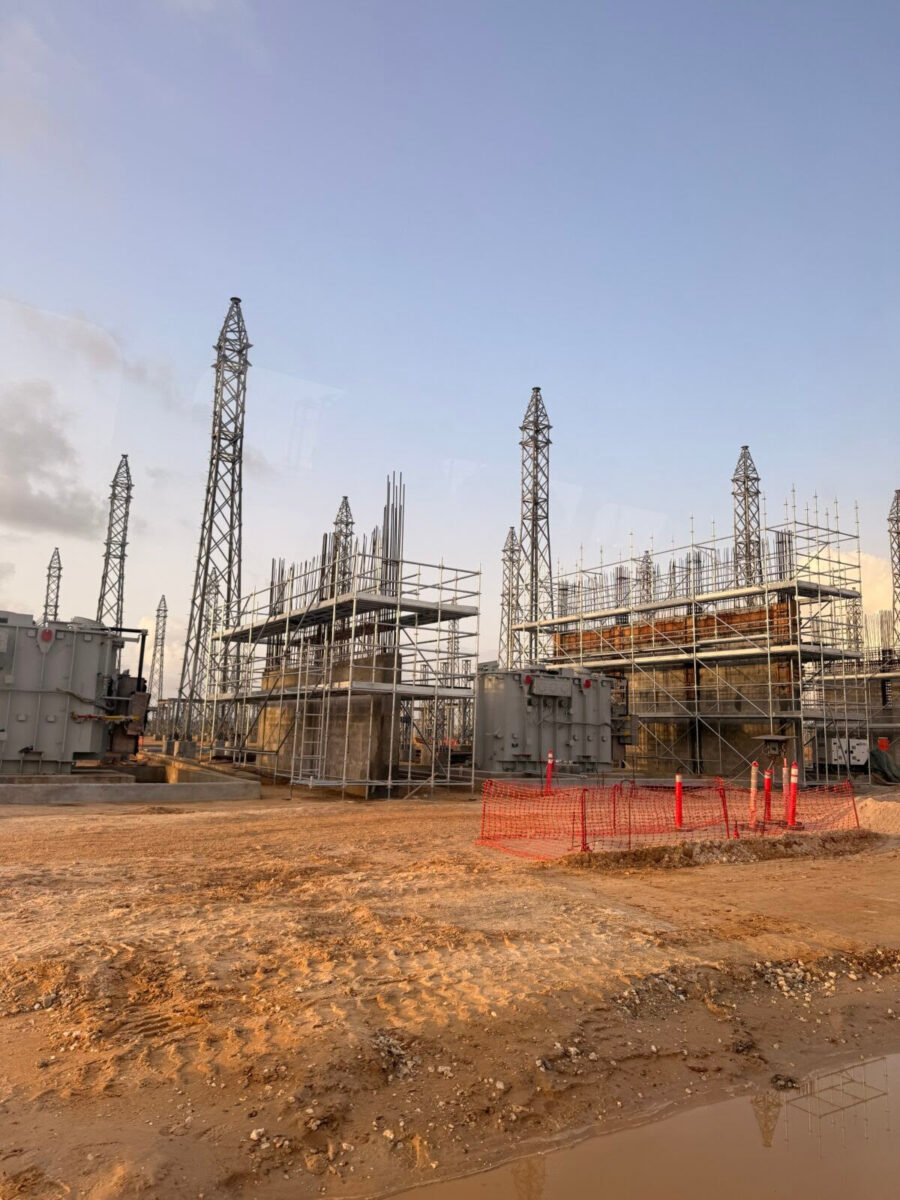
Pirela outlined the complex process underway at the Wales Development Zone. He explained that the facility is designed to receive natural gas and separate it into different components to maximise value for Guyana.
At the centre of the operation is methane, the primary gas component that will be used to fuel power generation and supply electricity to homes and businesses.
“The facility separates the molecules and extracts methane, which is then sent to the power generation system as fuel,” Pirela explained during the tour.
But electricity is only part of the equation.
The remaining gas components are condensed into liquids that can be recovered and stored for future use. These by-products can support a range of downstream industries including cooking gas and plastics manufacturing, creating opportunities for future industrial expansion.
Pirela explained that the project brings together expertise and equipment from approximately 20 countries across Europe, Asia and the Americas.
According to him, the international collaboration allowed the engineering teams to deliver the project within an accelerated timeframe.
“This facility is the result of integrating engineering and equipment from around the world,” he noted.
He further revealed that the current construction works represent the second phase of development.
The plant is being designed with operational flexibility, allowing it to run initially in a simple-cycle mode and later transition into a combined-cycle system that captures hot exhaust gases to produce additional electricity more efficiently.
Construction of the second phase is expected to conclude within the next three months, after which the turbines will be fully assembled.
“The target is to start power generation in December 2026,” Pirela stated.
To meet that deadline, he said teams are maintaining continuous operations.
“We’re working 24 hours a day, seven days a week, including holidays, to make sure this is achievable and to deliver power generation for Guyana.”
The gas processing facility is initially designed to handle 50 million standard cubic feet of gas per day, with infrastructure already installed to expand capacity to 120 million standard cubic feet daily in the future.
Pirela said the site is now technically prepared for gas introduction, with commissioning activities advancing.
“We’re ready for introducing gas and supporting the commissioning teams, with the hope of introducing gas later this year,” he added.
Once completed, the Gas-to-Energy project is expected to significantly reduce electricity costs, strengthen energy security and open new opportunities for industrial development in Guyana.
DPI